Startup cost
$3k–$15k
TRUiC Business Ideas
Decision Snapshot
Idea Score
65
Startup cost
$3k–$15k
Profit margin
21%
Break-even
4 mo–12 mo
Time to launch
12 wk–36 wk
Demand trend
Stable
5-yr failure rate
—
Capital intensity
Medium
Time commitment
Full time
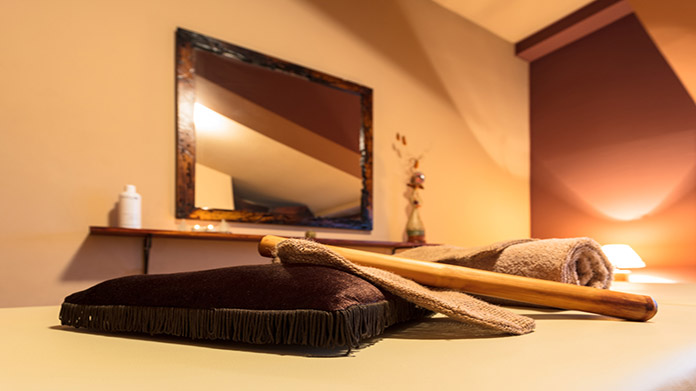
The first step to starting a Massage Therapy Business is getting certified. Most states regulate massage therapy so that some form of certification is required to become a massage therapist. Next, you will need to decide how you wish to market your establishment. Do you want to focus more on injury recovery or stress relief? Will you be paid directly by clients or through insurance plans? Lastly, you must acquire a base of loyal clients.
Our guide is in 3 parts:
There are a number of investments you’ll need to make before opening your doors. First, you’ll need a work space. Rent can run anywhere from $750/month to thousands, depending upon location and size of the space you need. Most landlords require first and last month’s rent as a deposit, so plan on budgeting for at least two months.
Hopefully, you already have a massage table and bolsters, but if you don’t, now is the time to buy. It’s not necessary to purchase the most expensive table, which could cost upwards of $900; but you will want to invest in a solid, quality table, an investment of at least $300. If you plan on offering standard massages, you’ll also need to purchase a few bolsters and wedges, which will run you another $150. When you start to offer more specialized massages, like pregnancy massage, you’ll want to save up for additional bolsters, setting you back another $250.
Your customers will need clean sheets and a blanket to keep them warm during their session. To avoid hours of laundry every day, most therapists purchase several days worth of sheets. At $35 per set, this can easily be one of your largest initial expenses.
Many massage therapists offer special services, such as hot stone massages and essential oils. Consider the services you plan to offer and invest accordingly. Large bottles of lotion cost over $250, so if you’re not 100% sure which product you love, opt for the smaller bottles until you’ve made your final decision.
To help reduce rent, many massage therapy entrepreneurs choose to share their workspace with chiropractors or physical therapists. This not only reduces monthly overhead costs, it ensures a steady flow of clients through an ongoing referral program.
Lastly, don’t be tempted to forego purchasing an insurance policy. You’ll hopefully have a steady flow of customers coming into your facility; don’t put your business at greater risk by going uninsured. While your premium will be fairly inexpensive, cost is dependent upon the city and state you live in, location within the city, size of the business, and your experience level.
Read our massage therapy business purchasing guide to learn about the materials and equipment you’ll need to start a massage therapy business, how much to budget, and where to make purchases.
In addition to the standard overhead, you should have an insurance policy in place. Sheets should be laundered, lotion should be fully stocked, as should brochures and business cards. Don’t forget to incorporate continuing education expenses into your annual budget as well.
As a massage therapist, you have a distinct advantage over many business owners – you offer a service everyone values. The ideal client for your business is dedicated to holistic healing and will help spread the word about how your services stand out above the rest.
Will your business be geared more towards offering a relaxing retreat or one where your clients come to get relief from chronic pain? As the owner of a massage therapy business, you have the unique opportunity to heal, and make a great living doing it.
While you can offer treatment packages, most massage companies bill per session. Those who accept insurance simply collect the insured’s co-payment and bill the rest directly to the insurance company. Should you choose not go the insurance route, offer your customers a little relief by accepting credit card payments for your services. Shelling out $60-100 per session is a luxury; do what it takes to keep those clients coming back month after month.
Additionally, some entrepreneurs offer more than just their services, profiting from offering goods such as Biofreeze, essential oils, books, and CDs. If you choose this avenue, just remember, there’s nothing worse than leaving a massage, only to be bombarded with someone wanting more money.
While the numbers vary by region, the national average massage therapists charge is $60 per hour. If you plan to accept insurance, discuss the fee structure with each company to ensure the allowable amount meets your facility’s needs.
According to the U.S. Bureau of Labor Statistics, the average salary for massage therapists is $37,180. This number varies greatly, depending upon additional certifications, specializations, and your office setting.
While you’re in the business to heal, you’re also in it to make money. Here are a few ways you can increase the profit of your new business.
Offer multiple payment options. Many consumers will find another place to go if your business doesn’t accept credit cards.
Accept insurance. This opens your business up to a whole new set of clients that would otherwise be unavailable to you.
Work nights and weekends. Make yourself available during the times your customers need you most.
Accept gift certificates. Studies indicate consumers spent $130 billion on gift cards in 2015, with almost $1 billion going unused.
Offer spa packages. If your vision is a more spa-like atmosphere, increase your earning potential by partnering with individuals to offer a bevy of spa services.
As an entrepreneur, your daily tasks will extend beyond massage. Clients must be scheduled and payments processed. There will be sheets to launder, client notes to complete, and product orders to place.
While healing hands and a gentle heart are the most critical skills you must possess, obtaining your national certification from the National Certificate Board for Therapeutic Massage & Bodywork should be a consideration. They offer a number of specialty certifications that will enhance your career and your Board Certification credentials will put you a step above the rest.
It’s also critical that therapists consistently seek out new healing practices through continuing education. Aside from fulfilling your continuing education requirements, you stand to learn from and network with the industry’s leading professionals. Therapists can attend CE classes through their local massage schools or travel for national and international courses. The NCBTMB’s website is a great resource for finding CE classes, as they maintain an updated list of available courses on their website at all times.
Due to the intimate nature of the business, most massage therapy business owners choose to keep their companies on a smaller, more local level. However, if your vision is to expand to have multiple locations (and employees) across the city, there is nothing preventing you from finding large-scale success.
Whether you decide to have a staff of therapists or run your office solo, you’ll want to hire an accountant for bookkeeping. As the business grows, you’ll want to hire someone to perform the office duties you don’t have time for. You could hire an assistant for minimum wage or participate in your state’s apprenticeship program, where the individual obtains their license at the end of the program.
Business Evaluation & Strategy Tool
We'll walk you through the four pillars every business needs: Points of Leverage, Marketing Strategy, Financial Model, and Personal Compatibility. At the end you'll see a personalized report and your action plan below will be tailored to your answers.
Every viable business has natural advantages. Below are common leverage points across four categories. Pick the ones that apply to your Massage Therapy business. We've pre-suggested a few based on your idea — review and adjust.
Without a way to connect with customers, even great businesses fail. Pick the channels you plan to use to reach your customers.
Enter your monthly baseline costs — the minimum overhead to keep the business running. Then we'll calculate how many sales per month you need to break even.
A business that doesn't fit your life will fail no matter how good the numbers look. Tell us how this business fits you.
Complete the four pillars and your personalized summary will appear here.
Nine concrete steps to take you from idea to open business, grouped into 30-day phases. Complete the planner above and we'll highlight what's most important for your situation.
An LLC keeps your personal assets separate from business debts and lawsuits — the most common reason small business owners choose this structure. Sole proprietorships and partnerships do not provide this protection.
Apply for your free Employer Identification Number through the IRS, then register for any state or local taxes that apply to your business (sales tax, franchise tax).
A dedicated business account is required to maintain personal asset protection. Mixing personal and business finances ('piercing the corporate veil') can void your LLC's liability shield.
Recording expenses and income from day one makes tax filing easier and lets you see when the business is actually profitable. Use software (QuickBooks, Wave) or a part-time bookkeeper.
State and local requirements vary widely. Brick-and-mortar businesses typically need a Certificate of Occupancy; service businesses may need specific professional licensing; food businesses need health permits.
General Liability Insurance is the most common starting point. If you'll have employees, most states require Workers' Compensation. Specific industries need additional coverage (product liability, professional liability, etc.).
Your brand is how customers perceive and remember you. A clear name, logo, and visual identity make every later marketing decision easier and protect you legally as you grow.
Every legitimate business needs a website. Social media pages are not a substitute — you don't own the platform. Modern website builders mean you can launch a clean site in a weekend without a developer.
A dedicated business number keeps your personal life private, makes the business look legitimate, and lets you route calls professionally. Cloud phone services start under $20/month.
Starting a Massage Therapy business typically costs $3,000 to $15,000. It is considered a medium capital-intensity business.
A Massage Therapy business runs roughly a 21% net profit margin, and most owners reach break-even in about 4 to 12 months.
You can usually launch a Massage Therapy business in about 12 to 36 weeks, and it is commonly run full time.
A Massage Therapy business is generally an intermediate-skill business to start, with stable demand. TRUiC rates it 65 out of 100 on our Idea Score.
Most Massage Therapy businesses register as an LLC or other legal entity and obtain a general business license. Depending on your state and city you may also need industry-specific permits, sales tax registration, and zoning or health approvals, so check your local requirements before you launch.