Startup cost
$1.0M
TRUiC Business Ideas
Decision Snapshot
Idea Score
31
Startup cost
$1.0M
Profit margin
6%
Break-even
18 mo–36 mo
Time to launch
12 wk–36 wk
Demand trend
Stable
5-yr failure rate
—
Capital intensity
Very high
Time commitment
Full time
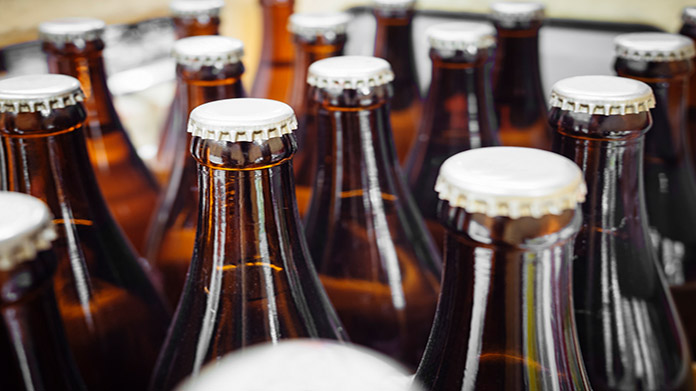
Whether for a special event, or just to wind down after a long week, Americans have always enjoyed their wine and spirits. While there are a lot of details that go into owning a liquor store, many find it to be a very rewarding career. You have an opportunity to interact with customers and sales representatives regularly and ensure you’ve made their day a little brighter.
Our guide is in 3 parts:
The capital required for start-up costs vary depending upon a number of factors. Location, staffing costs, beginning inventory, and licensing fees are all defining factors in how much you’ll need for your initial investment. BevMax requires that their investors have a minimum of $150,000 in liquid capital to open a franchise location properly. Entrepreneurs have reported start-up costs as high as $1 million for opening larger establishments.
A majority of your earnings will go back into re-stocking the store’s shelves. Investing in accounting software from the get-go will assist you in developing an efficient system for keeping up with your inventory.
Your second largest ongoing expense is payroll costs. You’ll also have annual licenses to renew, as well as insurance costs, which can be high in this line of work. A good portion of your monthly budget should go towards ongoing marketing campaigns, hopefully ensuring a steady flow of patrons.
As a rule, your preferred customer is anyone, over the age of 21, who enjoys a tasty beverage and prefers to do business with smaller, local establishments over the large retailer. Before investing in your retail space, conduct research to determine the competition in the areas you’re considering. What types of products do they sell and how successful is their business? What are the likes and dislikes of consumers in the area? This will help you determine if there’s a specific niche you should be targeting and what to stock the shelves with.
Liquor stores make money through the sale of each beverage. Some are sold by the bottle, while others are sold in greater quantity, as determined by the distributors.
Pricing varies from product to product and is defined by the size, type of alcohol, and distributor prices.
According to a recent Forbes study, liquor stores are among the top five least profitable businesses, taking home a profit of 1.7%. Owners who are able to run their own business take home an average salary of $21,000 – $51,000, depending upon size, location, and sales. At 1.7%, a store that has total sales of $500,000 realizes an annual profit of $8,500.
The following are a few strategies you can implement to ensure a more profitable liquor store business:
Offer classes, where you teach customers about specific products. Mixology classes are also a great way to pass your knowledge on to your customers.
Weekend cocktail samples give customers an opportunity to try something they might not otherwise consider. By offering these tastings on a weekend, you increase your chances of selling the product you’re promoting. Speak with the liquor distributors about these events. They can offer drink recipe suggestions and many will send out a representative to help with the tasting.
Start a wine or beer club.
Sell additional items that pair well with the products you sell. If wine is a speciality item, offer various cheese, crackers, wine glasses, etc.
Smaller liquor stores who have an attached bar and/or restaurant have also realized greater profits.
As the owner, you’ll want to be a visible part of the establishment at all times. Patrons will look to you for advice on a specific beverage, based on their personal preferences and/or event needs. In addition, you will be creating ongoing relationships with your various vendors and sales reps.
As the face of the business, there are a number of behind-the-scenes tasks you’ll need to accomplish daily. Maintaining accurate inventory, protecting your cash flow, and predicting SKU level/product demand requires careful and constant attention. Privately owned liquor stores typically realize a greater profit when structured as an owner-operator establishment. y
Strong business acumen is absolutely critical for starting and running a liquor store. Attention to detail, a knowledge of marketing and sales, accounting, operations, customer service, and human resources are all a requirement to ensure your business is even able to open its doors, much less realize long-term success. Since you’ll likely own and operate the establishment yourself, strong interpersonal skills will also prove beneficial.
There is very little ability to negotiate with distributors over pricing, as they have the monopoly on their alcohol brand. This makes competitive pricing between retailers difficult and results in a fairly low profit margin. The only way to secure significant price cuts is by investing in the purchase of large bulk orders, which presents its own set of challenges. It requires deeper pockets and additional space for storage. It’s also important that you understand consumer demand for bulk items, ensuring a timely return on investment.
To combat some of these issues, owners with a significant amount of cash flow find success by either opening a large, warehouse store, or by investing in more than one location. Franchising opportunities such as Wine & Spirits or BevMax offer entrepreneurs inside knowledge and assistance in helping an owner’s vision become a reality.
The following are some insider tips from individuals who have found success in this highly competitive industry:
Hire a knowledgeable attorney. The laws governing the handling and sale of alcohol can be quite complex. A lawyer can assist you in deciphering the language and ensuring no detail is missed.
Location, location, location. Your goal should be to open your market in an area that isn’t already saturated with competition. But, the location’s importance goes beyond that. Depending upon where you live, there could be local laws restricting the sale of liquor near churches, schools, libraries, and hospitals.
Open your liquor store near a grocery store that doesn’t sell liquor. Consumers like the efficiency of running multiple errands at once. If your shop is near the grocery store, they’re more likely to stop in.
Set your business up as an owner-operator establishment. Due to high payroll and inventory costs, this is the most effective way to ensure a profit.
Before signing on the dotted line on a building, consider contacting your local chamber of commerce. They can offer valuable insight into the demographic you’ll be serving and, in turn, how your business should be structured.
Maintain a balanced inventory at all times.
Per our insider tips, you’ll likely want to manage your liquor store yourself. The hours are long and the work is hard, however, so you will want to build a quality staff to assist you during the busy times. Due to the nature of the business, your team should consist of individuals over the age of 21. The more knowledgeable staff you have, the better customer service your store will provide. Many liquor store owners hire employees who have been of legal age for some time and had the opportunity to build knowledge on your store’s various offerings.
Business Evaluation & Strategy Tool
We'll walk you through the four pillars every business needs: Points of Leverage, Marketing Strategy, Financial Model, and Personal Compatibility. At the end you'll see a personalized report and your action plan below will be tailored to your answers.
Every viable business has natural advantages. Below are common leverage points across four categories. Pick the ones that apply to your Liquor Store business. We've pre-suggested a few based on your idea — review and adjust.
Without a way to connect with customers, even great businesses fail. Pick the channels you plan to use to reach your customers.
Enter your monthly baseline costs — the minimum overhead to keep the business running. Then we'll calculate how many sales per month you need to break even.
A business that doesn't fit your life will fail no matter how good the numbers look. Tell us how this business fits you.
Complete the four pillars and your personalized summary will appear here.
Nine concrete steps to take you from idea to open business, grouped into 30-day phases. Complete the planner above and we'll highlight what's most important for your situation.
An LLC keeps your personal assets separate from business debts and lawsuits — the most common reason small business owners choose this structure. Sole proprietorships and partnerships do not provide this protection.
Apply for your free Employer Identification Number through the IRS, then register for any state or local taxes that apply to your business (sales tax, franchise tax).
A dedicated business account is required to maintain personal asset protection. Mixing personal and business finances ('piercing the corporate veil') can void your LLC's liability shield.
Recording expenses and income from day one makes tax filing easier and lets you see when the business is actually profitable. Use software (QuickBooks, Wave) or a part-time bookkeeper.
State and local requirements vary widely. Brick-and-mortar businesses typically need a Certificate of Occupancy; service businesses may need specific professional licensing; food businesses need health permits.
General Liability Insurance is the most common starting point. If you'll have employees, most states require Workers' Compensation. Specific industries need additional coverage (product liability, professional liability, etc.).
Your brand is how customers perceive and remember you. A clear name, logo, and visual identity make every later marketing decision easier and protect you legally as you grow.
Every legitimate business needs a website. Social media pages are not a substitute — you don't own the platform. Modern website builders mean you can launch a clean site in a weekend without a developer.
A dedicated business number keeps your personal life private, makes the business look legitimate, and lets you route calls professionally. Cloud phone services start under $20/month.
Starting a Liquor Store business typically costs $1,000,000. It is considered a very high capital-intensity business.
A Liquor Store business runs roughly a 6% net profit margin, and most owners reach break-even in about 18 to 36 months.
You can usually launch a Liquor Store business in about 12 to 36 weeks, and it is commonly run full time.
A Liquor Store business is generally an intermediate-skill business to start, with stable demand. TRUiC rates it 31 out of 100 on our Idea Score.
Most Liquor Store businesses register as an LLC or other legal entity and obtain a general business license. Depending on your state and city you may also need industry-specific permits, sales tax registration, and zoning or health approvals, so check your local requirements before you launch.