Startup cost
$50k–$200k
TRUiC Business Ideas
Decision Snapshot
Idea Score
66
Startup cost
$50k–$200k
Profit margin
35%
Break-even
4 mo–12 mo
Time to launch
2 wk–8 wk
Demand trend
Stable
5-yr failure rate
—
Capital intensity
High
Time commitment
Full time
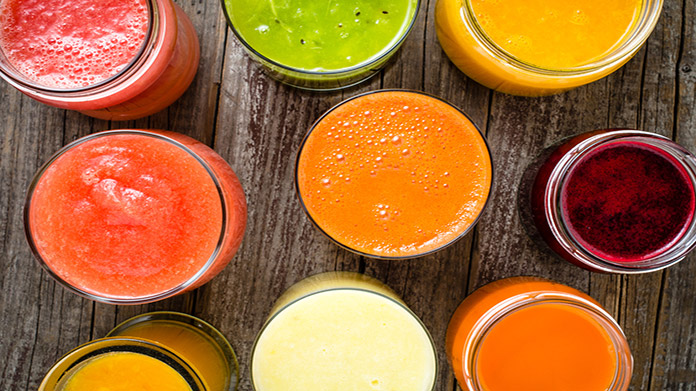
A juice bar uses fresh ingredients to prepare smoothies and a wide variety of juice drinks. Many juice bars also offer other types of health food products and some provide seating for their customers to enable them to socialize while enjoying their products.
Our guide is in 3 parts:
Opening a juice bar business can be done with less than $10,000 including the necessary business licenses, permits and insurance. The cost depends on whether your juice bar will be a part of another business such as a fitness center, or whether it will be a stand-alone store. You will need to rent space that includes a sink for washing and preparing the fruits and vegetables. The cost for a basic juicer is approximately $100, while cold-press machines cost about $300. Vegetable juicers are more expensive, starting at $2,400. You will also need a supply of cups, preferably biodegradable, which, if ordered in bulk, can cost less than twelve cents each. Straws are also a staple item at most juice shops.
Read our juice bar purchasing guide to learn about the materials and equipment you’ll need to start a juice bar, how much to budget, and where to make purchases.
Rent for retail space
Utilities
Cost of Ingredients
Staff salaries
Equipment maintenance
POS/ Inventory software service
Preferred clients include health conscious people with a desire to increase their energy levels.
A juice bar business makes money by charging customers for fresh, quality juice-based beverages. Pricing depends on the ingredients, time, skill, and expertise it takes to purchase and prepare these drinks. Many juice bars partner with health food stores to provide other healthy food products as well.
Most juice bar owners try to keep the cost of ingredients down to about 30 percent of the retail price to be able to cover ongoing expenses and realize a profit. A juice drink containing several ingredients can cost anywhere from $6.00 to $16.00, depending on the cost of ingredients and the local economy. Organic ingredients command a higher price.
Well-established, successful juice bar businesses have reported profit margins from 30% to 40%.
Adding extra healthful ingredients such as bee pollen or spirulina for an additional charge can increase profits. Providing healthy foods, such as salads, which are made from the raw ingredients of your juicing products can also be lucrative. Some juice bar owners also contract with local event coordinators to provide food and beverages for community and sporting events.
Some of the daily activities of a juice bar business owner include purchasing ingredients, developing new recipes, pricing drinks, updating your menu, training new staff, and of course keeping your books up to date.
You will also want to set aside time for promoting your business.
This business also requires a wide knowledge of fruits and vegetables, including which are in season and when, their nutritional value, and taste combinations. Communication skills are essential since you will be working with vendors, employees, and customers on a daily basis. Negotiation skills are also in high demand in this business, since produce must be purchased daily to maintain freshness.
Jamba Juice, one of the most well-known juice bars, earned 62.35 million in revenue in the first three quarters of 2016, of which 26.335 million was profit. The store boasts 800 locations in 26 states as well as several international locations. Of those locations, approximately 287 are company-owned, while about 517 are franchise-operated.
It’s important to build a team of vendors and trained staff before opening your juice bar for business. The success of your business will depend on your ability to provide fresh ingredients that are prepared and served by skilled and personable staff.
Business Evaluation & Strategy Tool
We'll walk you through the four pillars every business needs: Points of Leverage, Marketing Strategy, Financial Model, and Personal Compatibility. At the end you'll see a personalized report and your action plan below will be tailored to your answers.
Every viable business has natural advantages. Below are common leverage points across four categories. Pick the ones that apply to your Juice Bar business. We've pre-suggested a few based on your idea — review and adjust.
Without a way to connect with customers, even great businesses fail. Pick the channels you plan to use to reach your customers.
Enter your monthly baseline costs — the minimum overhead to keep the business running. Then we'll calculate how many sales per month you need to break even.
A business that doesn't fit your life will fail no matter how good the numbers look. Tell us how this business fits you.
Complete the four pillars and your personalized summary will appear here.
Nine concrete steps to take you from idea to open business, grouped into 30-day phases. Complete the planner above and we'll highlight what's most important for your situation.
An LLC keeps your personal assets separate from business debts and lawsuits — the most common reason small business owners choose this structure. Sole proprietorships and partnerships do not provide this protection.
Apply for your free Employer Identification Number through the IRS, then register for any state or local taxes that apply to your business (sales tax, franchise tax).
A dedicated business account is required to maintain personal asset protection. Mixing personal and business finances ('piercing the corporate veil') can void your LLC's liability shield.
Recording expenses and income from day one makes tax filing easier and lets you see when the business is actually profitable. Use software (QuickBooks, Wave) or a part-time bookkeeper.
State and local requirements vary widely. Brick-and-mortar businesses typically need a Certificate of Occupancy; service businesses may need specific professional licensing; food businesses need health permits.
General Liability Insurance is the most common starting point. If you'll have employees, most states require Workers' Compensation. Specific industries need additional coverage (product liability, professional liability, etc.).
Your brand is how customers perceive and remember you. A clear name, logo, and visual identity make every later marketing decision easier and protect you legally as you grow.
Every legitimate business needs a website. Social media pages are not a substitute — you don't own the platform. Modern website builders mean you can launch a clean site in a weekend without a developer.
A dedicated business number keeps your personal life private, makes the business look legitimate, and lets you route calls professionally. Cloud phone services start under $20/month.
Starting a Juice Bar business typically costs $50,000 to $200,000. It is considered a high capital-intensity business.
A Juice Bar business runs roughly a 35% net profit margin, and most owners reach break-even in about 4 to 12 months.
You can usually launch a Juice Bar business in about 2 to 8 weeks, and it is commonly run full time.
A Juice Bar business is generally an intermediate-skill business to start, with stable demand. TRUiC rates it 66 out of 100 on our Idea Score.
Most Juice Bar businesses register as an LLC or other legal entity and obtain a general business license. Depending on your state and city you may also need industry-specific permits, sales tax registration, and zoning or health approvals, so check your local requirements before you launch.