Startup cost
$5k–$10k
TRUiC Business Ideas
Decision Snapshot
Idea Score
57
Startup cost
$5k–$10k
Profit margin
6%
Break-even
18 mo–36 mo
Time to launch
12 wk–36 wk
Demand trend
Rising
5-yr failure rate
—
Capital intensity
Medium
Time commitment
Full time
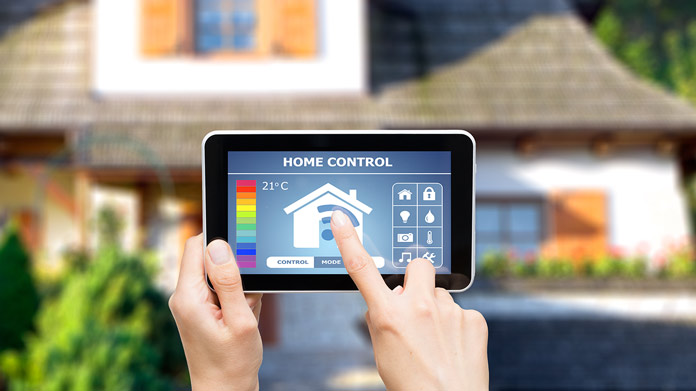
Starting a home automation business can be an exciting and rewarding business venture for entrepreneurs who are passionate about technology and implementing it into everyday living spaces to enhance convenience, security, and energy efficiency.
Having said that, you should keep in mind that launching a successful home automation business requires a thorough understanding of both the technology involved and the needs of the residential market.
In this comprehensive guide, we’ll walk you through all the essential steps you’ll need to take to start your own home automation business, from developing a business plan and sourcing high-quality technology to building a client base and getting licensed.
Our guide is in 3 parts:
The already massive home automation market, which was valued at approximately $57.67 billion in 2024, is projected to continue its expansion at a healthy compound annual growth rate (CAGR) of 5.00% until reaching $73.49 billion in 2029.
These systems became popular in the first place due to their ability to allow homeowners to monitor and control their energy usage remotely; by helping users to save money while being more sustainable, they’ve established themselves as valuable tools for modern households.
However, the gradual decline in the cost of these systems due to technological advancements is thought to be one of the primary drivers of the industry’s recent growth, as they’re gradually becoming more accessible to the general population.
Overall, the rapid expansion of the home automation industry is a positive sign for entrepreneurs considering entering the market — particularly since third-party distributors, such as retailers and system installers — are expected to hold a dominant market share by 2029 due to the established networks and market relationships they possess.
With that being said, getting started in this industry comes with its fair share of challenges. On top of needing large amounts of capital upfront, new entrants must also compete with both large tech giants and specialized automation companies with strong brand recognition in this already saturated market.
In order to succeed, new entrants should look for ways to differentiate themselves, whether this is by providing unique features, superior customer service, or competitive pricing.
If you’re considering whether a home automation business is right for you, the first thing you’ll need to know is whether it’s a) affordable, and b) worth the investment. I mean, how much can you actually make running your own home automation business?
Well, it depends, and the initial investment for a home automation business varies widely based on factors such as the size of your initial inventory, range of services you offer, and how big your service area is:
Equipment and Installation Tools: Since many home automation businesses operate under a primarily online and service-based model — and not from a brick-and-mortar store — they can avoid spending significant amounts of capital upfront on a large inventory and storage space. Instead, with a budget of between $5,000 and $10,000 you could maintain a small supply of high-demand items (such as network cables, connectors, basic sensors, and controllers) for quick access and purchase any extra equipment you may need for customer orders on-demand.
Insurance and Permits: In order to ensure both you and your clients are protected, you’ll want to invest in a number of different types of coverage for full protection, such as general liability, workers’ compensation, and E&O insurance. Overall, you could expect to easily be required to pay anywhere from $3,000 to $7,000 on your first year of coverage. Additionally, if you plan to fit these systems yourself, you’ll also likely need to obtain electrical or low-voltage installation permits to comply with local regulations, which vary greatly in cost by jurisdiction.
Employee Salaries: Even if you only plan to run a small operation, skilled technicians will be essential for a home automation business, as they’ll handle complex installations and troubleshooting. Salaries for experienced technicians in this field can range widely, but you should expect to pay between $40,000 and $60,000 annually for a full-time technician. However, if you’re just starting out and are looking to minimize costs, it might be a good idea to hire on a project-by-project basis — just know that as your client base grows, so will the need for full-time staff.
It’s important to remember that these estimated costs are based on the assumption that you won’t be running your business out of a brick-and-mortar store. However, if you do decide to follow this route, both your initial and ongoing costs will be much higher.
Once established, home automation businesses have the potential to generate substantial revenue, especially given the high price range of these products.
With basic systems tending to start at around $2,000 and more advanced, fully integrated setups reaching up to $15,000 or more, new home automation businesses can comfortably make between $50,000 and $150,000 profit in their first year, depending on their location and the specific services they offer.
In order to avoid competing against industry giants with far more resources, sophisticated R&D, and supply chains, many smaller businesses choose to instead focus on retail and installing the existing high-quality systems of these established brands as a key source of revenue.
While building and selling your own product line may sound appealing, it’s a challenging and capital-intensive route — by instead acting as an installer, you’re still able to take advantage of your industry knowledge, just without the financial risks and demands associated with manufacturing.
However, even if you follow this business model, the home automation field isn’t without its challenges. One of the most notable issues is the still-evolving nature of this technology, which still isn’t yet fully reliable and can occasionally experience software failures, even in high-end systems.
This can cause a significant problem for your business as — due to the premium prices these products command — many clients are understandably frustrated when they don’t run seamlessly, even though this is a level of reliability that’s often out of your control as it falls back on the technology’s inherent limitations.
Another key issue is the long-term sustainability of the business model as an installer. While new installations will bring steady revenue at first, once the local market becomes saturated and installation work slows, your business will shift toward support calls and troubleshooting — which can cut into profits.
As a result, figuring out how to maintain high profitability once the initial wave of installations slows down is a significant challenge you’ll need to figure out how to overcome.
The target market for a home automation business includes tech-savvy homeowners looking for convenience, enhanced security, and energy efficiency.
This also extends to property managers, real estate developers, and small businesses interested in modernizing their spaces. Customization and service quality are particularly appealing to clients seeking tailored automation solutions.
Home automation systems can range widely in price depending on customization and complexity. Basic installations start around $2,000, while high-end, fully integrated systems can cost up to $15,000 or more.
These prices reflect the expertise, quality of equipment, and level of integration required for each client’s unique needs.
Annual profits for a home automation business typically range from $50,000 to $150,000, based on location, market demand, and the services offered.
Businesses that focus on high-end, customized systems often see higher margins, particularly if they specialize in installation and support services for established, quality brands.
To improve profitability, focus on offering maintenance plans, upselling additional features, and targeting premium, high-margin products. Expanding services to include system upgrades or regular support contracts can create steady revenue streams.
Maintaining strong client relationships and building a reputation for quality service also helps boost profitability through referrals and repeat business.
Business Evaluation & Strategy Tool
We'll walk you through the four pillars every business needs: Points of Leverage, Marketing Strategy, Financial Model, and Personal Compatibility. At the end you'll see a personalized report and your action plan below will be tailored to your answers.
Every viable business has natural advantages. Below are common leverage points across four categories. Pick the ones that apply to your Home Automation business. We've pre-suggested a few based on your idea — review and adjust.
Without a way to connect with customers, even great businesses fail. Pick the channels you plan to use to reach your customers.
Enter your monthly baseline costs — the minimum overhead to keep the business running. Then we'll calculate how many sales per month you need to break even.
A business that doesn't fit your life will fail no matter how good the numbers look. Tell us how this business fits you.
Complete the four pillars and your personalized summary will appear here.
Nine concrete steps to take you from idea to open business, grouped into 30-day phases. Complete the planner above and we'll highlight what's most important for your situation.
An LLC keeps your personal assets separate from business debts and lawsuits — the most common reason small business owners choose this structure. Sole proprietorships and partnerships do not provide this protection.
Apply for your free Employer Identification Number through the IRS, then register for any state or local taxes that apply to your business (sales tax, franchise tax).
A dedicated business account is required to maintain personal asset protection. Mixing personal and business finances ('piercing the corporate veil') can void your LLC's liability shield.
Recording expenses and income from day one makes tax filing easier and lets you see when the business is actually profitable. Use software (QuickBooks, Wave) or a part-time bookkeeper.
State and local requirements vary widely. Brick-and-mortar businesses typically need a Certificate of Occupancy; service businesses may need specific professional licensing; food businesses need health permits.
General Liability Insurance is the most common starting point. If you'll have employees, most states require Workers' Compensation. Specific industries need additional coverage (product liability, professional liability, etc.).
Your brand is how customers perceive and remember you. A clear name, logo, and visual identity make every later marketing decision easier and protect you legally as you grow.
Every legitimate business needs a website. Social media pages are not a substitute — you don't own the platform. Modern website builders mean you can launch a clean site in a weekend without a developer.
A dedicated business number keeps your personal life private, makes the business look legitimate, and lets you route calls professionally. Cloud phone services start under $20/month.
Starting a Home Automation business typically costs $5,000 to $10,000. It is considered a medium capital-intensity business.
A Home Automation business runs roughly a 6% net profit margin, and most owners reach break-even in about 18 to 36 months.
You can usually launch a Home Automation business in about 12 to 36 weeks, and it is commonly run full time.
A Home Automation business is generally an intermediate-skill business to start, with rising demand. TRUiC rates it 57 out of 100 on our Idea Score.
Most Home Automation businesses register as an LLC or other legal entity and obtain a general business license. Depending on your state and city you may also need industry-specific permits, sales tax registration, and zoning or health approvals, so check your local requirements before you launch.