Startup cost
$75k–$250k
TRUiC Business Ideas
Decision Snapshot
Idea Score
63
Startup cost
$75k–$250k
Profit margin
27%
Break-even
18 mo–36 mo
Time to launch
2 wk–12 wk
Demand trend
Stable
5-yr failure rate
—
Capital intensity
Very high
Time commitment
Full time
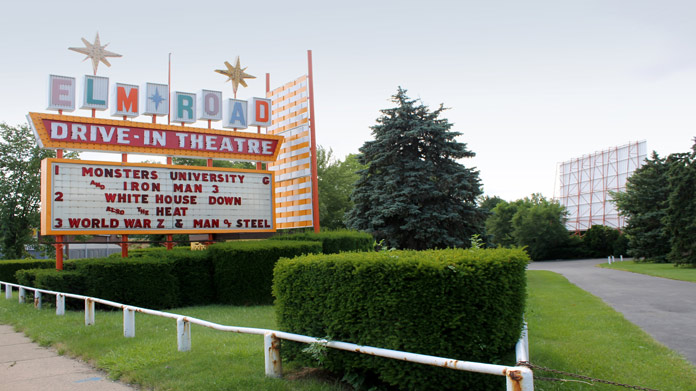
Drive-ins are finding a resurgence in some markets that target their film selection and menu to older customers who look to relive their childhood. You may have a playground, arcade, and concession stand to improve your customer experience. Sound is broadcast over radio waves and received by each car’s stereo system where they can control the volume.
Our guide is in 3 parts:
You will need about 10 to 14 acres of land ready to be developed or you may find an abandoned drive-in up for sale. You won’t be able to use old projection equipment, as the industry switched to a digital platform in the last decade. Expect to invest between $250,000 and a million to develop the property including building a projection house, concession stand, sound system, and playground.
How many acres do I need to lease or buy? The typical drive-in theater requires between 10-14 acres of land. This should allow up to 500 cars to park at your theater. You will also need to consider the space required to funnel cars off the road and through the box office. Some localities have zoning requirements in place to prevent traffic from building up along the road or highway leading into the theater.
What kind of projector do I need? Because most film studios have begun releasing movies exclusively in digital format, digital projectors have become essential to successful drive-in theaters. This will be one of your larger expenses, as digital projectors typically cost between $75,000 and $150,000 per screen and must be professionally installed and calibrated. Barco, Christie, and NEC are the three main cinema projector manufacturers today. Because not all old movies are available in digital format, if you plan to show classic movies you may also want to purchase a 35mm projector. You can often find these used.
How much is a projector screen? A quality projector screen for your drive-in theater can cost anywhere from $50,000 to $250,000 depending on your area and the specific local requirements. Most screens are made of steel and anchored in concrete. You will generally need to have a screen professionally constructed and installed to meet wind-load requirements.
How do I get an FM station to play the audio? The most common way to handle audio in a drive-in theater is use of an FM radio transmitter. To use this system you must select an FM frequency not in use and plug your FM transmitter into your projector’s audio output. This allows you to deliver film audio to patrons through their car radios. You will also need to have a supply of portable radios to rent out to those unable to receive sound through their car radios. You will need a different radio frequency for each screen. To remain FCC compliant, you will need to purchase a Part 15 FM transmitter.
Your payroll will be a major expenditure. Film rentals are a controllable expense as you can opt for second run flicks at a much lower rate. You will be placing weekly orders for concession supplies. Lot maintenance will also take up a large chunk of your expense spreadsheet.
How much does it cost to license a new film? The cost to license a new film will vary from film to film. The licensing fee is typically paid as a percentage of total ticket sales, with a minimum flat fee required. It will typically be around 50%, but big name new releases will often fall on the higher end during opening days or weeks with the fee gradually reducing over the life of the theater run.
How much does it cost to license a classic film? The cost to license a classic film will also vary depending on the specific movie, but will generally be lower than new releases. Second-run and classic movies can be a good option for drive-in theaters as they are often easier to obtain than new releases. However, you must take into account the level of demand in your area and how profitable older movies will be, even in the face of lower licensing fees.
How do I get the license to show films? Movie theaters obtain licenses to show films through film distributors. Because this process can be complex, it’s best to hire a booking agent to assist you in the early days of running your theater. Over time, you may choose to take this responsibility on yourself. As a small theater, booking new releases can be difficult. This is because many studios place specific requirements on leasing their films to theaters. Often, a new release will only be leased to a theater that can play the film seven days a week. If your drive-in is not open every day or has only one screen, it can be difficult to meet these requirements. Additionally, if you are located in close proximity to an indoor theater, these theaters will typically get priority because they can run the films day and night.
Your preferred customers will be someone looking for an old fashioned moviegoing experience. Drive-in movies reached peak popularity in the 1950s and 1960s. Therefore, many of your customers will be seeking a sense of nostalgia for entertainment in those times. Tailoring the theme of your theater and decor to such a historical period can help satisfy the wants and needs of your customers.
You bring in income by selling tickets to your films and through the sales of concession products. Most of your profit is generated through food and drink sales as film distributors take a serious portion of ticket sales for new films.
How would I manage ticket sales? Your specific box office set up will depend on your location. You may choose to sell from a single window or set up several entry lanes to manage more traffic. Some theaters even utilize carhops to come window to window selling tickets. Although many older theaters maintain a cash-only system, today many film distribution companies require electronic sales to accurately record ticket sales and revenue.
Do I charge by vehicle, or by person? Movie studios require a per person admission price for new movies. However, you may consider holding per car specials on classic movie runs during slow periods.
The average ticket price per person is about $10 a piece, with discounted rates for children and seniors. You may wish to offer a car-load price of $30 to $40. Concession items will be sold for a price of between $4 and $10. If you are offering alcohol and a full menu, expect to be charging $12-$20.
Can you set up deals with local restaurants to deliver to parked cars? Although it may be possible to set up an agreement with local restaurants to service your movie goers, it may not be cost-effective. Because concessions will make up such a large portion of your theater profits, it can be counter productive to give such a large share of these profits to outside businesses.
You may be making as little as 10% of each ticket sold when you are showing new releases during the summer blockbuster season. Concession items offer profit of 50 to 80%, but your operational expenses will eat into all those extra dollars. If you are selling out all season long, you could see a total profit of $100,000 to $150,000.
The key to success is filling up your drive-in every time you open the gates. Running obscure or old movies that don’t bring in customers might be fun, but not profitable. New trends for the movie industry focus on offering premium services for regular customers over offering bargain tickets to increase the profit for every carload that buys admission.
When your operate your drive-in movie theater, on any given day you might need to:
Sell tickets and admissions to your patrons
Work with distribution companies to book upcoming movies
Load and program film files into your digital projectors
Preview films to ensure proper presentation
Clean and maintain concession equipment
Hire your parking and concession staff
Clean and maintain the property after each show
Ensure customer satisfaction through patrolling of the entire property during the show
Update websites to provide ticket times and prices
Operate the projectors during each presentation
Order supplies for concession stand/cleaning equipment
Maintain attractive landscaping
Attend trade screenings to learn about upcoming films
Knowledge of film history and emerging film trends will help you select movies that your audience will appreciate. If you play movies that do not attract customers, the you will lose the money you spent to play that movie. Being able to read trends in order to predict which films will be successful will help you present movies that will be popular among your customers, maximizing your profits and success. Taking film production or film history classes can help you develop the skills needed to make these predictions.
On the other hand, you will also need to perform the administrative tasks of this business. The entertainment industry can be a confusing industry to work with, so it is important that you familiarize yourself with licensing requirements that will affect your ability to play certain movies. Taking classes in business or entertainment law can help you gain the knowledge needed to more easily navigate your way in the entertainment industry.
How do I manage the concessions? Concession sales are the heart of the movie theater business. Because of high licensing fees, most movie theaters make the bulk of their profit selling concessions. For this reason, you’ll want to put a great deal of effort into this aspect of your theater. Handling food service during the small window before the movie starts can be a difficult balance. Consider what food and drinks you plan to serve and how long each customer turnaround will take. Although popcorn and soda are the two highest yield concessions, having a few other unique offerings can make your theater stand out.
To properly run your concession stand you’ll need an area to store and prepare food and a serving area. You’ll need to consider how your food will be prepared, how much space is needed for preparation, and what equipment is required.
The drive-in movie theatre model is in survival mode as customers turn to their home theaters more often to catch a flick. When you provide an experience that cannot be duplicated anywhere else, your drive-in can become a local sensation that will remain open for years to come. Each location will fill a unique need for their local community.
Do I need to be connected to a traditional theater? No. Most drive-in theaters are not affiliated with major traditional theater chains.
How do I plan for the winter months? The seasonal effects on your theater will depend on where you are located. Many drive-in theaters in warmer climates remain open year round. Even those in cooler places can find ways to stay open. If you do not plan to stay open in the colder months you will need to have a solid financial plan in place to cover ongoing expenses involved in maintaining your property and effective marketing to get your theater back up and running in the spring or summer.
Would it be smarter to find a franchise opportunity? Because the cost to build a drive-in theater from scratch can be very high, purchasing a franchise or acquiring a current or recently closed theater can be a much more cost-effective way to get into this business. By choosing to open a franchise you are also given the additional benefit of existing relationships with film distributors and ongoing concession product deals.
Build your business plan with the understanding that you may be running a seasonal business. Drive-ins operate generally between April and October in northern locations, as the costs of removing snow and weather make operating in the winter exorbitant. Think about other ways to use your property during the daytime such as classic car shows, flea markets or running charitable events for schools and community organizations. Join organizations such as North American Theater Owners to expand your contacts with distributors and vendors.
Is it better to pave the parking lot? Having a paved space for your drive-in theater is preferable for a number of reasons. Not only will it hold up much better to the constant traffic and the elements, it will also reduce dirt, dust, and mud accumulation. Some localities require paved surfaces. Be sure to check with your local zoning authorities to see what is required.
How large does the screen need to be? Modern movies are produced in two different aspect ratios: widescreen/flat (1.85:1) and scope (2.39:1). Because drive-in theaters do not have moveable screen masking to adjust by film the way indoor theaters do, you will want to build a screen somewhere between these two ratios. Many drive-in theaters use a ratio between 2.0:1 and 2.2:1. A typical drive-in screen is between 50 and 100 feet wide. Once you’ve chosen your width you will base the height on your chosen dimensions.
Screen height is also important. A drive-in screen should be at least 15 feet from the ground depending on the lay of your land. Watching drive-in movies from the back of an SUV with its rear hatch open has become very common. This modern development requires higher screen heights to allow an unobstructed view.
Do I need to have angled parking in the lot? Achieving the correct parking angle to allow all patrons to have a clear view of your screen is an essential aspect of constructing a drive-in theater. To do so, ramps are almost always required. To determine how to construct the ramps you will need to understand what angle the cars across your space will need to be at in order for the screen to be in view for both front and rear seat passengers. This will depend on the natural slope of your land and the distance between the car and the screen. Building ramps is another major drive-in start-up expense.
About six weeks before you open, you will need to be in the process of hiring and training your projectionists, managers, and concession and lot attendants. You will want to line up a landscape and lot maintenance company and ensure you have technical support available for your projectors and business computers. You will have had to contact your film distributors six months ahead of time to ensure that you are in the pipeline to receive the blockbusters for your first customers.
How many staff do I need to hire? At a bare minimum, you will need to have employees to sell tickets and concessions, provide security, run the projector, and clean up after each showing. The exact size of your staff will depend on the number of patrons you host and the overall size of your operation.
Business Evaluation & Strategy Tool
We'll walk you through the four pillars every business needs: Points of Leverage, Marketing Strategy, Financial Model, and Personal Compatibility. At the end you'll see a personalized report and your action plan below will be tailored to your answers.
Every viable business has natural advantages. Below are common leverage points across four categories. Pick the ones that apply to your Drive In Movie business. We've pre-suggested a few based on your idea — review and adjust.
Without a way to connect with customers, even great businesses fail. Pick the channels you plan to use to reach your customers.
Enter your monthly baseline costs — the minimum overhead to keep the business running. Then we'll calculate how many sales per month you need to break even.
A business that doesn't fit your life will fail no matter how good the numbers look. Tell us how this business fits you.
Complete the four pillars and your personalized summary will appear here.
Nine concrete steps to take you from idea to open business, grouped into 30-day phases. Complete the planner above and we'll highlight what's most important for your situation.
An LLC keeps your personal assets separate from business debts and lawsuits — the most common reason small business owners choose this structure. Sole proprietorships and partnerships do not provide this protection.
Apply for your free Employer Identification Number through the IRS, then register for any state or local taxes that apply to your business (sales tax, franchise tax).
A dedicated business account is required to maintain personal asset protection. Mixing personal and business finances ('piercing the corporate veil') can void your LLC's liability shield.
Recording expenses and income from day one makes tax filing easier and lets you see when the business is actually profitable. Use software (QuickBooks, Wave) or a part-time bookkeeper.
State and local requirements vary widely. Brick-and-mortar businesses typically need a Certificate of Occupancy; service businesses may need specific professional licensing; food businesses need health permits.
General Liability Insurance is the most common starting point. If you'll have employees, most states require Workers' Compensation. Specific industries need additional coverage (product liability, professional liability, etc.).
Your brand is how customers perceive and remember you. A clear name, logo, and visual identity make every later marketing decision easier and protect you legally as you grow.
Every legitimate business needs a website. Social media pages are not a substitute — you don't own the platform. Modern website builders mean you can launch a clean site in a weekend without a developer.
A dedicated business number keeps your personal life private, makes the business look legitimate, and lets you route calls professionally. Cloud phone services start under $20/month.
Starting a Drive In Movie business typically costs $75,000 to $250,000. It is considered a very high capital-intensity business.
A Drive In Movie business runs roughly a 27% net profit margin, and most owners reach break-even in about 18 to 36 months.
You can usually launch a Drive In Movie business in about 2 to 12 weeks, and it is commonly run full time.
A Drive In Movie business is generally an intermediate-skill business to start, with stable demand. TRUiC rates it 63 out of 100 on our Idea Score.
Most Drive In Movie businesses register as an LLC or other legal entity and obtain a general business license. Depending on your state and city you may also need industry-specific permits, sales tax registration, and zoning or health approvals, so check your local requirements before you launch.