Startup cost
$275k
TRUiC Business Ideas
Decision Snapshot
Idea Score
40
Startup cost
$275k
Profit margin
6%
Break-even
18 mo–36 mo
Time to launch
12 wk–36 wk
Demand trend
Stable
5-yr failure rate
—
Capital intensity
Very high
Time commitment
Full time
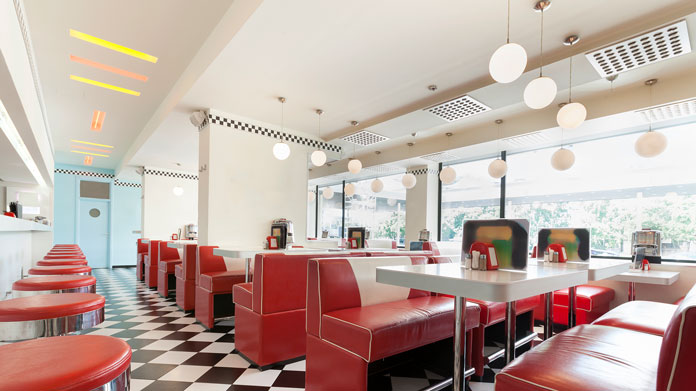
Diners are general watering holes for locals, so they have the potential to become mainstays in any given town. Restaurant owners can distinguish themselves by a variety of factors: speed, quality of service, price, restaurant theme and menu items. Successful diners are known for giving fast, friendly service.
Our guide is in 3 parts:
Average start-up costs to open up a restaurant are around $275,000 if you rent, and $425,000 if you buy the building. These fees should include everything, such as kitchen appliances and technology for the building.For further context (when you need to replace items), an industrial fryer will cost around $700, and an average table and chair set will run around $250.
You or the landlord of the building will also need to obtain a Certificate of Occupancy, which states the building is up to code. Your employees and customers will need protection against injury, as slips and burns are common in restaurants. You’ll need OSHA compliant workers’ compensation for employees and safety signage for customers.
If you choose to open up a franchise, such as a 5 and Diner (a 50s themed diner), you’ll need $250,000 in liquid assets and $750,000 net worth (e.g., real estate holdings).
Any diner will have a variety of ongoing expenses:
Server salaries
Equipment maintenance and replacement
Cost of food
Marketing
Administrative items (e.g., computers, office supplies)
An ideal customer is someone who lives in the area, and one who is likely to establish a good rapport with the serving staff. Once a person has positive associations with the diner, they are more likely to bring their friends and to return again and again. Casual eateries are generally profitable only when they’re able to establish a good foundation of ‘regulars.’
Diners make money by charging people for food with a profit margin. The cost of the food items must cover rent, equipment, staff salaries, and restaurant fixtures. Restaurants have some of the highest overhead of any business, so diners may operate at a deficit for many months before starting to see profit.
The standard formula for restaurants is to total the cost of the raw ingredients, and then multiply that by at least 3 to determine the listed menu price. However, each business will be influenced on where they are and who their clientele is. You will need to determine a profitable margin based on your rent price, staff wages, and equipment costs. However, you may also want to check out your competitors’ prices in the area before setting the final dollar amount.
Profits are dependent on the amount of sales they make in any given day. The profit margins are typically only about 5 to 6% though, so there needs to be a high volume before restaurant owners start seeing major profit. If your restaurant does $500,000 in sales in a year, then your profit would be $27,500.
The best thing an owner can do is determine what people are willing to pay a premium for, whether that’s healthy but delicious food or a trendy new flavor that everyone’s talking about. Even diners can get a little fancy to keep their customers. There’s also the possibility of branching out into merchandising (e.g., T-shirts, hats) or by setting up stands and selling prepared foods at farmer’s markets for further promotion.
Owners may find a general day consisting of the following tasks:
Hiring and managing employees
Overseeing the cooking process
Designating and coordinating shifts for all staff
Ordering inventory and food supplies
Performing inspections to ensure quality and cleanliness
Preparing budgets
Building and equipment maintenance
Testing and experimenting with new menu items
The best skills an owner can have is being a good multi-tasker. Most tasks on a to-do list may seem simple, but put all of it together and it’s a time-management puzzle that not everyone can solve. You should also be good at reading people and understanding what they want. When diners have legitimate complaints, listening and negotiating skills will become critical to staying in business.
Diners aren’t generally known for being large restaurants, though there are exceptions to this rule. A diner may expand in terms of physical space (e.g., buying the building next door and expanding the seating area), or they may become a franchise. Should your diner become extremely popular, with long wait times and enthusiastic prospective customers, then it’s recommended you open another location to accommodate the demand.
You may also wish to start a franchise. For example, popular chains like Denny’s or Ruby’s allow owners to use their name and menu to establish a business. The name recognition and built-in advertising can give owners a leg-up when it comes to getting their first customers.
More than anything else, a diner needs to be consistent if it hopes for success. While no business is perfect, uneven service, food quality, or restaurant cleanliness will quickly turn customers off. If people see Yelp reviews that are sometimes good and sometimes bad, they may feel uncomfortable taking a chance. An owner cannot survive in the competitive restaurant world without watching every detail.
You also need to be smart about spending. Look for deals and sales whenever you can. Restaurants that have gone out of business are a good way to pick up perfectly functional equipment at a deep discount. Many owners will overspend before even opening the doors on everything from Facebook ads to redecorating, only to find their sales don’t support the initial enthusiasm.
The best time to build a team is at the very beginning, before the diner opens. Once the diner becomes popular, it will be difficult to hire and fire simply due to time constraints. Staff turnover often has a more significant impact on profits than owners think. Between trying to fill in the absent person’s shifts and training new people, there’s a lot of potential for major mistakes. While a certain amount of this is unavoidable in a business like a diner, you should really be looking for people who are willing to stick with the organization to make it a success.
Business Evaluation & Strategy Tool
We'll walk you through the four pillars every business needs: Points of Leverage, Marketing Strategy, Financial Model, and Personal Compatibility. At the end you'll see a personalized report and your action plan below will be tailored to your answers.
Every viable business has natural advantages. Below are common leverage points across four categories. Pick the ones that apply to your Diner business. We've pre-suggested a few based on your idea — review and adjust.
Without a way to connect with customers, even great businesses fail. Pick the channels you plan to use to reach your customers.
Enter your monthly baseline costs — the minimum overhead to keep the business running. Then we'll calculate how many sales per month you need to break even.
A business that doesn't fit your life will fail no matter how good the numbers look. Tell us how this business fits you.
Complete the four pillars and your personalized summary will appear here.
Nine concrete steps to take you from idea to open business, grouped into 30-day phases. Complete the planner above and we'll highlight what's most important for your situation.
An LLC keeps your personal assets separate from business debts and lawsuits — the most common reason small business owners choose this structure. Sole proprietorships and partnerships do not provide this protection.
Apply for your free Employer Identification Number through the IRS, then register for any state or local taxes that apply to your business (sales tax, franchise tax).
A dedicated business account is required to maintain personal asset protection. Mixing personal and business finances ('piercing the corporate veil') can void your LLC's liability shield.
Recording expenses and income from day one makes tax filing easier and lets you see when the business is actually profitable. Use software (QuickBooks, Wave) or a part-time bookkeeper.
State and local requirements vary widely. Brick-and-mortar businesses typically need a Certificate of Occupancy; service businesses may need specific professional licensing; food businesses need health permits.
General Liability Insurance is the most common starting point. If you'll have employees, most states require Workers' Compensation. Specific industries need additional coverage (product liability, professional liability, etc.).
Your brand is how customers perceive and remember you. A clear name, logo, and visual identity make every later marketing decision easier and protect you legally as you grow.
Every legitimate business needs a website. Social media pages are not a substitute — you don't own the platform. Modern website builders mean you can launch a clean site in a weekend without a developer.
A dedicated business number keeps your personal life private, makes the business look legitimate, and lets you route calls professionally. Cloud phone services start under $20/month.
Starting a Diner business typically costs $275,000. It is considered a very high capital-intensity business.
A Diner business runs roughly a 6% net profit margin, and most owners reach break-even in about 18 to 36 months.
You can usually launch a Diner business in about 12 to 36 weeks, and it is commonly run full time.
A Diner business is generally an intermediate-skill business to start, with stable demand. TRUiC rates it 40 out of 100 on our Idea Score.
Most Diner businesses register as an LLC or other legal entity and obtain a general business license. Depending on your state and city you may also need industry-specific permits, sales tax registration, and zoning or health approvals, so check your local requirements before you launch.