Startup cost
$10k–$15k
TRUiC Business Ideas
Decision Snapshot
Idea Score
63
Startup cost
$10k–$15k
Profit margin
14%
Break-even
4 mo–12 mo
Time to launch
2 wk–8 wk
Demand trend
Stable
5-yr failure rate
—
Capital intensity
Medium
Time commitment
Seasonal
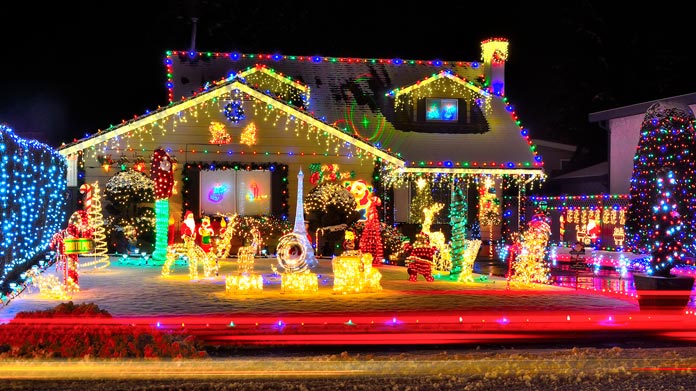
Many people and businesses enjoy having decorations during the holiday season. Not everyone, however, likes decorating or is physically able to. Christmas lights installation businesses provide holiday decorating services for individuals and businesses who want or need assistance with the put-up and take-down of lights and other decorations.
Our guide is in 3 parts:
The startup expenses involved in opening a Christmas lights installation business include:
a vehicle for transporting crews and lights to customers’ sites
ladders for installing lights
commercial-grade lights
insurance
Because a Christmas lights installation business is usually started to complement another seasonal business, most business owners who get into this line of work already have a vehicle, ladders and insurance from their other business. For instance, a painter or landscaper likely already has the equipment and insurance they need.
Some business owners may be tempted to purchase inexpensive lights to save money starting out, but this strategy often backfires. Cheap lights are more likely to break than commercial-grade ones, and the labor costs of replacing lights that break often exceed any savings the less expensive lights offer.
Instead of purchasing low-quality, inexpensive lights, businesses should invest in a few samples of high-grade lights. Representatives can use these samples to show customers what the lights look like, and then customers’ initial payments can be used to actually purchase the lights that will be used in displays.
Finally, some business owners may want to invest in a franchise. Opening a Shine holiday lighting franchise costs between $10,000 and $15,000. While franchises can offer some nice benefits, business owners don’t have to start their business as a franchise. Many open independent businesses that are successful.
The ongoing expenses for a Christmas lights installation business include storage costs for lights during the year, employees’ salaries and equipment costs. Storage costs are typically factored into customers’ quotes. Employees’ salaries and equipment costs are normally covered by another seasonal business during the rest of the year.
While most Christmas lights installation businesses have lots of residential customers, a business’ ideal customer is another business. Businesses frequently are willing to spend more on displays than individuals are able to, and most businesses don’t have employees to install lights for them. Lots of individual homeowners prefer install their own lights, making individual homeowners a less reliable source of regular business.
A Christmas lights installation business makes money by charging customers for to install, service and take down decorative lights during the holiday season. Most customers are given individual quotes based on the size and complexity of their display.
The average cost of a Christmas light installation is $1,500, but some jobs run as high as $15,000 or $20,000. Many businesses don’t take on displays for less than $500 or $1,000.
A Christmas lights installation business can bring in $50,000 or possibly $100,000, according to Stephen Lisk of Stephen Lisk Landscape Management in New Jersey. This is in addition to any revenue earned by another seasonal business.
A Christmas light installation business can generate more revenue by offering decorative lighting services at other times of the year. Some individuals may be willing to pay for Halloween decorating, and many people will hire a professional service for weddings or other special events.
The daily activities of a Christmas lights installation business revolve around the holiday decorating season. The season for actually displaying lights usually runs from Thanksgiving through the first week of January. The work involved extends beyond both these dates, though:
Leading up to the season, representatives help customers design their displays and crews test lights to make sure they’re working properly.
Through November and the first week of December, crews install light displays.
From Thanksgiving through the first week of January, crews service any lights that break or go out.
After the first week of January, crews take down lights and put them in storage.
Because there are only a few weeks to get as many light displays up as possible, Jim Berns of Michigan-based Berns Landscaping Services, Inc. recommends starting to put displays up soon after Halloween. Displays can be installed but not turned on. When customers want them turned on, a technician can come and set the timers—which takes much less time than putting in an entire display. This helps businesses serve as many customers as possible in the week or two after Thanksgiving, which is when most customers want to start turning on their lights.
While putting up holiday lighting might seem like a simple process, installers need to know how the lights they’re putting up will impact the circuits the lights are on. For example, they need to know:
how many lights a circuit can maintain
why different types of LEDs can’t be used on the same circuit
when it’s necessary to use a silicone connector
Many holiday lighting manufacturers and suppliers offer classes that cover information like this, and all installers should be signed up for such a class. For more advanced training, business owners can pursue one of the certifications offered by the Association of Outdoor Lighting Professionals.
Business owners also need to know how to manage and grow their Christmas lights installation business. For this, typical business skills such as business management, financial planning, and customer service skills will all be required.
Most Christmas lights installation businesses start out small, serving just a local area. Several, however, grow to have franchises throughout a region or across the country. For example, Christmas Decor is a national business that works with local decorators in 48 different states. One decorator the company works with is the Christmas Decor of NJ by Triple R Lighting.
Before starting a Christmas lights installation business, business owners should carefully calculate how many customers they can realistically service. As a business grows, Christmas Designers notes, it can be tempting to take on more customers than the business can reasonably handle. Overextending a business can be disastrous, as upset customers are apt to leave reviews that tarnish a business’ reputation and hamper future growth. Controlled growth offers more long-term potential for success.
Business owners should also contact a tree service company in their area before officially opening. Some customers may have trees that are too tall for a Christmas lights installation business to put lights on, but this work could be outsourced to a tree service company that’s equipped to work on tall trees. The Christmas lighting installation business could still do the rest of the work, and it may even make a commission on the outsourced tree decorating.
Businesses only have a few weeks to install holiday lights, so it’s important to have a crew of employees ready to do installations as soon as a business opens. Most business owners already have a crew of employees available from their other seasonal business.
Business Evaluation & Strategy Tool
We'll walk you through the four pillars every business needs: Points of Leverage, Marketing Strategy, Financial Model, and Personal Compatibility. At the end you'll see a personalized report and your action plan below will be tailored to your answers.
Every viable business has natural advantages. Below are common leverage points across four categories. Pick the ones that apply to your Christmas Lights Installation business. We've pre-suggested a few based on your idea — review and adjust.
Without a way to connect with customers, even great businesses fail. Pick the channels you plan to use to reach your customers.
Enter your monthly baseline costs — the minimum overhead to keep the business running. Then we'll calculate how many sales per month you need to break even.
A business that doesn't fit your life will fail no matter how good the numbers look. Tell us how this business fits you.
Complete the four pillars and your personalized summary will appear here.
Nine concrete steps to take you from idea to open business, grouped into 30-day phases. Complete the planner above and we'll highlight what's most important for your situation.
An LLC keeps your personal assets separate from business debts and lawsuits — the most common reason small business owners choose this structure. Sole proprietorships and partnerships do not provide this protection.
Apply for your free Employer Identification Number through the IRS, then register for any state or local taxes that apply to your business (sales tax, franchise tax).
A dedicated business account is required to maintain personal asset protection. Mixing personal and business finances ('piercing the corporate veil') can void your LLC's liability shield.
Recording expenses and income from day one makes tax filing easier and lets you see when the business is actually profitable. Use software (QuickBooks, Wave) or a part-time bookkeeper.
State and local requirements vary widely. Brick-and-mortar businesses typically need a Certificate of Occupancy; service businesses may need specific professional licensing; food businesses need health permits.
General Liability Insurance is the most common starting point. If you'll have employees, most states require Workers' Compensation. Specific industries need additional coverage (product liability, professional liability, etc.).
Your brand is how customers perceive and remember you. A clear name, logo, and visual identity make every later marketing decision easier and protect you legally as you grow.
Every legitimate business needs a website. Social media pages are not a substitute — you don't own the platform. Modern website builders mean you can launch a clean site in a weekend without a developer.
A dedicated business number keeps your personal life private, makes the business look legitimate, and lets you route calls professionally. Cloud phone services start under $20/month.
Starting a Christmas Lights Installation business typically costs $10,000 to $15,000. It is considered a medium capital-intensity business.
A Christmas Lights Installation business runs roughly a 14% net profit margin, and most owners reach break-even in about 4 to 12 months.
You can usually launch a Christmas Lights Installation business in about 2 to 8 weeks, and it is commonly run seasonal.
A Christmas Lights Installation business is generally an intermediate-skill business to start, with stable demand. TRUiC rates it 63 out of 100 on our Idea Score.
Most Christmas Lights Installation businesses register as an LLC or other legal entity and obtain a general business license. Depending on your state and city you may also need industry-specific permits, sales tax registration, and zoning or health approvals, so check your local requirements before you launch.