Startup cost
$27k–$87k
TRUiC Business Ideas
Decision Snapshot
Idea Score
59
Startup cost
$27k–$87k
Profit margin
8%
Break-even
4 mo–12 mo
Time to launch
2 wk–12 wk
Demand trend
Rising
5-yr failure rate
—
Capital intensity
High
Time commitment
Full time
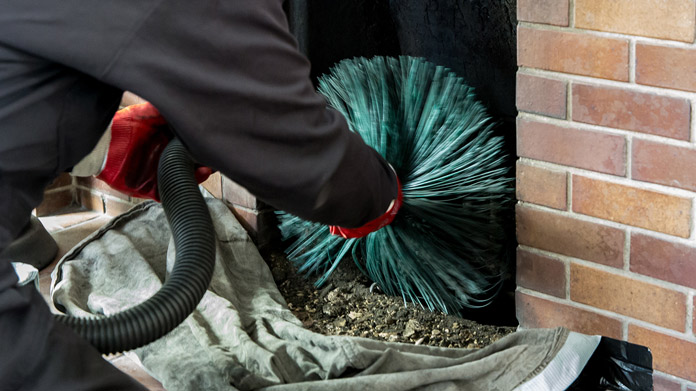
A chimney sweep business is a business which makes money by sweeping and cleaning fireplaces and chimneys. Normally, several workers service homes, apartment complexes and businesses. Chimney sweeping is pretty cheap to conduct, and chimney sweep owners can generally make a large profit by charging healthy costs. Chimney sweeps are done on a job-to-job basis, and owners can adjust prices depending on a project’s length and difficulty.
Our guide is in 3 parts:
Chimney sweep business startup costs are between $27,000 to $87,000, depending on the business’s size, equipment and supply needs. This price includes franchising process, a small workshop and cleaning equipment. Costs can be reduced by operating the business from your home, but liability coverage—and other insurance costs—will remain.
Your target market will be residential homeowners and small to medium-sized business owners. Mostly, you’ll direct services towards homeowners with chimneys. As for commercial properties, look for factory, store, and production plant operators who own multiple chimneys. Because your profits will rely on the number of chimneys cleaned, clients with more chimneys should be your primary market. You can also target real estate investors who own multiple rental properties that may need servicing.
A chimney sweep business makes money by cleaning, repairing, and touching up chimneys and fireplaces. Some chimney sweep businesses may expand services to roof repair, roof cleaning, and gutter cleaning. While most chimney sweep businesses charge by the number of chimneys cleaned, some charge by the hour.
Rates depend on the condition of the chimney. A basic inspection and sweep can run anywhere from $125 – $250 for a single home. Commercial and industrial jobs that involve multiple chimneys often get a lower rate per chimney.
A good chimney sweep can make as much as $25,000 to $50,000 per year. If a chimney sweep’s business owner is smart about services, marketing and management, they can make six figures per year.
To make more money, make sure your chimney sweep has diversified services. In addition to cleaning chimneys, you should offer chimney inspection and repair. Also, you should offer roof and gutter cleaning. Because a lot of chimney sweep businesses exclusively offer cleanings, any additional services will expand your marketing potential. Having flexible payment options, too, can make your business more profitable.
Typically, chimney sweeps clean between six and eight chimneys a day. If they’re a full-time sweep, they also spend a good amount of time pricing their services.
First, a chimney sweep will inspect the establishment. Next, they’ll mark down which services to use. Services vary depending on a chimney’s construction materials. All services also focus on the cleaning of wood, oil, and gas burning chimneys. The detection, prevention, and correction of chimney and venting hazards also takes place.
Then, the chimney sweeping team uses tools, cleaning materials, and knowledge to fix any issues, clean away debris, and repair any broken materials. If a project needs more attention, a sweep can create an ongoing service plan.
A chimney sweep business owner should be well-versed in the art of chimney cleaning. Joining the National Chimney Sweep Guild helps, as does having a solid grasp on roof maintenance. Future chimney sweep business owners should visit the Chimney Sweep Trade Show in Portland every year. Additionally, they should check out the Chimney Safety Institute of America to learn how to prevent chimney fires, heating disasters and structural disasters
From an administrative standpoint, a chimney sweep business owner should learn effective management, marketing and financing tactics. Learning to expand services to large markets, keep customers interested and offer competitive rates helps.
In most cases, a chimney sweep business will stay local. This doesn’t mean they can’t expand to serve a regional clientele, however. A lot of chimney sweep businesses become local favorites, and those with great prices and services can easily become an area’s best providers. Successful chimney sweep providers offer far more than simple chimney cleaning services. Often, they serve commercial properties and provide ongoing services.
Self-promotion is your friend. During your first few years as a chimney sweep business owner, you’ll need to build a solid customer base. Once you’ve established your clientele, you’ll need to operate on a referral basis to grow your audience.
Safety is a huge factor. Your workers should be outfitted with safety gear to prevent injuries. In doing so, you can reduce your insurance coverage costs. Liability issues, like fires and post-job damages, can be harmful to your business’s professional viability.
You should have at least two additional workers when you start your chimney sweep business. Even if you’re starting it from your home, the extra hands matter. In the beginning, you’ll need to rely on a high service output to increase and maintain profits.
Business Evaluation & Strategy Tool
We'll walk you through the four pillars every business needs: Points of Leverage, Marketing Strategy, Financial Model, and Personal Compatibility. At the end you'll see a personalized report and your action plan below will be tailored to your answers.
Every viable business has natural advantages. Below are common leverage points across four categories. Pick the ones that apply to your Chimney Sweep business. We've pre-suggested a few based on your idea — review and adjust.
Without a way to connect with customers, even great businesses fail. Pick the channels you plan to use to reach your customers.
Enter your monthly baseline costs — the minimum overhead to keep the business running. Then we'll calculate how many sales per month you need to break even.
A business that doesn't fit your life will fail no matter how good the numbers look. Tell us how this business fits you.
Complete the four pillars and your personalized summary will appear here.
Nine concrete steps to take you from idea to open business, grouped into 30-day phases. Complete the planner above and we'll highlight what's most important for your situation.
An LLC keeps your personal assets separate from business debts and lawsuits — the most common reason small business owners choose this structure. Sole proprietorships and partnerships do not provide this protection.
Apply for your free Employer Identification Number through the IRS, then register for any state or local taxes that apply to your business (sales tax, franchise tax).
A dedicated business account is required to maintain personal asset protection. Mixing personal and business finances ('piercing the corporate veil') can void your LLC's liability shield.
Recording expenses and income from day one makes tax filing easier and lets you see when the business is actually profitable. Use software (QuickBooks, Wave) or a part-time bookkeeper.
State and local requirements vary widely. Brick-and-mortar businesses typically need a Certificate of Occupancy; service businesses may need specific professional licensing; food businesses need health permits.
General Liability Insurance is the most common starting point. If you'll have employees, most states require Workers' Compensation. Specific industries need additional coverage (product liability, professional liability, etc.).
Your brand is how customers perceive and remember you. A clear name, logo, and visual identity make every later marketing decision easier and protect you legally as you grow.
Every legitimate business needs a website. Social media pages are not a substitute — you don't own the platform. Modern website builders mean you can launch a clean site in a weekend without a developer.
A dedicated business number keeps your personal life private, makes the business look legitimate, and lets you route calls professionally. Cloud phone services start under $20/month.
Starting a Chimney Sweep business typically costs $27,000 to $87,000. It is considered a high capital-intensity business.
A Chimney Sweep business runs roughly a 8% net profit margin, and most owners reach break-even in about 4 to 12 months.
You can usually launch a Chimney Sweep business in about 2 to 12 weeks, and it is commonly run full time.
A Chimney Sweep business is generally an intermediate-skill business to start, with rising demand. TRUiC rates it 59 out of 100 on our Idea Score.
Most Chimney Sweep businesses register as an LLC or other legal entity and obtain a general business license. Depending on your state and city you may also need industry-specific permits, sales tax registration, and zoning or health approvals, so check your local requirements before you launch.