Startup cost
$25k–$250k
TRUiC Business Ideas
Decision Snapshot
Idea Score
43
Startup cost
$25k–$250k
Profit margin
8%
Break-even
4 mo–12 mo
Time to launch
12 wk–36 wk
Demand trend
Stable
5-yr failure rate
—
Capital intensity
Very high
Time commitment
Seasonal
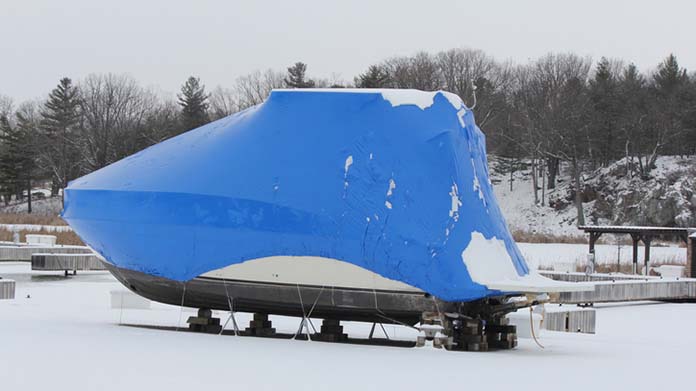
Many boat owners have their boat taken out of the water and put into storage at season’s end. Before a boat can safely be stored for the offseason, however, it must be winterized. Winterization is the process of cleaning a boat, servicing its engines and systems, and covering the boat.
While some boat owners winterize their vessels themselves, many hire a business to do the work. Boaters may choose to have a business service their boat because they don’t have time to do it themselves, they don’t want to do it themselves, or they want other maintenance items checked at the end of the boating season.
Our guide is in 3 parts:
The startup costs for a boat winterization business are minimal. Business owners need:
Basic tools
A power washer
Fuel stabilizers, antifreeze, and similar fluids
Shrink wrap
Specialized shrink-wrapping tools
Business owners who have little initial capital can begin by borrowing tools if they don’t have the required ones already, and a power washer can be borrowed or rented as needed. The required fluids don’t cost much. Boating places the cost of taking care of fluids between $50 and $110.
The largest expense is usually the cost of shrink wrap and the specialized tools needed to apply it. Michael Enos spend $2,000 on shrink wrap and tools when winterizing his first boat (which was his personal airboat).
Business owners can save on building expenses by going to a client’s site rather than purchasing or leasing a work area. The tools and equipment will fit in any car, truck, or SUV, so it’s easy to offer services on-site.
The ongoing expenses for a boat winterization business are low. Business owners need to purchase supplies as they use fluids and shrink wrap. Those that have employees must pay salaries and any commercial space that’s used must be paid for.
Boat owners are the target market for a boat winterization business. Anyone who has a boat that’s larger than a dinghy, canoe, or kayak may need their boat winterized.
A boat winterization business makes money by charging customers for winterizing their boats. Whether boat owners do any of the above-listed work themselves can affect how much is charged.
The average amount charged to winterize a boat is $300. Smaller outboards can be as little as $100, while cabin cruisers can run $600 or more.
The fees charged by Sportsman’s Boat Storage shows how the cost to winterize different boats can vary. The storage center offers winterization starting at $250. Additional fees are charged for extra services, such as:
Changing oil ($75 to $110)
Winterizing a freshwater or porta potty system (cost varies)
Winterizing a ballast system ($50 per pump)
Adding a fuel stabilizer ($14.21 average)
With an average price of $300, a boat winterization business can bring in a substantial seasonal profit. Winterizing just two boats a day could result in a daily revenue of $600 throughout the fall.
Many boat winterization businesses also offer basic small boat repairs. To add repair services, business owners should take a marine engine repair course. Annapolis School of Seamanship, Universal Technical Institute, and many other schools offer classes.
Winterizing a boat typically takes a few hours. The exact work done depends on the type of boat being winterized, but it usually involves the following:
Pulling the boat out of the water (if not previously done)
Cleaning the boat (possibly power-washing or polishing it)
Draining some of the fluids in the engine
Adding stabilizers and/or antifreeze to the engine fluids that are left
Servicing the other fluid and electrical systems on board
Covering the boat in shrink wrap
Placing the boat in storage (either inside or outside)
This work may be performed in an indoor workspace, outside, or at a customer’s location.
At the very least, business owners must know how to winterize many different types of boats. Customers will have inboards, outboards, inboard/outboards, sailboats, and wooden boats, each with slightly different needs.
To learn how to winterize different boats, prospective business owners should spend a season working at a marina that offers winterization services. There are a number of free guides on boat winterization, but these are better used as references than training materials. They don’t cover everything that business owners may encounter. (Boat U.S. is a well-known organization that has published a thorough guide.)
Most boat winterization businesses are small, local operations. For example, Mike’s Marine Service is a typical marina that offers winterization and other services.
Businesses that expand beyond a defined region usually focus on a single aspect of winterization — shrink-wrapping — and offer the service for more than just boats. This is what Michael Enos did with Fast Wrap, a business that grew to dozens of locations by offering shrink-wrapping service for boats, amusement park rides, and other winterized equipment.
Going to customers’ locations has several benefits beyond merely keeping startup costs low. By not procuring a specific workspace, business owners:
Keep their overhead low, which allows them to undercut the competition
Offer a more convenient service, which can become a major selling point
Make themselves visible in boating areas, which leads to an increased number of clients
Many business owners start out by themselves and a number never hire employees. Those who do want to grow the business usually bring on seasonal workers to help meet the demand in fall. Having at least one employee also makes shrink-wrapping boats go much faster.
Business Evaluation & Strategy Tool
We'll walk you through the four pillars every business needs: Points of Leverage, Marketing Strategy, Financial Model, and Personal Compatibility. At the end you'll see a personalized report and your action plan below will be tailored to your answers.
Every viable business has natural advantages. Below are common leverage points across four categories. Pick the ones that apply to your Boat Winterization business. We've pre-suggested a few based on your idea — review and adjust.
Without a way to connect with customers, even great businesses fail. Pick the channels you plan to use to reach your customers.
Enter your monthly baseline costs — the minimum overhead to keep the business running. Then we'll calculate how many sales per month you need to break even.
A business that doesn't fit your life will fail no matter how good the numbers look. Tell us how this business fits you.
Complete the four pillars and your personalized summary will appear here.
Nine concrete steps to take you from idea to open business, grouped into 30-day phases. Complete the planner above and we'll highlight what's most important for your situation.
An LLC keeps your personal assets separate from business debts and lawsuits — the most common reason small business owners choose this structure. Sole proprietorships and partnerships do not provide this protection.
Apply for your free Employer Identification Number through the IRS, then register for any state or local taxes that apply to your business (sales tax, franchise tax).
A dedicated business account is required to maintain personal asset protection. Mixing personal and business finances ('piercing the corporate veil') can void your LLC's liability shield.
Recording expenses and income from day one makes tax filing easier and lets you see when the business is actually profitable. Use software (QuickBooks, Wave) or a part-time bookkeeper.
State and local requirements vary widely. Brick-and-mortar businesses typically need a Certificate of Occupancy; service businesses may need specific professional licensing; food businesses need health permits.
General Liability Insurance is the most common starting point. If you'll have employees, most states require Workers' Compensation. Specific industries need additional coverage (product liability, professional liability, etc.).
Your brand is how customers perceive and remember you. A clear name, logo, and visual identity make every later marketing decision easier and protect you legally as you grow.
Every legitimate business needs a website. Social media pages are not a substitute — you don't own the platform. Modern website builders mean you can launch a clean site in a weekend without a developer.
A dedicated business number keeps your personal life private, makes the business look legitimate, and lets you route calls professionally. Cloud phone services start under $20/month.
Starting a Boat Winterization business typically costs $25,000 to $250,000. It is considered a very high capital-intensity business.
A Boat Winterization business runs roughly a 8% net profit margin, and most owners reach break-even in about 4 to 12 months.
You can usually launch a Boat Winterization business in about 12 to 36 weeks, and it is commonly run seasonal.
A Boat Winterization business is generally an intermediate-skill business to start, with stable demand. TRUiC rates it 43 out of 100 on our Idea Score.
Most Boat Winterization businesses register as an LLC or other legal entity and obtain a general business license. Depending on your state and city you may also need industry-specific permits, sales tax registration, and zoning or health approvals, so check your local requirements before you launch.