Startup cost
$50k–$500k
TRUiC Business Ideas
Decision Snapshot
Idea Score
39
Startup cost
$50k–$500k
Profit margin
8%
Break-even
4 mo–12 mo
Time to launch
12 wk–36 wk
Demand trend
Rising
5-yr failure rate
—
Capital intensity
Very high
Time commitment
Flexible
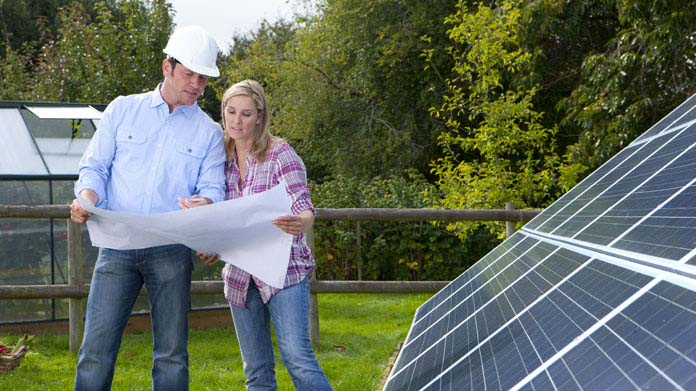
Carbon offsetting is the practice of purchasing carbon credits for carbon dioxide emissions which, in turn, help fund projects to reduce carbon dioxide in our atmosphere. This practice works to reduce the carbon emissions and carbon footprints of businesses and organizations. In essence, a business “buys out” their carbon emissions by paying a fee, which goes to fund programs and initiatives that work to support renewable energy plans and methods or ways to capture harmful greenhouse gasses, such as methane.
Our guide is in 3 parts:
As a carbon offset business, much of your work involves calculating and negotiating the payments needed to help fund environmental and energy programs and connecting businesses with informed carbon reduction firms or programs. Your business will operate as a middle man, with no real equipment or labor costs. Carbon reduction firms are mainly paying for advertising and marketing to make businesses aware of their programs and connections.
The other substantial costs will lie in travel expenses. You and your team may be traveling regularly to inspect and calculate the waste emissions from client businesses.
Travel expenses are typically the biggest ongoing expense. Advertising and marketing will also feature prominently, especially when first starting as a business. You will also need to continue paying for website hosting and maintenance since this is often your direct mode of contact and engagement for new business.
Carbon offsetting businesses must also regularly communicate and partner with the firms and organizations performing waste capture, building and operating green energy solutions, and atmospheric scrubbers and other environmental cleaning techniques. Businesses involved in this industry must also engage with civic and community leaders to promote green energy initiatives. Community support and engagement are critical tools to help sway public opinion and, in turn, affect corporate interests and bottom lines.
Carbon offset companies will collect a fee from the clients they serve. It may be a standard rate or can be based on the overall reductions you’re able to create for the client. There are also nonprofit carbon offset businesses. These businesses may be subsidized through government loans or grants.
The rates of carbon offset will depend on the calculations of possible and actual pollution incurred through your clients’ businesses.
Carbon offset businesses usually collect a percentage fee for their services, based on the carbon offset payment figures. The bigger the offset, the bigger the company revenues. There are also several carbon offset businesses that are nonprofits. They often rely on governmental agencies, programs, and grants to supply revenue.
To increase annual profits, consider forming an energy consulting firm to offer residential and commercial customers options own reducing energy usage and moving toward more sustainable energy sources. Creating local and regional energy committees to examine sustainable energy solutions is another great way to increase visibility and profits.
Carbon offsetting is a business that helps companies and farms reduce their airborne pollution through existing or emerging technologies and programs. Your job will often entail educating your existing and future clients of the programs and techniques available. You may be giving presentations or creating documents to help your clients understand how positive change can proceed. You will also be assessing and calculating your client’s carbon emissions to determine the levels of offset needed to reach or match zero emissions. Additionally, you should be making your clients aware of as many options for reducing waste before carbon offsetting has been enacted.
Because this business revolves around the science of greenhouse gasses and proactive ecological planning, it would be helpful to understand and be well-versed in environmental science and chemistry. Being knowledgeable about your industry and able to speak to others with confidence is important to strengthening support and understanding across the business landscape. Therefore, experience with public speaking will also be a positive trait to possess.
An individual looking to enter this industry should also have a savvy business mind and be able to crunch numbers and offer financially viable solutions to their clients. Business Economics and finance are also strong fields of study for this position.
Carbon offsetting is a fast-growing and popular business, especially within the industrial business sectors. As tighter emission rules are rolled out, more companies will be looking to improve their outputs. Carbon footprint reduction is important to all levels of businesses, too, so there will undoubtedly become more interest in running clean facilities, no matter the size.
Consider the following advice when launching your new carbon offsetting business:
Much of the work in this business can be handled by a small team or even a few key individuals. Outgoing, detail-oriented staff are necessary to drive your business. You want people around you who are as passionate about clean air and water as you are.
Business Evaluation & Strategy Tool
We'll walk you through the four pillars every business needs: Points of Leverage, Marketing Strategy, Financial Model, and Personal Compatibility. At the end you'll see a personalized report and your action plan below will be tailored to your answers.
Every viable business has natural advantages. Below are common leverage points across four categories. Pick the ones that apply to your Carbon Offsetting business. We've pre-suggested a few based on your idea — review and adjust.
Without a way to connect with customers, even great businesses fail. Pick the channels you plan to use to reach your customers.
Enter your monthly baseline costs — the minimum overhead to keep the business running. Then we'll calculate how many sales per month you need to break even.
A business that doesn't fit your life will fail no matter how good the numbers look. Tell us how this business fits you.
Complete the four pillars and your personalized summary will appear here.
Nine concrete steps to take you from idea to open business, grouped into 30-day phases. Complete the planner above and we'll highlight what's most important for your situation.
An LLC keeps your personal assets separate from business debts and lawsuits — the most common reason small business owners choose this structure. Sole proprietorships and partnerships do not provide this protection.
Apply for your free Employer Identification Number through the IRS, then register for any state or local taxes that apply to your business (sales tax, franchise tax).
A dedicated business account is required to maintain personal asset protection. Mixing personal and business finances ('piercing the corporate veil') can void your LLC's liability shield.
Recording expenses and income from day one makes tax filing easier and lets you see when the business is actually profitable. Use software (QuickBooks, Wave) or a part-time bookkeeper.
State and local requirements vary widely. Brick-and-mortar businesses typically need a Certificate of Occupancy; service businesses may need specific professional licensing; food businesses need health permits.
General Liability Insurance is the most common starting point. If you'll have employees, most states require Workers' Compensation. Specific industries need additional coverage (product liability, professional liability, etc.).
Your brand is how customers perceive and remember you. A clear name, logo, and visual identity make every later marketing decision easier and protect you legally as you grow.
Every legitimate business needs a website. Social media pages are not a substitute — you don't own the platform. Modern website builders mean you can launch a clean site in a weekend without a developer.
A dedicated business number keeps your personal life private, makes the business look legitimate, and lets you route calls professionally. Cloud phone services start under $20/month.
Starting a Carbon Offsetting business typically costs $50,000 to $500,000. It is considered a very high capital-intensity business.
A Carbon Offsetting business runs roughly a 8% net profit margin, and most owners reach break-even in about 4 to 12 months.
You can usually launch a Carbon Offsetting business in about 12 to 36 weeks, and it is commonly run flexible.
A Carbon Offsetting business is generally an intermediate-skill business to start, with rising demand. TRUiC rates it 39 out of 100 on our Idea Score.
Most Carbon Offsetting businesses register as an LLC or other legal entity and obtain a general business license. Depending on your state and city you may also need industry-specific permits, sales tax registration, and zoning or health approvals, so check your local requirements before you launch.