Startup cost
$25k–$100k
TRUiC Business Ideas
Decision Snapshot
Idea Score
43
Startup cost
$25k–$100k
Profit margin
3%
Break-even
4 mo–12 mo
Time to launch
12 wk–36 wk
Demand trend
Stable
5-yr failure rate
—
Capital intensity
High
Time commitment
Full time
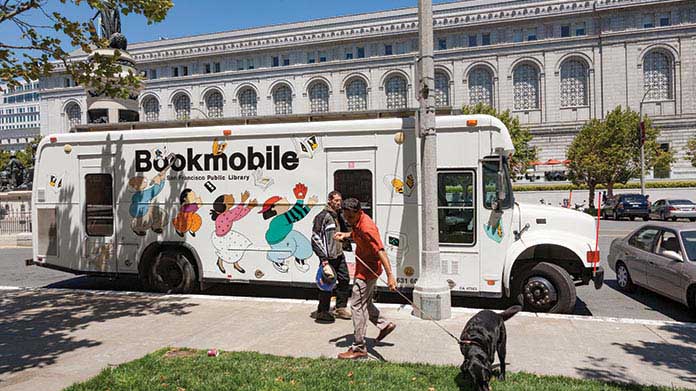
Bookmobiles offer a unique opportunity for the public to access reading materials. Since librarian Mary Titcomb launched the first bookmobile at the turn of the 20th century, these small businesses have served the reading needs of the public in both rural and urban areas. Whether operating as a for-profit business selling books to customers or a public service offered by some libraries, bookmobiles bring entertainment and education to those who may not otherwise have access to books.
While the popularity of bookmobiles waxed and waned during the past century, these mobile bookstores and libraries remain uniquely equipped to meet the needs of the modern reader. Since the early 2000s, the number of bookmobiles has grown nationwide. That increase likely will accelerate in today’s environment with more people — both adults and children — staying home for work and education. Bookmobiles can provide for the reading needs of their communities by meeting residents wherever they’re located.
Our guide is in 3 parts:
The costs for starting a bookmobile business can vary considerably, depending on your requirements. Buying a new vehicle, equipping it for business with shelves, etc., and purchasing an inventory of new books could cost more than $100,000. On the low end, you could purchase a used vehicle for less than $5,000, do the renovations yourself, and begin with a stock of used books. In this case, you could potentially get started for $10,000 or less.
The average annual cost of keeping a bookmobile on the road is around $200,000, according to the Association of Bookmobile and Outreach Services (ABOS). The need to continually replenish your book inventory is obvious, but you also must prepare for other ongoing expenses like vehicle repairs. You’ll likely need to drive your bookmobile every day, which results in wear and tear. As with any work vehicle, you should budget for repairs as part of your business.
A bookmobile business can serve multiple market segments. Literature enthusiasts, students, children, the elderly, and people without access to a nearby library or bookstore all represent potential target markets.
Bookmobile businesses make money by selling books and related items to the public. Some bookmobiles may operate as nonprofits, such as those run by libraries. Nonprofit bookmobiles typically receive public funding.
A bookmobile business sells similar products to bookstores at similar prices. A typical paperback book can cost between $9.99 and $19.99 while hardcover books tend to cost $27.99 and up.
Independent bookselling typically isn’t a highly lucrative business. Most independent booksellers only manage a 2 percent to 3 percent profit margin. If you can minimize your bookmobile operational costs, you may be able to save some money over what you’d pay renting a brick-and-mortar space for your business. But, you should still expect to run on fairly thin profit margins.
You can make your business more profitable in several ways. First, try to find items to sell in addition to books because you often can make a better profit margin on them. Items like bookmarks, journals, and themed souvenirs can help you boost your revenue. If your market demand will support it, operating more than one bookmobile is another way to make your business more profitable. Once you expand to multiple bookmobiles and can serve more of your area, you can increase revenue while benefiting from economies of scale.
A typical day at a bookmobile business starts with preparing the bookmobile for travel. You may already know your route or you may need to determine that before you hit the road. Once you head out, you must get your bookmobile safely to your destination and open for business before you can start serving the public.
After you open for business, you’ll spend your time helping customers and keeping your inventory organized. Customers will ask for suggestions, and some may be quite eager to talk for hours about their favorite books. Your job will require the ability to successfully juggle friendly customer service with the practical needs of running your business.
At the end of the day, you’ll need to close up shop and prepare to hit the road again. Once you return to your home base, you must prepare for the next day and lock up.
Book knowledge is one of the most important skills a bookmobile business owner needs because many of your customers will ask for recommendations. The more widely you read — both fiction and nonfiction books — the better equipped you’ll be to provide personalized recommendations and build rapport with your customers.
Customer service is another key skill bookmobile business owners need. To attract customers and keep them coming back, you must make a positive impression and know how to keep customers happy.
Auto repair experience is another useful, but perhaps not obvious requirement for this line of work. Like all automobiles, bookmobiles can break down from time to time. The better you are at fixing your vehicle, the less money you’ll need to spend on repairs.
The growth potential for a bookmobile business depends on the size of the market in which it operates. A bookmobile business in a rural area, for example, may be able to meet market demand with a single bookmobile. In contrast, a bookmobile business in an urban area could expand into operating multiple bookmobiles to meet local demand. Another popular option for expansion is to open a brick-and-mortar bookstore after your bookmobile business develops name recognition.
Start off by gauging local interest for your bookmobile business. The more people you talk to, the more connections you’ll make and the more you’ll learn about the market’s needs. You might be surprised at how excited your community is to have a bookmobile on the way and the support you receive for your venture.
If you aren’t mechanically inclined, make friends with a mechanic so you can keep your bookmobile on the road. Things will break and, if you can’t fix them, your business will remain stuck where it is – which likely will halt your income generation.
While you may be able to run your bookmobile business on your own at first, you’ll eventually want help — especially if you plan to expand your business by adding more trucks. Start small and see what you can accomplish on your own or with the help of those closest to you. Once you start to find yourself stretched thin, it’s time to consider hiring help. You’ll also need to hire additional employees if you want to operate more than one truck.
Business Evaluation & Strategy Tool
We'll walk you through the four pillars every business needs: Points of Leverage, Marketing Strategy, Financial Model, and Personal Compatibility. At the end you'll see a personalized report and your action plan below will be tailored to your answers.
Every viable business has natural advantages. Below are common leverage points across four categories. Pick the ones that apply to your Bookmobile business. We've pre-suggested a few based on your idea — review and adjust.
Without a way to connect with customers, even great businesses fail. Pick the channels you plan to use to reach your customers.
Enter your monthly baseline costs — the minimum overhead to keep the business running. Then we'll calculate how many sales per month you need to break even.
A business that doesn't fit your life will fail no matter how good the numbers look. Tell us how this business fits you.
Complete the four pillars and your personalized summary will appear here.
Nine concrete steps to take you from idea to open business, grouped into 30-day phases. Complete the planner above and we'll highlight what's most important for your situation.
An LLC keeps your personal assets separate from business debts and lawsuits — the most common reason small business owners choose this structure. Sole proprietorships and partnerships do not provide this protection.
Apply for your free Employer Identification Number through the IRS, then register for any state or local taxes that apply to your business (sales tax, franchise tax).
A dedicated business account is required to maintain personal asset protection. Mixing personal and business finances ('piercing the corporate veil') can void your LLC's liability shield.
Recording expenses and income from day one makes tax filing easier and lets you see when the business is actually profitable. Use software (QuickBooks, Wave) or a part-time bookkeeper.
State and local requirements vary widely. Brick-and-mortar businesses typically need a Certificate of Occupancy; service businesses may need specific professional licensing; food businesses need health permits.
General Liability Insurance is the most common starting point. If you'll have employees, most states require Workers' Compensation. Specific industries need additional coverage (product liability, professional liability, etc.).
Your brand is how customers perceive and remember you. A clear name, logo, and visual identity make every later marketing decision easier and protect you legally as you grow.
Every legitimate business needs a website. Social media pages are not a substitute — you don't own the platform. Modern website builders mean you can launch a clean site in a weekend without a developer.
A dedicated business number keeps your personal life private, makes the business look legitimate, and lets you route calls professionally. Cloud phone services start under $20/month.
Starting a Bookmobile business typically costs $25,000 to $100,000. It is considered a high capital-intensity business.
A Bookmobile business runs roughly a 3% net profit margin, and most owners reach break-even in about 4 to 12 months.
You can usually launch a Bookmobile business in about 12 to 36 weeks, and it is commonly run full time.
A Bookmobile business is generally an intermediate-skill business to start, with stable demand. TRUiC rates it 43 out of 100 on our Idea Score.
Most Bookmobile businesses register as an LLC or other legal entity and obtain a general business license. Depending on your state and city you may also need industry-specific permits, sales tax registration, and zoning or health approvals, so check your local requirements before you launch.