Startup cost
$50k
TRUiC Business Ideas
Decision Snapshot
Idea Score
66
Startup cost
$50k
Profit margin
23%
Break-even
4 mo–12 mo
Time to launch
12 wk–36 wk
Demand trend
Stable
5-yr failure rate
—
Capital intensity
High
Time commitment
Full time
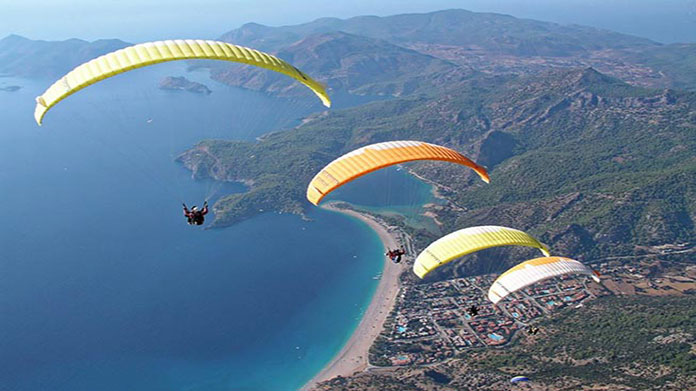
Aerial sports offer people outstanding views, adrenaline-inducing flight and lots of fun. Before people take off paragliding or hang gliding, however, they first need to learn how to take off, fly and land safely. Aerial sports instruction businesses offer lessons to novice, experienced and even expert flyers on how to safely enjoy these sports.
Our guide is in 3 parts:
The startup costs for an aerial sports business can easily reach $50,000 or more. The first significant cost is training, as attaining the aforementioned levels requires a number of lessons that must be taken at other aerial sports schools. The other large upfront cost is the price of equipment, for each glider can run in the neighborhood of $2,000.
Other notable upfront expenses include liability insurance, other insurance, staffing costs and advertising fees. Businesses also need a vehicle that can transport students and gear, if the business owner doesn’t already have one.
The ongoing expenses for aerial sports businesses include fuel and maintenance for a vehicle, maintenance for equipment, professional membership fees, insurance premiums, employees salaries and advertising costs. Professional memberships aren’t required, but they’re relatively inexpensive and help show that a business is well qualified to teach aerial sports. Membership with the USHPA is $294 per year for instructors. This amount could be earned back in a single lesson or class.
An aerial sports instruction business’ ideal customer is someone who enjoys adrenaline-inducing sports, but is new to paragliding or hang gliding. Such a person will be open to taking a class, and they may get hooked and want a lot more instruction. Additionally, most customers that are able to afford instruction have a decent amount of discretionary income.
Aerial sports instruction businesses make money by charging for lessons on paragliding, hang gliding or other aerial sports. Lessons may be one-day long, or they may build on each other in longer courses.
Aerial sports instruction businesses usually offer a variety of classes and bundles, and the rates are different for each. Eagle Paragliding, LLC has a well-structured pricing scheme, which includes:
Tandem flights priced between $100 and $200
A 1-day course priced at $200
A 2-day course priced at $400
An 8- to 10-day course for novice students priced at $1,500
Clinics priced between $395 and $750
Tours priced between $1,800 and $2,250
An aerial sports instruction business’ profit potential varies, but these can be highly profitable businesses. One husband-and-wife team in San Francisco earned $18,000 in their first year and grew that to $210,000 in revenue just four years later.
There are several ways an aerial sports instruction business can increase its revenue. To start with, instructors can obtain advanced certificates and certificates in other aerial sports. This lets instructors lead advanced clinics, which often command higher prices, and provide classes to people interested in a wider array of aerial sports.
Businesses can also sell equipment to beginners they introduce to the sport. Many people will first try out aerial sports by taking a class or two, but they may soon want to buy their own gliders. Without many contacts in the industry, they’ll often purchase gear from that their trusted instructor recommends. Since gliders can run $2,000, this can add a significant amount to a business’ profits.
An aerial sports instruction business owner spends much of their time teaching students how to fly paragliders, hang gliders and similar equipment. When not teaching students, a business owner may spend their time maintaining and repairing equipment, managing any instructors they hire, marketing their business, scheduling classes and monitoring the weather (to see if conditions are conducive to flying).
Business owners will need to be experienced and knowledgeable flyers in their chosen aerial sport. If they don’t have previous experience, they’ll need to attend classes at another aerial sports school.
While there are some variations in training programs, reaching the level of instructor always takes a number of lessons. For instance, instructors who train through the Association of Paragliding Pilots and Instructors (APPI) system, need to go through five levels before they reach professional status. Even then, full-fledged instructors have to complete four more levels of training.
The U.S. Hang Gliding & Paragliding Association’s (USHPA’s) levels are a bit simpler, but instructors must still reach H-4/P-4 Advanced Pilot level before the association lets them teach others. This is the fourth of five levels.
Technically, this training is normally a legal requirement. Prospective students, however, will ask and check what training their instructors have. If the instructors aren’t officially recognized by a respected professional organization, students will probably not sign up for classes.
Most aerial sports instruction businesses operate from a single location. Many business owners are able to find plenty of students to fill their schedule, as well as the schedules of other instructors.
Aerial sports are weather-dependent activities. While there are many weather resources available (e.g. weather radios, apps and websites), becoming an amateur meteorologist and intimately familiar with local weather patterns can help business owners decide whether, when and where to take off.
Business owners will likely want to hire at least a few staff members from the start. Employees can help coordinate launches and landings, and they can assist students with their gear.
Business Evaluation & Strategy Tool
We'll walk you through the four pillars every business needs: Points of Leverage, Marketing Strategy, Financial Model, and Personal Compatibility. At the end you'll see a personalized report and your action plan below will be tailored to your answers.
Every viable business has natural advantages. Below are common leverage points across four categories. Pick the ones that apply to your Aerial Sports business. We've pre-suggested a few based on your idea — review and adjust.
Without a way to connect with customers, even great businesses fail. Pick the channels you plan to use to reach your customers.
Enter your monthly baseline costs — the minimum overhead to keep the business running. Then we'll calculate how many sales per month you need to break even.
A business that doesn't fit your life will fail no matter how good the numbers look. Tell us how this business fits you.
Complete the four pillars and your personalized summary will appear here.
Nine concrete steps to take you from idea to open business, grouped into 30-day phases. Complete the planner above and we'll highlight what's most important for your situation.
An LLC keeps your personal assets separate from business debts and lawsuits — the most common reason small business owners choose this structure. Sole proprietorships and partnerships do not provide this protection.
Apply for your free Employer Identification Number through the IRS, then register for any state or local taxes that apply to your business (sales tax, franchise tax).
A dedicated business account is required to maintain personal asset protection. Mixing personal and business finances ('piercing the corporate veil') can void your LLC's liability shield.
Recording expenses and income from day one makes tax filing easier and lets you see when the business is actually profitable. Use software (QuickBooks, Wave) or a part-time bookkeeper.
State and local requirements vary widely. Brick-and-mortar businesses typically need a Certificate of Occupancy; service businesses may need specific professional licensing; food businesses need health permits.
General Liability Insurance is the most common starting point. If you'll have employees, most states require Workers' Compensation. Specific industries need additional coverage (product liability, professional liability, etc.).
Your brand is how customers perceive and remember you. A clear name, logo, and visual identity make every later marketing decision easier and protect you legally as you grow.
Every legitimate business needs a website. Social media pages are not a substitute — you don't own the platform. Modern website builders mean you can launch a clean site in a weekend without a developer.
A dedicated business number keeps your personal life private, makes the business look legitimate, and lets you route calls professionally. Cloud phone services start under $20/month.
Starting an Aerial Sports business typically costs $50,000. It is considered a high capital-intensity business.
An Aerial Sports business runs roughly a 23% net profit margin, and most owners reach break-even in about 4 to 12 months.
You can usually launch an Aerial Sports business in about 12 to 36 weeks, and it is commonly run full time.
An Aerial Sports business is generally an intermediate-skill business to start, with stable demand. TRUiC rates it 66 out of 100 on our Idea Score.
Most Aerial Sports businesses register as an LLC or other legal entity and obtain a general business license. Depending on your state and city you may also need industry-specific permits, sales tax registration, and zoning or health approvals, so check your local requirements before you launch.