Startup cost
$2k–$15k
TRUiC Business Ideas
Decision Snapshot
Idea Score
59
Startup cost
$2k–$15k
Profit margin
23%
Break-even
4 mo–12 mo
Time to launch
12 wk–36 wk
Demand trend
Declining
5-yr failure rate
—
Capital intensity
Medium
Time commitment
Flexible
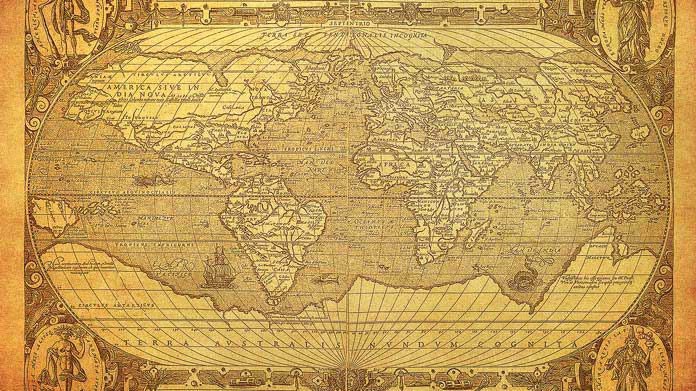
The vintage maps businesses is a niche market of collectibles, including old, historic, rare, unusual and one-of-a-kind maps. Some vintage maps business owners start out as hobbyists and then go on to establish galleries that house large collections of vintage maps.
Common types of vintage maps include star maps, antique railway and road strip maps, military battle maps and celestial maps. Geographical vintage maps cover all categories, such as archipelagos, world oceans and groups of islands.
You may also be interested in additional unique business ideas.
Our guide is in 3 parts:
If you’re considering storefront for your vintage maps business, you’ll have the cost of monthly rent. If you go with a website, the cost is much lower. You can have a nice website created for under $200 or even make one on your own. The cost of inventory varies depending on how big you want to go. You can start with a collection that costs less than $2,000 to get started.
Ongoing costs for a vintage maps business include inventory, employee wages, rent, website maintenance, bookkeeping expenses and advertising. These are really costs that never go away. If you’re renting a storefront, monthly rental costs can range from $650 to $1,200 per month. To have a website created will range anywhere from $200+.
The preferred client/customer types for vintage maps include collectors, decorators, and homeowners. Collectors are always on the hunt for that diamond in the rough. Decorators are always looking for interesting items to decorate homes and offices. Individual homeowners may feel a special connection to a part of the world—whether it is somewhere they have travelled, or the former home of their ancestors—and wish to have a map of that area in their home.
Vintage maps store owners make money in a variety of ways. Some operate online stores, offering individual collectors the opportunity to sell their vintage maps on consignment on the website, and then splitting the profit according to a predetermined ratio.
Other store owners may purchase large collections from collectors and sell each vintage map individually to garner a greater profit.
The answer to this question is as much as the market will bear. Of course, it has to be fair. But you’ll want your markup to be at least 50 percent of the cost.
Profit really depends on business acumen. If you know how to price your goods and run your business efficiently, the sky is really the limit. Some vintage maps business owners make a minimum of around $20,000 per year, while others who operate full time earn $75,000+.
Cutting ongoing expenses is one way to make your business more profitable. You may find that your business would work better as an online store, instead of operating out of a physical storefront. It’s also wise to sharpen your negotiation skills when it comes to buying inventory.
Many vintage maps store owners spend their day buying and selling a variety of vintage maps. Most have connections with other map dealers and purchase their vintage maps or purchase vintage maps from individual sellers. Vintage maps store owners also inquire about other map businesses selling collections of maps of antiquity. Day-to-day activities usually include making phone calls to these resources, researching marketing opportunities, pricing inventory, and preparing orders for shipment. Some vintage maps store owners also provide map repair, map conservation and map restoration.
Like any other business, there are some essential skills to build a successful vintage maps business. Organization, sales ability and problem resolution are the key three. You need to take time to look at business locations, keep track of vendors, put together an advertising plan and make sure financing is in place. Being able to be a good salesperson is also essential. Make sure you have a well-prepared sales pitch that is persuasive. Most of all, know accurate and specific information about the maps that you’re trying to sell, and tailor it in a manner that makes sense to your potential buyer.
The growth potential for a vintage maps business is positive, as accessibility is shrinking. In addition, vintage maps store owners can add adjunct services, such as framing, cleaning and restoration.
If you’re opening a storefront, research the ancestry of your local community. Many people take an interest in genealogy in their later years, and you could bring in a lot of customers by selling antique maps specific to the regions of their ancestral homeland.
It’s time to build a team when you start to grow. Hire salespeople to manage business and sales. Just be sure to both educate and train them. You can also build a team of appraisers and framers if need be.
Business Evaluation & Strategy Tool
We'll walk you through the four pillars every business needs: Points of Leverage, Marketing Strategy, Financial Model, and Personal Compatibility. At the end you'll see a personalized report and your action plan below will be tailored to your answers.
Every viable business has natural advantages. Below are common leverage points across four categories. Pick the ones that apply to your Vintage Maps business. We've pre-suggested a few based on your idea — review and adjust.
Without a way to connect with customers, even great businesses fail. Pick the channels you plan to use to reach your customers.
Enter your monthly baseline costs — the minimum overhead to keep the business running. Then we'll calculate how many sales per month you need to break even.
A business that doesn't fit your life will fail no matter how good the numbers look. Tell us how this business fits you.
Complete the four pillars and your personalized summary will appear here.
Nine concrete steps to take you from idea to open business, grouped into 30-day phases. Complete the planner above and we'll highlight what's most important for your situation.
An LLC keeps your personal assets separate from business debts and lawsuits — the most common reason small business owners choose this structure. Sole proprietorships and partnerships do not provide this protection.
Apply for your free Employer Identification Number through the IRS, then register for any state or local taxes that apply to your business (sales tax, franchise tax).
A dedicated business account is required to maintain personal asset protection. Mixing personal and business finances ('piercing the corporate veil') can void your LLC's liability shield.
Recording expenses and income from day one makes tax filing easier and lets you see when the business is actually profitable. Use software (QuickBooks, Wave) or a part-time bookkeeper.
State and local requirements vary widely. Brick-and-mortar businesses typically need a Certificate of Occupancy; service businesses may need specific professional licensing; food businesses need health permits.
General Liability Insurance is the most common starting point. If you'll have employees, most states require Workers' Compensation. Specific industries need additional coverage (product liability, professional liability, etc.).
Your brand is how customers perceive and remember you. A clear name, logo, and visual identity make every later marketing decision easier and protect you legally as you grow.
Every legitimate business needs a website. Social media pages are not a substitute — you don't own the platform. Modern website builders mean you can launch a clean site in a weekend without a developer.
A dedicated business number keeps your personal life private, makes the business look legitimate, and lets you route calls professionally. Cloud phone services start under $20/month.
Starting a Vintage Maps business typically costs $2,000 to $15,000. It is considered a medium capital-intensity business.
A Vintage Maps business runs roughly a 23% net profit margin, and most owners reach break-even in about 4 to 12 months.
You can usually launch a Vintage Maps business in about 12 to 36 weeks, and it is commonly run flexible.
A Vintage Maps business is generally an intermediate-skill business to start, with declining demand. TRUiC rates it 59 out of 100 on our Idea Score.
Most Vintage Maps businesses register as an LLC or other legal entity and obtain a general business license. Depending on your state and city you may also need industry-specific permits, sales tax registration, and zoning or health approvals, so check your local requirements before you launch.