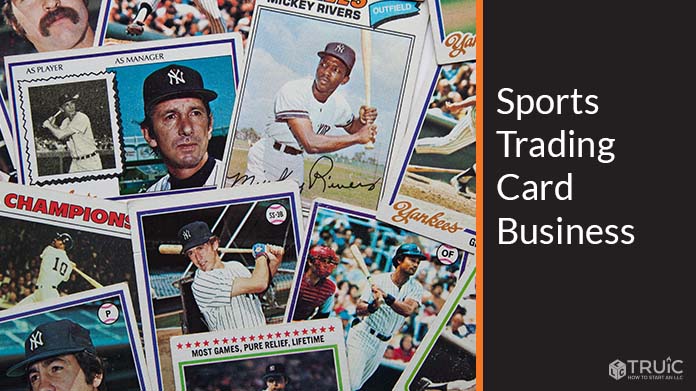
Part 1 - How to Start a Sports Trading Card Business - Background
A sports trading card business buys and sells defined cards and related collectible goods. Preserve the original ideas of careful product identification, clear customer communication and suitable collector relationships, while testing actual demand and complete costs.
This guide selects new collector-card retail under 459999, rather than operating a sports team. Used rare/vintage goods, consignment, auction, grading submission, memorabilia, non-sport gaming and paid breaks can have different classification, custody, product and platform obligations. Collectibility does not guarantee resale value or investment returns.
Our guide is in 3 parts:
- Part 1 - How to start a Sports Trading Card business - Background
- Part 2 - Our planner tool to see if this idea is the right fit for you
- Part 3 - Action plan to get started
What are the costs involved in opening a Sports Trading Card Business?
Define actual new/used inventory, sales channel and service limits first. Quote suitable secure premises/storage/display, accurately sourced opening stock with acquisition/provenance/condition records, appropriate product assessment and any contracted grading/shipping, systems/images/payment/privacy, actual permissions and contracts, all setup work, coverage, marketing and reserve.
An existing collection is inventory with an actual basis, condition and cash opportunity cost, not automatically free stock. No representative $25,000–$250,000 complete budget or low-overhead guarantee was established. A particular entity form is not universal; obtain appropriate actual legal/tax advice rather than assuming another business owner can confirm every requirement.
Scope customer-owned goods, grading submissions, events, consignment or breaks separately for competence, custody, terms, permissions and coverage before accepting them.
What are the ongoing expenses for a Sports Trading Card Business?
Include complete owner/staff sourcing, identification/condition checks, inventory/photo/listing records, customer communication, suitable packing/shipping/returns and nonbillable administration work; lawful loaded staff, secure space/utilities, acquired stock and markdowns/losses, any actual grading/authentication costs, systems/platform/payment/shipping fees, coverage, equipment/security upkeep, training/records, marketing and reserve.
Grading can tie up stock and cash. PSA’s October 28, 2026 announcement reopened a U.S. Value service at $39.99 with $500 maximum insured value and estimated 90–100 business days; it distinguishes existing-order terms and says estimates can change. This is one dated service example, not a current checkout/insurance guarantee, value appraisal or proof that grading every card improves profit. Confirm actual current service/fees, shipping, custody and terms.
Who is the target market?
Test actual collectors or appropriate buyers seeking the defined card types, condition, authenticity information, access and budget. No representative younger-male profile, demographic shift or general resale-price increase was verified.
Describe actual card identity, condition, alteration/authentication/grading status and limitations accurately. Interest in a player, rare feature or collectible does not establish willingness to pay or a future financial return.
How does a Sports Trading Card Business make money?
Earn collected receipts for accurately described suitable card/product sales, or separately scoped actual fees under clear consignment/other service contracts. Distinguish goods you own from customer property and gross marketplace sales from retained receipts and net profit.
State actual item, condition, inclusions, shipping, return and payment terms. An advertised rarity, grade or price guide is not a guaranteed sale or proof of the amount that will remain after acquisition, selling costs, complete work and overhead.
How much can you charge customers?
Compare actual recent completed like-for-like transactions for the same item, edition, condition, grading/authentication status and terms; asking prices and guides are inputs, not guaranteed realized values. A 30% markup on a hypothetical $100 acquisition gives a $130 price and $30 gross difference, about 23.08% of sales before other costs, not a 30% net margin.
As one platform cost example, eBay’s ordinary U.S. selling-fee page currently lists 13.25% for the specified trading-card categories on the defined total sale up to $7,500 per item, plus $0.40 per order over $10. An assumed single $100 total sale therefore incurs $13.65 under that base calculation, leaving $86.35 before stock, shipping and other costs. Its total includes specified tax/shipping, and store, Live and other conditions differ; this is not a complete transaction quote or net profit.
How much profit can a Sports Trading Card Business make?
No representative $30,000–$50,000 dealer profit, 23.4% net margin or demand-led earnings increase was established. Gross sale price, the amount after a platform fee, compensation and operating profit differ.
For an entirely assumed month, 100 defined sales at $100 collected each produce $10,000. At $75 direct acquired stock, complete owner/staff identification/listing/customer/fulfillment work, appropriate grading allocation, fees and shipping per sale, contribution is $2,500. Against $3,000 fixed suitable secure premises/systems, coverage, equipment allowance, nonbillable administration and other stated costs, operating loss is $500 before financing, tax and omitted costs. At constant $25 contribution, 120 whole sales cover stated costs only if actual suitable qualified capacity, stock and paid demand exist. These are not observed card values, wages, grading yields, sale volumes or return benchmarks.
Include all owner work and fees without double counting. Forecast stock purchases/markdowns, grading delays, custody/claims, returns/refunds, tax and cash separately. Operating coverage differs from owner income and recovery of setup spending.
How can you make your business more profitable?
Keep suitable collector gatherings and trade shows as community options to assess. Confirm actual venue/access, appropriate participants and guardian arrangements, security/custody, trading/sales terms, applicable permits/coverage, complete staff work and costs before promoting them.
Events, larger inventory or more followers do not automatically generate sales or net profit. Paid breaks, mystery offers, raffles and games are separate mechanics to review under actual law and current platform terms; ordinary card retail does not automatically authorize them.
Day-to-Day and Growth
What happens during a typical day at a Sports Trading Card Business?
Keep useful customer discussions, suitable supplier relationships, inventory/display care and appropriate website/show planning. Add careful identity/condition/provenance checks, accurate photos/records, secure custody, appropriately scoped grading/shipping, clear returns and actual product/release terms.
Allocate staff training, privacy, disputes/claims, marketing and financial records. Discussions with peers should inform knowledge without treating a rumored release or asking price as guaranteed demand or margin.
What are some skills and experiences that will help you build a successful Sports Trading Card Business?
Develop competent card/edition/condition identification within actual scope, appropriate authenticity and grading checks, accurate comparisons/listings, careful storage/packing/custody, respectful customer communication and financial management. Collecting experience, specialist learning and reliable records are options to build competence.
Passion, extroversion or knowing a rare card is not a substitute for accurate disclosures, suitable expertise and complete costs. Represent actual qualifications and limits honestly; no default intermediate skill rating, fixed workload or year-round demand was established.
What is the growth potential for a Sports Trading Card Business?
A focused suitable retail range or separately assessed service/channel is a possible model. No representative current surge, player-signature/hologram premium, scarcity-led return or steadily increasing dealer earnings was verified.
Track actual suitable paid transactions, delivered quality, complete work, collected contribution, markdowns/returns and cash. Additional card types, graded stock, staff, events or locations add sourcing, custody, product/platform, worker and funded obligations.
What are some insider tips for jump starting a Sports Trading Card Business?
Keep the useful ideas of respectful buyer/seller relationships, suitable shows and accurate social communication. Learn the actual inventory and customer niche, verify source/condition evidence and document agreements before committing cash or customer goods.
A strong following, event attendance or rarity claim does not prove reputation, demand or net profit. For covered shipped orders, FTC guidance addresses reasonable shipping promises, delay procedures, consent and refunds; build actual sustainable fulfillment and cash plans.
How and when to build a team
Allocate competent sourcing/identification, accurate listings, secure inventory/customer custody, fulfillment/returns, customer communication and financial roles with suitable backup. Solo or staffed operation depends on actual sustainable qualified workload, stock/security and commitments rather than a universal shop schedule.
Fund lawful loaded owner/staff work, appropriate training/supervision, agreements and coverage before expansion. A knowledgeable collector or outside-contractor label does not automatically resolve all duties.
Part 2 - Is this business right for you?
Business Evaluation & Strategy Tool
We'll walk you through the four pillars every business needs: Points of Leverage, Marketing Strategy, Financial Model, and Personal Compatibility. At the end you'll see a personalized report and your action plan below will be tailored to your answers.
This guide's benchmarks are under editorial review. Enter your own figures and choose the assumptions that fit your business.
Step 1 of 4 — Points of Leverage
Every viable business has natural advantages. Below are common leverage points across four categories. Pick the ones that apply to your Sports Trading Card business.
Step 2 of 4 — Marketing Strategy
Without a way to connect with customers, even great businesses fail. Pick the channels you plan to use to reach your customers.
Step 3 of 4 — Financial Model
Enter your monthly baseline costs — the minimum overhead to keep the business running. Then we'll estimate how many customer transactions would cover that overhead before variable costs.
Step 4 of 4 — Personal Compatibility
A business that doesn't fit your life will fail no matter how good the numbers look. Tell us how this business fits you.
Your Sports Trading Card Evaluation Report
Complete the four pillars and your personalized summary will appear here.
Points of Leverage
Marketing Strategy
Financial Model
Personal Compatibility
Part 3 - Your business launch action plan
Before committing to launch costs, test your business idea with potential customers. Use the free worksheet to record the offer, evidence and next decision.
Nine concrete steps to take you from idea to open business, grouped into 30-day phases. Adjust the phases to fit your funding, permits, and operating needs. Complete the planner above and we'll highlight what's most important for your situation.
First 30 days — Foundation
-
Choose a permitted business structure
Compare structures permitted for your activity, location, ownership and tax situation. Professional practices can have special entity and ownership rules. Check those requirements before filing; an LLC does not protect against every kind of personal liability.
-
Check tax IDs and registrations
Determine whether you need an EIN based on ownership, tax treatment, employees and applicable tax obligations. Some sole-owner businesses do not need one for federal income-tax purposes, while a bank or state may still require it. Apply directly with the IRS when needed and check applicable state or local registrations.
-
Separate business finances
Choose an appropriate business account and keep clear financial records. Separating business and personal transactions supports bookkeeping and entity formalities. Banks have their own eligibility and documentation requirements; a separate account is not a guarantee against personal liability.
-
Set up business accounting
Recording expenses and income from day one makes tax filing easier and lets you see when the business is actually profitable. Use software (QuickBooks, Wave) or a part-time bookkeeper.
Days 30–60 — Compliance & Risk
-
Get permits and licenses
Check the authorities responsible for your business activity and operating location. Professional authorization, tax registration, facility permits and product requirements are different questions. Online or mobile operations can still have licensing and other regulatory obligations.
-
Get business insurance
Identify the risks and coverage obligations for your activities, workers and location. Review applicable liability, property, professional or product coverage and workers’ compensation with the relevant state authority and a licensed insurance professional. Required coverage varies by jurisdiction and operation.
Days 60–90 — Launch
-
Define your brand
Choose a name, message and visual identity that help your intended customers understand the business. Check relevant name and trademark requirements before investing in a brand; a logo or business-name registration alone does not establish complete legal protection.
-
Create your business website
Choose a web presence that fits how your customers research and buy. A website can explain your offer, support inquiries or sales, and connect your marketing channels. Plan the content, accessibility, privacy and maintenance requirements for the features you need.
-
Set up your business phone system
Choose a customer-contact setup that fits your sales and service process. Compare current provider terms, business-use eligibility, routing features and ongoing costs, and decide how you will keep personal contact details separate.