Startup cost
$500–$5k
TRUiC Business Ideas
Decision Snapshot
Idea Score
74
Startup cost
$500–$5k
Profit margin
50%
Break-even
4 mo–12 mo
Time to launch
2 wk–8 wk
Demand trend
Stable
5-yr failure rate
—
Capital intensity
Low
Time commitment
Flexible
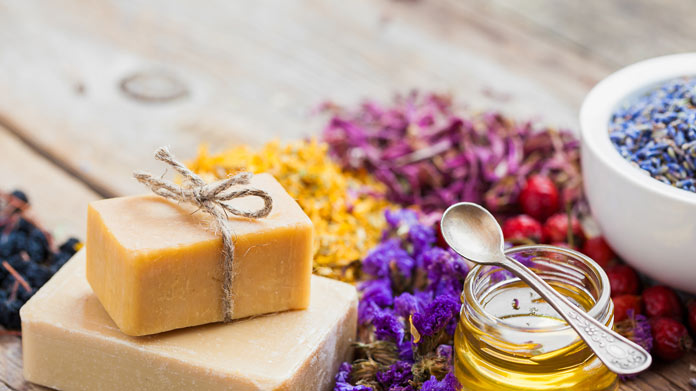
Starting a soap making business can be a rewarding venture for entrepreneurs who are passionate about crafting natural, handmade products that combine creativity with chemistry.
Having said that, launching a successful soap making business requires more than just creative recipes and attractive packaging — you’ll also need to understand complex FDA regulations, maintain consistent product quality, and develop effective marketing strategies in order to succeed.
In this comprehensive guide, we’ll walk you through all the essential steps you’ll need to take to start your own soap making business, from developing unique formulas and understanding the relevant regulations to setting up operations and building a loyal customer base.
Our guide is in 3 parts:
The handmade soap market has flourished in recent years, reaching a global value of USD $158.79 million in 2023 and being forecast to expand at a compound annual growth rate (CAGR) of 5.94% until 2031.
A growing awareness among consumers of the benefits of natural and organic personal care products is thought to be the primary driver of this market’s expansion in recent years. However, the rise of e-commerce platforms and social media has also played a crucial role by making it much easier for soap makers to reach customers directly.
With that said, while social media and e-commerce platforms have lowered barriers to entry, they’ve also intensified competition. As a result, to really succeed in this market you’ll need both an exceptional product and a well-executed marketing strategy.
If you’re considering whether a soap making business is right for you, the first thing you’ll need to know is whether it’s a) affordable, and b) worth the investment. I mean, how much can you actually make running your own soap making business?
Well, it depends. The initial investment for a soap making business varies widely based on factors such as your production scale, the types of soaps you plan to make, and whether you’ll operate from home or a commercial space:
Equipment ($2,000 – $10,000): In order to be able to make your products, you’ll need to invest in essential soap making equipment like molds, cutters, safety gear, and precise measuring tools. While basic tools can cost as little as $2,000, investing in commercial-grade equipment like large batch mixers ($1,500 to $3,000), professional cutting systems ($500 to $1,000), and curing racks ($300 to $800) can significantly increase the total amount you spend.
Initial Ingredients ($1,000 – $5,000): Alongside this equipment, you’ll also need to purchase a basic inventory of the ingredients needed to make soap — which include base oils (e.g., coconut, olive, palm, etc), lye, essential oils, colorants, and additives. While buying in bulk can reduce the cost-per-unit, you’ll need to balance this against your storage capacity and projected output.
Workspace Setup ($500 – $15,000): If you plan to run your operation from home, the initial amount you’ll spend setting up your workspace will be minimal as you’ll likely only need a few basic ventilation improvements and storage solutions. However, a commercial space will likely require a far more significant investment in proper ventilation systems, safety equipment, and workspace modifications so that it’s compliant with local regulations.
Packaging and Labels ($1,000 – $3,000): Alongside your products, you’ll also need to invest in professional packaging materials such as boxes, wrapping paper, and labels, as well as business cards to support your branding. Ensuring your labels meet FDA requirements — including ingredient lists and proper warnings — often involves professional design and printing services, which can drive up this cost.
Testing and Certification ($500 – $2,000): To ensure your products are safe and compliant, you’ll need to conduct testing and preserve samples from each batch. Depending on your target market and retail partners, you may also be required to obtain additional certifications — such as a Good Manufacturing Practice (GMP) certification — which will further add to this expense.
Licenses and Permits ($200 – $1,000): For your business to be operating legally, it will need to obtain a number of different licenses and permits — such as a general business license, sales tax permits, and possibly additional cosmetic manufacturing permits — though the cost of these can vary depending on your location and local regulations (see Step 6).
Although not exactly a startup cost, it’s highly recommended to set aside at least three months of operating expenses as working capital. This will provide you with a buffer that can help manage inventory purchases and cover ongoing expenses for a bit while you try to build a customer base.
For soap making businesses, this will typically mean having $5,000 to $15,000 in reserve, depending on your specific goals and production scale.
Most soap makers are able to comfortably earn profit margins between 50% and 70% — even when accounting for production costs and the impact of batch failures on the bottom line.
As an example, a basic 4-ounce bar of handcrafted soap typically costs between $2 and $3 to produce (including materials, packaging, and overheads), yet can be sold for between $6 and $12 per bar, while premium or specialized soap bars can retail for as much as $25.
This profitability — combined with the flexibility and low upfront amount of capital needed to get started — makes soap making a highly scalable business model. By starting with small batches that are sold locally or online, you can minimize your initial costs as you test the market and later on expand your production as you grow your client base.
While selling directly to clients through an e-commerce or social media platform offers the highest margins as it cuts out intermediaries, this isn’t always the most viable option when getting started. As such, many new soap makers choose to diversify their revenue streams in an effort to maximize their profits.
One common strategy is to establish wholesale arrangements with boutiques, spas, and other similar businesses in your local area. While these partnerships typically offer lower margins compared to direct-to-consumer sales, they provide the advantage of steady, reliable order volumes.
Alternatively, offering personalized products for events like weddings or corporate gifts is another great option since it allows you to charge premium prices for your products while at the same time differentiating your business from competitors.
Yes, soap making businesses can be highly profitable for their owners due to the low cost of materials compared to retail pricing. For example, while standard bars only cost between $2 and $3 to produce, they’re typically sold for between $6 and $12 each.
As such, with proper pricing and efficient production, soap making businesses can experience profit margins of between 50% and 70%.
The cost to start a soap making business ranges from $6,000 to $50,000, depending on your scale of operations and chosen setup.
However, it’s also recommended to plan for at least three months of operating expenses on top of these initial setup costs to ensure that your business has some working capital to fall back on.
At a minimum, you’ll need FDA registration, a business license (depending on your location), and a sales tax permit to sell homemade soap.
Additionally, if you’ll be running your business from home, you’ll also need a home occupation permit to confirm that your business activities are appropriate for a residential area.
The standard pricing formula for handmade soaps involves calculating your total costs (materials, labor, packaging, overhead) and adding a profit margin between 50% and 70%.
However, pricing also depends heavily on local competition and the type of products you sell. For example, while basic bars typically retail between $6 and $12, specialty soaps with premium ingredients or complex designs can command up to $15 to $25 per bar.
Business Evaluation & Strategy Tool
We'll walk you through the four pillars every business needs: Points of Leverage, Marketing Strategy, Financial Model, and Personal Compatibility. At the end you'll see a personalized report and your action plan below will be tailored to your answers.
Every viable business has natural advantages. Below are common leverage points across four categories. Pick the ones that apply to your Soap Making business. We've pre-suggested a few based on your idea — review and adjust.
Without a way to connect with customers, even great businesses fail. Pick the channels you plan to use to reach your customers.
Enter your monthly baseline costs — the minimum overhead to keep the business running. Then we'll calculate how many sales per month you need to break even.
A business that doesn't fit your life will fail no matter how good the numbers look. Tell us how this business fits you.
Complete the four pillars and your personalized summary will appear here.
Nine concrete steps to take you from idea to open business, grouped into 30-day phases. Complete the planner above and we'll highlight what's most important for your situation.
An LLC keeps your personal assets separate from business debts and lawsuits — the most common reason small business owners choose this structure. Sole proprietorships and partnerships do not provide this protection.
Apply for your free Employer Identification Number through the IRS, then register for any state or local taxes that apply to your business (sales tax, franchise tax).
A dedicated business account is required to maintain personal asset protection. Mixing personal and business finances ('piercing the corporate veil') can void your LLC's liability shield.
Recording expenses and income from day one makes tax filing easier and lets you see when the business is actually profitable. Use software (QuickBooks, Wave) or a part-time bookkeeper.
State and local requirements vary widely. Brick-and-mortar businesses typically need a Certificate of Occupancy; service businesses may need specific professional licensing; food businesses need health permits.
General Liability Insurance is the most common starting point. If you'll have employees, most states require Workers' Compensation. Specific industries need additional coverage (product liability, professional liability, etc.).
Your brand is how customers perceive and remember you. A clear name, logo, and visual identity make every later marketing decision easier and protect you legally as you grow.
Every legitimate business needs a website. Social media pages are not a substitute — you don't own the platform. Modern website builders mean you can launch a clean site in a weekend without a developer.
A dedicated business number keeps your personal life private, makes the business look legitimate, and lets you route calls professionally. Cloud phone services start under $20/month.
Starting a Soap Making business typically costs $500 to $5,000. It is considered a low capital-intensity business.
A Soap Making business runs roughly a 50% net profit margin, and most owners reach break-even in about 4 to 12 months.
You can usually launch a Soap Making business in about 2 to 8 weeks, and it is commonly run flexible.
A Soap Making business is generally an intermediate-skill business to start, with stable demand. TRUiC rates it 74 out of 100 on our Idea Score.
Most Soap Making businesses register as an LLC or other legal entity and obtain a general business license. Depending on your state and city you may also need industry-specific permits, sales tax registration, and zoning or health approvals, so check your local requirements before you launch.