Startup cost
$100k–$500k
TRUiC Business Ideas
Decision Snapshot
Idea Score
31
Startup cost
$100k–$500k
Profit margin
6%
Break-even
4 mo–12 mo
Time to launch
12 wk–36 wk
Demand trend
Stable
5-yr failure rate
—
Capital intensity
Very high
Time commitment
Seasonal
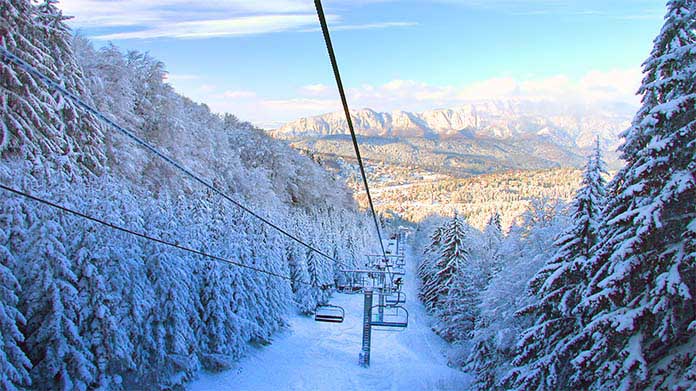
Ski resorts are one of the main places people go for wintertime fun. Resorts offer skiing, snowboarding, equipment rentals and lessons. Many resorts also have concessions, a restaurant, a bar and other amenities.
Our guide is in 3 parts:
The costs of opening a ski resort are significant. Business owners need to purchase land, cut trails, buy equipment, build lodges and other buildings and install lifts. These don’t even take into account employee’s initial wages, insurance costs, permit fees and energy costs. According to EHow, snowmaking equipment alone costs millions of dollars, and land can run hundreds of thousands of dollars.
Existing resorts come up for sale fairly regularly, but they also cost a lot to purchase and begin operating. When CNL Lifestyle Properties, which owns major resorts around the country, listed its 16 ski resorts for sale, they collectively were worth hundreds of millions of dollars. A small resort in New York was listed for much less. It only cost $475,000, but almost all of its equipment would have to be replaced.
The ongoing expenses for a ski resort business are significant. They include energy costs, maintenance, repair and upkeep expenses, insurance premiums, permit fees and employees’ salaries, among other items. HOKA says that simply keeping a mountain’s equipment up-to-date can cost $2 million annually.
A ski resort business’ ideal customer is an active person who is passionate about winter sports and has a significant amount of discretionary income. Such a person will likely go skiing or snowboarding multiple times, as they probably enjoy the activity and can afford to participate in the sports.
A ski resort’s primary product or service are lift tickets, which guests buy so they might go up the mountain. Tickets bring in only a fraction of a resort’s revenue, though.
While your guests are staying at your resort, there are many opportunities to sell them additional products and services. Common products and services that ski resorts sell include:
lessons
equipment rentals
foods and beverages
ski and snowboard gear
According to NBC News, the average price of a one-day lift ticket at a ski resort business was $85.52 in 2012. On the Snow lists current prices at ski resorts throughout the United States. On the site:
many local ski resorts charge between $30 and $50 for a ticket
regional resorts often charge between $60 and $90 for a ticket
resorts that attract guests from all over the country charge between $70 and $130
The potential profit of a ski resort varies greatly depending on its size and location. The mountains Hopara lists often bring in between $1 and $3 million each year. Large resorts can earn much, much more.
In the winter, a ski resort business can increase its revenue streams by offering tubing along with skiing and snowboarding. Putting in a waterpark or hosting events can help bring in revenue during the offseason.
During the winter season, there are many day-to-day activities that must be done. A few include:
checking trail conditions, and opening and closing trails as appropriate
selling lift tickets
loading and unloading guests onto and off of lifts
attending to anyone who needs assistance while on the slope
repairing broken-down equipment
making snow and grooming trails (Most snowmaking and grooming occurs at night, after a mountain is closed.)
During the offseason, the day-to-day operations are much more relaxed. There’s still plenty to do, though. This is the time when most non-emergency repairs are made, routine maintenance is done and improvements are put in.
A ski resort business owner should either be able to teach people to ski, or they should have the financial ability to hire one or more ski instructors. Business owners who don’t have enough knowledge about skiing and snowboarding ought to hire someone, as it can take years to master the sports.
Additionally, a business owner should have an in-depth knowledge of the inner workings of ski resorts. Trade magazines, such as POWDER and SKI Magazine, provide some insights into the industry, and working at ski resorts will give business owners firsthand experience. Business owners may also want to earn an associate of science in ski resort management, which includes classes on ski area risk management, ski area planning, mountain operations, housekeeping management and other relevant topics.
Most ski resort businesses operate only one resort. Instead of opening up resorts in other areas, resorts that want to expand will usually either expand their current resort or increase the amenities they offer. Cutting new trails, installing more lifts and opening neighboring peaks lets a resort expand so that it can attract and accommodate more guests. Adding amenities, which might include anything from a new bar to a five-star hotel, can also help attract more guests, and it can increase revenue.
Killington, a ski resort in Vermont, has used both of these strategies. The resort has many amenities, including the high-end Killington Grand Resort Hotel and several restaurants in the area. It also boasts seven peaks — including nearby Pico, which was a nearby ski resort that went bankrupt and was bought by the owners of Killington.
In some cases, a single company may own multiple (usually larger) ski resorts. Even when multiple resorts are owned by one company, though, each resort is often operated by an independent company or group.
A ski resort business’ location has a large impact on its potential success. A great location will provide ample space for many different trails (of varying difficulties), be easy for people to get to and offer room to expand by offering more amenities in the future. It also will get lots of snow. In some areas, just a mile can be the difference between getting a lot of snow and just a moderate amount.
Additionally, at least some of a resort’s trails should face north. These trails will get less sun each day, so their snow won’t melt as quickly. Keeping just one or two north-facing trails open can help a resort extend its season by several days or, even, a few weeks.
Finally, before opening a ski resort, business owners should work with the resort’s energy supplier to see if they can get a discounted rate. Making snow requires a vast amount of energy, and even a small discount could save a resort a lot of money. Some resorts are able to get greatly discounted rates for a couple weeks a year, which lets them make most of their snow during these weeks and stockpile it for the rest of the season.
Ski resort businesses usually need multiple employees from the outset. Business owners may want to hire people to help with ticket sales, mountain operations, lessons, equipment rentals and concessions. Most resorts also need ski patrollers, but these are often volunteers at smaller resorts.
Business Evaluation & Strategy Tool
We'll walk you through the four pillars every business needs: Points of Leverage, Marketing Strategy, Financial Model, and Personal Compatibility. At the end you'll see a personalized report and your action plan below will be tailored to your answers.
Every viable business has natural advantages. Below are common leverage points across four categories. Pick the ones that apply to your Ski Resort business. We've pre-suggested a few based on your idea — review and adjust.
Without a way to connect with customers, even great businesses fail. Pick the channels you plan to use to reach your customers.
Enter your monthly baseline costs — the minimum overhead to keep the business running. Then we'll calculate how many sales per month you need to break even.
A business that doesn't fit your life will fail no matter how good the numbers look. Tell us how this business fits you.
Complete the four pillars and your personalized summary will appear here.
Nine concrete steps to take you from idea to open business, grouped into 30-day phases. Complete the planner above and we'll highlight what's most important for your situation.
An LLC keeps your personal assets separate from business debts and lawsuits — the most common reason small business owners choose this structure. Sole proprietorships and partnerships do not provide this protection.
Apply for your free Employer Identification Number through the IRS, then register for any state or local taxes that apply to your business (sales tax, franchise tax).
A dedicated business account is required to maintain personal asset protection. Mixing personal and business finances ('piercing the corporate veil') can void your LLC's liability shield.
Recording expenses and income from day one makes tax filing easier and lets you see when the business is actually profitable. Use software (QuickBooks, Wave) or a part-time bookkeeper.
State and local requirements vary widely. Brick-and-mortar businesses typically need a Certificate of Occupancy; service businesses may need specific professional licensing; food businesses need health permits.
General Liability Insurance is the most common starting point. If you'll have employees, most states require Workers' Compensation. Specific industries need additional coverage (product liability, professional liability, etc.).
Your brand is how customers perceive and remember you. A clear name, logo, and visual identity make every later marketing decision easier and protect you legally as you grow.
Every legitimate business needs a website. Social media pages are not a substitute — you don't own the platform. Modern website builders mean you can launch a clean site in a weekend without a developer.
A dedicated business number keeps your personal life private, makes the business look legitimate, and lets you route calls professionally. Cloud phone services start under $20/month.
Starting a Ski Resort business typically costs $100,000 to $500,000. It is considered a very high capital-intensity business.
A Ski Resort business runs roughly a 6% net profit margin, and most owners reach break-even in about 4 to 12 months.
You can usually launch a Ski Resort business in about 12 to 36 weeks, and it is commonly run seasonal.
A Ski Resort business is generally an intermediate-skill business to start, with stable demand. TRUiC rates it 31 out of 100 on our Idea Score.
Most Ski Resort businesses register as an LLC or other legal entity and obtain a general business license. Depending on your state and city you may also need industry-specific permits, sales tax registration, and zoning or health approvals, so check your local requirements before you launch.