Startup cost
$5k–$10k
TRUiC Business Ideas
Decision Snapshot
Idea Score
73
Startup cost
$5k–$10k
Profit margin
25%
Break-even
4 mo–12 mo
Time to launch
2 wk–8 wk
Demand trend
Stable
5-yr failure rate
—
Capital intensity
Medium
Time commitment
Flexible
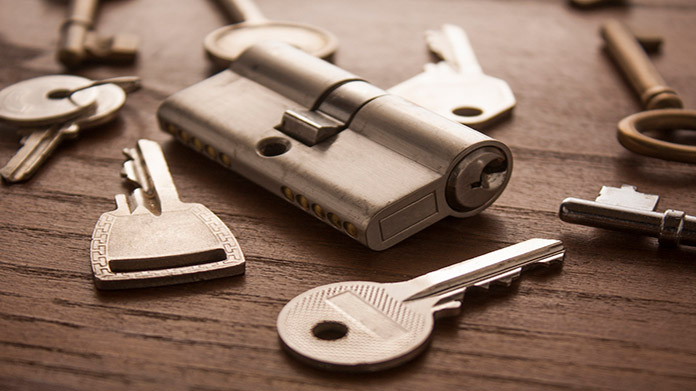
Locksmithing involves picking, designing, installing, and maintaining locks — both mechanical and electronic. Your business would sell to, and service, clients who need these kinds of services. Clients may include other businesses, state and local governments, elementary and secondary schools, hospitals, and security companies. Most locksmithing businesses provide services either in-store or on-site.
Our guide is in 3 parts:
Starting a locksmithing business doesn’t cost a fortune. If you start working out of your home, it may cost a few hundred dollars for basic equipment like:
Plug spinners
Mechanical and computerized picks
Key extractor
Tension wrenches
Electric pick guns
Locksmith hammer
Router drills
Key cutters
A full-time operation with a wide range of services might have initial startup costs of between $5,000 and $10,000, with much of this money going toward more advanced tools like:
Key decoders
Lock bypass tools
Specialized tools like automotive lock picking tools or safe cracking tools
Drill jigs and guides
If you want to run an emergency on-site service, you’ll also need a vehicle.
Ongoing expenses for a locksmith business depend on the size of the business. Maintenance of service vehicles may run a few hundred to a few thousand dollars a year. Maintenance on tools is typically minimal, but may cost several hundred per year depending on the equipment used and your company’s maintenance needs.
Locksmiths serve a wide variety of customers. However, the most profitable customers are typically corporations and governments in need of ongoing service and maintenance. With that said, a 24/7 emergency service can be profitable for some locksmithing businesses since premium prices can be charged for what is essentially “after hours” work.
Locksmith businesses make money by designing and installing lock systems. They also make money by designing keys and performing various services related to locksmithing. This might include letting someone into their car or home if they’ve locked themselves out accidentally. It could also include making duplicate keys or fixing locks or security systems.
Most locksmiths charge a mobile fee of $35 and $150 if they have to go to the customer for service. For nights or weekends, you can charge between $150 and $250. For basic service, like changing a lock, locksmiths charge anywhere between $40 and $100, plus $5 to $25 per cylinder. If you’re installing new locks, you can charge up to $100 as a minimum fee, plus $20 to $30 per lock.
Copying a key should cost customers between $1.50 and $4 for standard keys. Specialized keys can be sold for up to $20 and “chipped” keys for vehicles may fetch prices between $50 and $175.
Locksmithing businesses tend to have a high markup on services. Because it’s a low-overhead business, most of what you charge is profit. A one-person locksmithing business can clean between $40,000 and $60,000 per year. However, if you employ other locksmiths, there’s no reason you can’t make a million dollars or more.
One of the best ways to build profits in the locksmithing business is to offer exceptional service and ask for referral business. However, beyond that, locksmiths who specialize tend to make more than generalists. For example, automobile lockout services tend to charge more than a general locksmith. Locksmith companies who specialize in corporate security also make more than generalists. Keep this in mind when considering whether a locksmithing business is right for you.
Locksmiths make locks and keys, so a lot of the day-to-day activities revolve around that. However, a locksmith might also spend a lot of time changing or replacing locks in a building, updating old locks or replacing broken ones. A locksmithing business might be responsible for maintaining and updating security systems for corporations or governments. If you run a 24/7 emergency service, your typical day will likely include lockout services at odd or unusual hours.
The locksmithing business is, more or less, a trade profession which still operates under an apprenticeship program. There are also certifications you can get from trade organizations, like the Associated Locksmiths of America (ALOA).
Certified Registered Locksmith is one of three major certifications that increase a locksmith’s credibility and help educate potential candidates for apprenticeship. The other two certifications are the Certified Professional Locksmith (CPL) and Certified Master Locksmith (CML).
Most companies who hire locksmiths look for these certifications. Likewise, if you want to be taken seriously in the industry, all three are a practical requirement.
Other certifications include Registered Locksmith (RL), Certified Automotive Locksmith (CAL), Certified Professional Safe Tech (CPS), and Certified Master Safe Tech (CMST).
In addition to certifications, you’ll need a license. Some states require you have a certification before getting licensed to do business as a locksmith.
Before you can get licensed, you need to meet additional requirements:
Be 18 years old.
Complete training or apprenticeship.
Pass a certification course and exam.
Get a business license.
Have a clean criminal history.
The two main governing bodies that offer certifications are the Associated Locksmiths of America (ALOA) and the Safe and Vault Technician’s Association (SAVTVA).
A locksmithing business is usually a small one. Most locksmiths are part of a family-owned operation or work as an apprentice under the original owner.
However, there is nothing that prevents a locksmithing business from becoming a large chain or franchise. Most locksmithing businesses remain small because of the unique nature of the business. It doesn’t scale well unless you use business systems (like franchise agreements).
Most locksmithing businesses are small, family-owned, operations. However, if you want to build a larger business, you’ll need to hire and train talent. It makes sense to hire extra help when you can’t perform all the basic tasks of the business yourself.
For example, some of the first roles you may want to fill include a bookkeeper and a receptionist. If you need additional help, hiring a locksmith will cost you between $22,141 and $56,597 in salary. This does not include benefits and other regulatory requirements.
Business Evaluation & Strategy Tool
We'll walk you through the four pillars every business needs: Points of Leverage, Marketing Strategy, Financial Model, and Personal Compatibility. At the end you'll see a personalized report and your action plan below will be tailored to your answers.
Every viable business has natural advantages. Below are common leverage points across four categories. Pick the ones that apply to your Locksmith business. We've pre-suggested a few based on your idea — review and adjust.
Without a way to connect with customers, even great businesses fail. Pick the channels you plan to use to reach your customers.
Enter your monthly baseline costs — the minimum overhead to keep the business running. Then we'll calculate how many sales per month you need to break even.
A business that doesn't fit your life will fail no matter how good the numbers look. Tell us how this business fits you.
Complete the four pillars and your personalized summary will appear here.
Nine concrete steps to take you from idea to open business, grouped into 30-day phases. Complete the planner above and we'll highlight what's most important for your situation.
An LLC keeps your personal assets separate from business debts and lawsuits — the most common reason small business owners choose this structure. Sole proprietorships and partnerships do not provide this protection.
Apply for your free Employer Identification Number through the IRS, then register for any state or local taxes that apply to your business (sales tax, franchise tax).
A dedicated business account is required to maintain personal asset protection. Mixing personal and business finances ('piercing the corporate veil') can void your LLC's liability shield.
Recording expenses and income from day one makes tax filing easier and lets you see when the business is actually profitable. Use software (QuickBooks, Wave) or a part-time bookkeeper.
State and local requirements vary widely. Brick-and-mortar businesses typically need a Certificate of Occupancy; service businesses may need specific professional licensing; food businesses need health permits.
General Liability Insurance is the most common starting point. If you'll have employees, most states require Workers' Compensation. Specific industries need additional coverage (product liability, professional liability, etc.).
Your brand is how customers perceive and remember you. A clear name, logo, and visual identity make every later marketing decision easier and protect you legally as you grow.
Every legitimate business needs a website. Social media pages are not a substitute — you don't own the platform. Modern website builders mean you can launch a clean site in a weekend without a developer.
A dedicated business number keeps your personal life private, makes the business look legitimate, and lets you route calls professionally. Cloud phone services start under $20/month.
Starting a Locksmith business typically costs $5,000 to $10,000. It is considered a medium capital-intensity business.
A Locksmith business runs roughly a 25% net profit margin, and most owners reach break-even in about 4 to 12 months.
You can usually launch a Locksmith business in about 2 to 8 weeks, and it is commonly run flexible.
A Locksmith business is generally an intermediate-skill business to start, with stable demand. TRUiC rates it 73 out of 100 on our Idea Score.
Most Locksmith businesses register as an LLC or other legal entity and obtain a general business license. Depending on your state and city you may also need industry-specific permits, sales tax registration, and zoning or health approvals, so check your local requirements before you launch.