Startup cost
$5k–$10k
TRUiC Business Ideas
Decision Snapshot
Idea Score
63
Startup cost
$5k–$10k
Profit margin
15%
Break-even
4 mo–12 mo
Time to launch
2 wk–8 wk
Demand trend
Stable
5-yr failure rate
—
Capital intensity
Medium
Time commitment
Full time
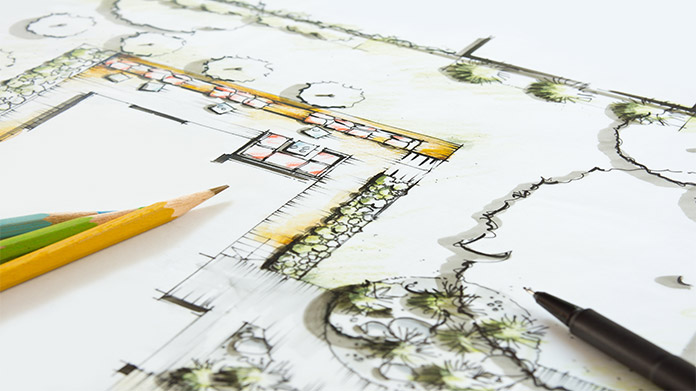
Like landscaping, landscape architecture is a seasonal business; however, there is an important different between the two. Most landscapers provide clients with basic lawn services that help keep the property well-groomed. On the other hand, landscape architects are primarily concered with the design and layout of a lawn, such as where to place ponds, flower-beds, patios, and stone walkways. A good landscape architect can dramatically increase the value of a property.
Our guide is in 3 parts:
Costs to start a small to medium-sized landscape design business vary. However, in general, you will spend between $5,000 and $10,000 on startup costs. Most of the money goes towards a high-end computer and design software. Starting out, you will also spend a significant amount of money on advertising in your local community.
Ongoing costs for the design business are minimal. You’ll cover utilities and a new computer every few years.
There are also ongoing costs for design software upgrades.
Ongoing expenses for landscaping include maintenance of tools, upkeep of the office and store, and office supplies. Expect to pay between $5,000 and $10,000 per month for maintenance and recurring expenses in a mid-sized company. For a small company, your ongoing costs may only be a few hundred to $1,000 per month.
Preferred clients are corporate clients or customers who have signed seasonal or “evergreen” contracts. Large revenue projects are ideal. Bad clients are typically those that do not have the budget for ongoing landscaping work, those who want piecemeal projects with a high overhead, and those with accounts that have extended Net payment terms. An extended net payment term such as “Net-60” means that the client has up to 60 days after completion of the job to pay you for your services.
Landscape architects typically work with medium to larger companies. However, many designers start out with homeowners and small businesses.
They make most of their money by charging clients for design projects. These projects can be charged at either a flat rate or a per hour rate.
Landscape designers and architects charge by the hour or per project. To simple design for a residential home may cost, on average, $4,000 to $5,000. On a per-hour basis, you should charge clients between $50 and $150 per hour.
If your design company also does construction and maintenance, there are usually 2 rates for landscaping: the maintenance rate and the construction rate.
The maintenance rate is for basic lawn and grounds maintenance. The construction rate is for constructing lawn features, small structures, and building patios or laying brick and stone.
A good maintenance rate is $44.13 per man-hour.
The construction rate for residential should be set at $54 per man hour or at least 20% higher than the maintenance rate.
Corporate rates should be set at least 20% to 25% higher for both maintenance and construction.
Design can be a high-profit business, but it all depends on the client and how tight your contracts are. Some clients routinely go out of scope and end up costing the business more money than the initial project quote.
Profit should be priced in at at least 10% of cost (minimum), for both the design and the construction businesses. Some companies operate at a 15% margin, but this is rare, especially for a smaller company.
You can make your business more profitable by narrowing your scope of operations towards a background of limited space and teaching landscaping principles to individuals or companies who have their own on-site maintenance team.
You could also offer additional services, bring in a professional master mason who can lay stone, or a bricklayer to lay brick. Partner with a master carpenter and offer custom woodworking and lawn features.
Day-to-day activities of the business include a variety of tasks. Client intake forms, invoicing, and meeting with new clients are a given, but the business must also coordinate with contractors, monitor its supplies carefully, and keep clients updated about the project.
At minimum, you will need a bachelor’s degree in landscape architecture. Master’s degrees are available too. In addition to education, you will want to start as an apprentice to get a feel for the industry and how it works. Becoming a Landscape Gardener apprentice will teach you about the construction and landscaping side of the business, but is not necessary to do design work.
Apprenticeships usually take several years to complete. You can also take school-based apprenticeships.
To work as a landscape engineer, you must be comfortable working indoors in front of a computer all day.
If you decide to work with the construction crew, you will be outdoors in all types of weather conditions. You must be physically fit, able to lift heavy loads, and able to do manual labor for at least 6 to 8 hours per day. You must be able to work flexible hours and work in a team environment.
Small landscape design firms can be operated as “one man” operations but there’s no reason a business owner could not hire an entire team of designers and contractors, turning it into a comprehensive design and construction company.
In fact, larger companies are typically full-service landscapers who also design and build custom lawn features as well as maintain properties.
Landscape design businesses depend largely on their reputation. Also, because the business is inherently seasonal, businesses that survive are those that secure “evergreen” contracts. Cash flow management is important. You will have to manage the company’s funds to stay afloat during the off-season when work is light or non-existent.
Hire help as soon as you can. The design side of this business requires you work long hours. The construction aspect of this business is very labor intensive. So you’ll need all the help you can get. Ideally, you’ll start with a team of at least 3 to 5 people. Larger companies can employ 10, 20, or more employees.
Business Evaluation & Strategy Tool
We'll walk you through the four pillars every business needs: Points of Leverage, Marketing Strategy, Financial Model, and Personal Compatibility. At the end you'll see a personalized report and your action plan below will be tailored to your answers.
Every viable business has natural advantages. Below are common leverage points across four categories. Pick the ones that apply to your Landscape Architect business. We've pre-suggested a few based on your idea — review and adjust.
Without a way to connect with customers, even great businesses fail. Pick the channels you plan to use to reach your customers.
Enter your monthly baseline costs — the minimum overhead to keep the business running. Then we'll calculate how many sales per month you need to break even.
A business that doesn't fit your life will fail no matter how good the numbers look. Tell us how this business fits you.
Complete the four pillars and your personalized summary will appear here.
Nine concrete steps to take you from idea to open business, grouped into 30-day phases. Complete the planner above and we'll highlight what's most important for your situation.
An LLC keeps your personal assets separate from business debts and lawsuits — the most common reason small business owners choose this structure. Sole proprietorships and partnerships do not provide this protection.
Apply for your free Employer Identification Number through the IRS, then register for any state or local taxes that apply to your business (sales tax, franchise tax).
A dedicated business account is required to maintain personal asset protection. Mixing personal and business finances ('piercing the corporate veil') can void your LLC's liability shield.
Recording expenses and income from day one makes tax filing easier and lets you see when the business is actually profitable. Use software (QuickBooks, Wave) or a part-time bookkeeper.
State and local requirements vary widely. Brick-and-mortar businesses typically need a Certificate of Occupancy; service businesses may need specific professional licensing; food businesses need health permits.
General Liability Insurance is the most common starting point. If you'll have employees, most states require Workers' Compensation. Specific industries need additional coverage (product liability, professional liability, etc.).
Your brand is how customers perceive and remember you. A clear name, logo, and visual identity make every later marketing decision easier and protect you legally as you grow.
Every legitimate business needs a website. Social media pages are not a substitute — you don't own the platform. Modern website builders mean you can launch a clean site in a weekend without a developer.
A dedicated business number keeps your personal life private, makes the business look legitimate, and lets you route calls professionally. Cloud phone services start under $20/month.
Starting a Landscape Architect business typically costs $5,000 to $10,000. It is considered a medium capital-intensity business.
A Landscape Architect business runs roughly a 15% net profit margin, and most owners reach break-even in about 4 to 12 months.
You can usually launch a Landscape Architect business in about 2 to 8 weeks, and it is commonly run full time.
A Landscape Architect business is generally an intermediate-skill business to start, with stable demand. TRUiC rates it 63 out of 100 on our Idea Score.
Most Landscape Architect businesses register as an LLC or other legal entity and obtain a general business license. Depending on your state and city you may also need industry-specific permits, sales tax registration, and zoning or health approvals, so check your local requirements before you launch.