Startup cost
$2k–$5k
TRUiC Business Ideas
Decision Snapshot
Idea Score
74
Startup cost
$2k–$5k
Profit margin
41%
Break-even
4 mo–12 mo
Time to launch
2 wk–8 wk
Demand trend
Stable
5-yr failure rate
—
Capital intensity
Low
Time commitment
Flexible
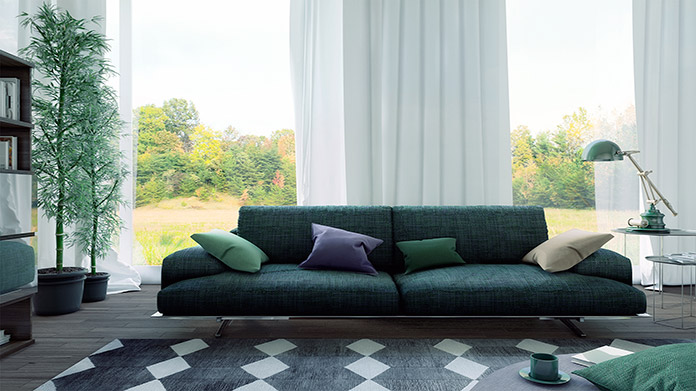
Interior designers have a deep understanding of human psychology, especially as it relates to how people react with a specific interpretation of interior design and physical space. An interior design firm may work on many different types of environments that can be created inside a building. Examples are office spaces in a corporate skyscraper, luxury hotels, fine homes, museums, and even churches. Typically, designers will specialize in either commercial or residential interior design, though some firms do both.
Our guide is in 3 parts:
If you are going to be self-employed, this business can be started in a very modest way for a few thousand dollars by taking online home study courses to get your certification and then working from home until you build up a client base that can support the expenses of an office and additional staff.
If you are considering working for a major design firm before beginning your own business, you will most likely need to pay for a formal education to get a degree. There are two-year and four-year programs at major universities, colleges, trade schools, community colleges, and art/design schools. These programs range from $4,000 to 25,000 per year.
The range in startup costs, after you have a degree and are certified, is what it takes to pay for an office for the time needed to find your first clients. Allow six months for the initial marketing efforts to attract the first clients and $2,000 to $5,000 per month budget ($12,000 to $30,000 total) to give you enough time to succeed.
This is not a high-overhead business. You will need to pay for marketing expenses, the cost of an office, insurance, staff (if you have any), and transportation costs to go to visit clients. A small interior design business, operating from home, might have expenses of around $2,000 to $3,000 per month. The next step up would be having a commercial office space and that runs around $2,000 per month more. As you add staff you will need to allow for $5,000 to $12,000 per month in additional expenses so your total monthly budget could rise to be about $20,000 per month.
The best type of client is one that is easy to get along with, has good taste, enjoys the finer things in life, is open to suggestions, and has a project where “money is no object” with an almost unlimited budget. Of course, no one just starting out in this business will find clients like that.
The second best type of client is the “bread and butter” client. These clients have a reasonable budget to spend on the interior design work and ask the interior designer to work on a specific space. When they are pleased with the results, they give the same interior designer another project to work on. They also tell their friends how happy they are with the work and invite them over to see what was done.
Most of the successful interior design firms have plenty of this second type of client. By making these clients happy, the business grows in an almost organic, automatic way. One successful project leads to another and then another.
Interior design firms can be paid in a variety of ways. The American Society of Interior Designers notes these are the most common ways to charge for interior design services:
Charging a flat or fixed fee – After discussing the project with the client and agreeing on the detailed specifics of the project scope, the interior designer proposes a complete fee (expense reimbursement of actual out-of-pocket costs is additional) to take the project through all the stages from concept development, specifications, layout, and installation.
Time-based fee – The interior designer proposes a compensation rate based on hours, weeks, or months of service.
Project percentage fee – The interior designer earns a markup percentage of the cost of the total project including any items, artwork, furniture, or services purchased to complete the project for the client.
Retainer with balance paid upon completion – An initial deposit is paid by the client, which is a portion of the interior designer’s fee that is agreed by signed written contract. The balance of this fee is paid upon successful completion of the project.
Cost plus – Using this method, the interior designer buys things at wholesale for the project and then charges the client the retail price or a slightly discounted price from regular retail.
Cost per square foot – The fee for the interior designer is calculated based on the total square footage involved in the project.
The self-employed interior designer can charge on average $100 per hour for their services. One interior design company recommends either charging hourly, per square foot, or with a flat fee.
The top interior designer firms in the world, are able to charge clients millions of dollars in fees. Partners in those firms make more than one million a year and regular staff designers make around $80,000 to $144,000 per year.
The total profit depends on the number of interior designers working for the firm and whether there is enough work to keep them all busy. Each designer should generate enough billable hours at $75 per hour to bring in revenues of $80,000 to $144,000 per year. If the firm is a single designer, the expenses would be $24,000 to $60,000 per year, which creates a gross profit before taxes of $56,000 to $84,000 per year.
It is not uncommon for an interior design firm to double as an architectural firm, combining the two through dual expertise or through a partnership between an interior designer and an architect. Several of the world’s best interior design firms have an architectural component, which provides additional revenues.
Another source of additional income is designing products to sell (e.g. lamps, furniture, decorative items etc.) and then creating a popular and successful brand name for those products.
There are three main activities of an interior design firm owner. They are: 1) constantly learning about new elements of design and current trends, 2) seeking new clients to work for, and: 3) managing the ongoing projects and staff.
Having a flair for creative efforts, the ability to work hard, and an eye for aesthetics are the critical elements needed to succeed in this work. Most interior designers have a degree in interior design, but some are architects, and some have a degree in fine arts and supplement their knowledge by taking interior design classes for the necessary certification requirements.
If people walk into your home and are amazed by how it looks and ask how they can get similar results created for them, you are on the right track and may have found your first client.
The American Society of Interior Designers has a website with information for students and information for those who want to become interior designers. They also have a job bank and recommend taking an internship with a design firm to learn more about this career path.
Interior Design publishes an annual list of the 100 top designs firms in the world.
The list for 2016 shows these firms are the top ten with these earnings:
Gensler from San Francisco earned $527 million in design fees.
HOK from St. Louis earned $151 million in design fees.
Perkins + Will from Chicago earned $149 million in design fees.
Jacobs from Pasadena earned $145 million in design fees.
HBA/Hirsch Bedner Associates from Los Angeles earned $132 million in design fees.
IA Interior Architects from San Francisco earned $95 million in design fees.
Stantec from Edmonton earned $92 million in design fees.
CallisonRTKL from Dallas earned $83 million in design fees.
Nelson from Philadelphia earned $79 million in design fees.
HKS from Dallas earned $77 million in design fees.
It is best to have some experience by either interning at or working with a design firm. Alternatively, you can offer to help a successful interior designer that works on their own. While learning, build up a portfolio of your work. Take high-quality digital photographs of the work, make big glossy prints for your physical portfolio (11” x 17” size), and put them in a very attractive leather portfolio binder. Carry this physical portfolio with you everywhere you go and as often as possible show your work to other people.
Use a “soft” sell approach, by not trying to sell anything at all. Just ask everyone, even someone you just met in a casual setting, to give you their opinion of your work. You will be surprised how this can lead to jobs. Also, put the photos on a website that shows the best of your work as well.
When there is so much design work that you have a client waiting list, it is time to consider adding staff to help you. However, it is imperative that you supervise your staff and exercise caution when hiring a new team members, as your business’ reputation will rely on the quality of your staff and quality of the work that they do.
Business Evaluation & Strategy Tool
We'll walk you through the four pillars every business needs: Points of Leverage, Marketing Strategy, Financial Model, and Personal Compatibility. At the end you'll see a personalized report and your action plan below will be tailored to your answers.
Every viable business has natural advantages. Below are common leverage points across four categories. Pick the ones that apply to your Interior Design business. We've pre-suggested a few based on your idea — review and adjust.
Without a way to connect with customers, even great businesses fail. Pick the channels you plan to use to reach your customers.
Enter your monthly baseline costs — the minimum overhead to keep the business running. Then we'll calculate how many sales per month you need to break even.
A business that doesn't fit your life will fail no matter how good the numbers look. Tell us how this business fits you.
Complete the four pillars and your personalized summary will appear here.
Nine concrete steps to take you from idea to open business, grouped into 30-day phases. Complete the planner above and we'll highlight what's most important for your situation.
An LLC keeps your personal assets separate from business debts and lawsuits — the most common reason small business owners choose this structure. Sole proprietorships and partnerships do not provide this protection.
Apply for your free Employer Identification Number through the IRS, then register for any state or local taxes that apply to your business (sales tax, franchise tax).
A dedicated business account is required to maintain personal asset protection. Mixing personal and business finances ('piercing the corporate veil') can void your LLC's liability shield.
Recording expenses and income from day one makes tax filing easier and lets you see when the business is actually profitable. Use software (QuickBooks, Wave) or a part-time bookkeeper.
State and local requirements vary widely. Brick-and-mortar businesses typically need a Certificate of Occupancy; service businesses may need specific professional licensing; food businesses need health permits.
General Liability Insurance is the most common starting point. If you'll have employees, most states require Workers' Compensation. Specific industries need additional coverage (product liability, professional liability, etc.).
Your brand is how customers perceive and remember you. A clear name, logo, and visual identity make every later marketing decision easier and protect you legally as you grow.
Every legitimate business needs a website. Social media pages are not a substitute — you don't own the platform. Modern website builders mean you can launch a clean site in a weekend without a developer.
A dedicated business number keeps your personal life private, makes the business look legitimate, and lets you route calls professionally. Cloud phone services start under $20/month.
Starting an Interior Design business typically costs $2,000 to $5,000. The largest cost is usually marketing. It is considered a low capital-intensity business.
An Interior Design business runs roughly a 41% net profit margin, and most owners reach break-even in about 4 to 12 months.
You can usually launch an Interior Design business in about 2 to 8 weeks, and it is commonly run flexible.
An Interior Design business is generally an intermediate-skill business to start, with stable demand. TRUiC rates it 74 out of 100 on our Idea Score.
Most Interior Design businesses register as an LLC or other legal entity and obtain a general business license. Depending on your state and city you may also need industry-specific permits, sales tax registration, and zoning or health approvals, so check your local requirements before you launch.