Startup cost
$4k
TRUiC Business Ideas
Decision Snapshot
Idea Score
63
Startup cost
$4k
Profit margin
8%
Break-even
4 mo–12 mo
Time to launch
2 wk–8 wk
Demand trend
Rising
5-yr failure rate
—
Capital intensity
Low
Time commitment
Full time
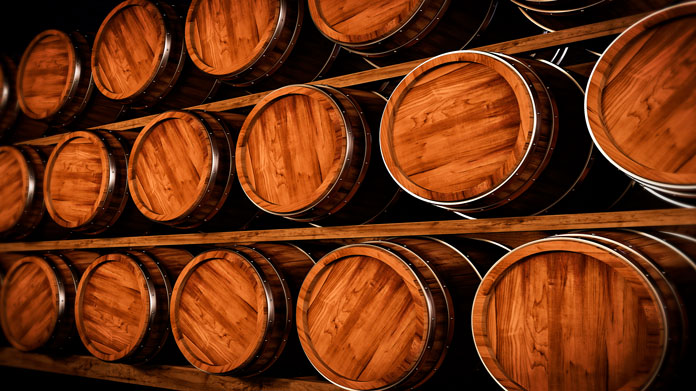
Most people in this business sell the liquor created from their distillery through various vendors. Additionally, some people sell their liquor directly to customers via an attached store or restaurant. Certain distilleries also offer features such as tours or tastings in order to build community engagement and brand awareness.
Our guide is in 3 parts:
The exact cost of opening a distillery depends on the size of the distillery and where it will be located. It is possible to start a small distillery for around $30,000. This includes spending about $5,000 on the initial lease and relevant licensing and $5,000 on equipment such as stills and fermenters and mash tuns. Larger expenditures include $9,000 or so for insurance and about $6,000 to obtain a vehicle large enough to help with transporting supplies and helping with distribution (if possible in your state). Finally, you should budget $4,000 o $5,000 to help pay a small team of employees.
Your ongoing expenses will vary due to factors like area, number of employees, amount of monthly production, and so on. Using the figures from earlier, you may be paying $2,500 a month for your lease, $4,000 a month for your worker’s salaries. You will also be paying for more supplies each month and gasoline for transporting those supplies, but these amounts may vary from month to month.
Because of the three-tier system (which will be explained later), your most direct customers are actually the liquor distributors who will then distribute to retailers. Your best distributor is usually a small- or mid-range distributor because they are likely to specialize in (or simply take a chance on) liquor created by a smaller distillery.
On the most basic level, a distillery makes money from the sale of liquors the distiller has created. This process is a little abstract in most states, though, as they follow a three-tier system. In this system, the distiller is the producer who sells their products to distributors who then sell to retailers.
As mentioned before, you are most likely selling to distributors who, in turn, will sell to retailers. Prices can vary based on what spirits you are selling and what the size of the bottle is. A general rule of thumb is that you will receive 40-50% of the eventual retail price of something, so if your spirit is eventually sold for $40, you are likely to get $18-$20.
There is great potential for profit. As an industry, small (“craft”) distilleries have now become a $450 million market, and the amount of craft distilleries has increased by 300% from 2011 to 2014. It is a growing industry with a good profit margin built into every bottle, though your overall amount of profit obviously depends on how many bottles you sell.
Never stop promoting your business, as the retailers and distributors will not do much (if any) marketing for you. Make sure you have SEO-enhanced online marketing of your spirits, and try to fill your social media with genuinely funny, engaging, and/or moving content. Don’t forget to pound the pavement and try to physically talk to various distributors and retailers as well in order to build a relationship and advertise your product. Finally, never forget that this is a long game: it may take a while to build a reputation and grow your profits in a crowded market, but a truly unique product and marketing campaign can set you apart and firmly establish your brand.
There are many daily activities at a distillery. Some time may be spent planning, designing, and testing new spirits that will be sold. A fair amount of time is spent actually distilling spirits (from malting and fermentation all the way to bottling). Time will also be spent researching the liquor industry, researching liquor history, and researching what your competition is doing. Finally, a good amount of time may be spent promoting your products, and in most states, having conversations with the retailers who will sell your liquor.
If you have the time and money, there are online and offline educational programs that offers degrees or certifications in distilling and brewing, which can be a big help. Any previous experience working at a distillery is also beneficial. Ultimately, the best skill is research: it is important to simultaneously learn about the distilling industry and its methods as well as the history of alcohol promotion and sales.
The growth potential for this business is very steady. The Bureau of Labor Statistics shows employment among breweries, wineries, and distilleries increasing from a little over 132,000 in May of 2016 to nearly 146,000 in May of 2017.
Be sure to do your homework on other brands so that you can truly create unique flavors that will be a big hit with your customers. Be sure that your promotional material plays up the idea of this as a local alcohol brand, as this can engage community interest. Finally, start by focusing on white spirits that do not have to be aged while you let your other spirits age (a process that may take years).
Even for a small distillery, you will likely need a team right away, as there are many moving parts to the process of distilling spirits, storing spirits, transporting spirits, and so on. Plus, the process may involve a fair share of late nights, and it’s good to have others to share that burden with.
Business Evaluation & Strategy Tool
We'll walk you through the four pillars every business needs: Points of Leverage, Marketing Strategy, Financial Model, and Personal Compatibility. At the end you'll see a personalized report and your action plan below will be tailored to your answers.
Every viable business has natural advantages. Below are common leverage points across four categories. Pick the ones that apply to your Distillery business. We've pre-suggested a few based on your idea — review and adjust.
Without a way to connect with customers, even great businesses fail. Pick the channels you plan to use to reach your customers.
Enter your monthly baseline costs — the minimum overhead to keep the business running. Then we'll calculate how many sales per month you need to break even.
A business that doesn't fit your life will fail no matter how good the numbers look. Tell us how this business fits you.
Complete the four pillars and your personalized summary will appear here.
Nine concrete steps to take you from idea to open business, grouped into 30-day phases. Complete the planner above and we'll highlight what's most important for your situation.
An LLC keeps your personal assets separate from business debts and lawsuits — the most common reason small business owners choose this structure. Sole proprietorships and partnerships do not provide this protection.
Apply for your free Employer Identification Number through the IRS, then register for any state or local taxes that apply to your business (sales tax, franchise tax).
A dedicated business account is required to maintain personal asset protection. Mixing personal and business finances ('piercing the corporate veil') can void your LLC's liability shield.
Recording expenses and income from day one makes tax filing easier and lets you see when the business is actually profitable. Use software (QuickBooks, Wave) or a part-time bookkeeper.
State and local requirements vary widely. Brick-and-mortar businesses typically need a Certificate of Occupancy; service businesses may need specific professional licensing; food businesses need health permits.
General Liability Insurance is the most common starting point. If you'll have employees, most states require Workers' Compensation. Specific industries need additional coverage (product liability, professional liability, etc.).
Your brand is how customers perceive and remember you. A clear name, logo, and visual identity make every later marketing decision easier and protect you legally as you grow.
Every legitimate business needs a website. Social media pages are not a substitute — you don't own the platform. Modern website builders mean you can launch a clean site in a weekend without a developer.
A dedicated business number keeps your personal life private, makes the business look legitimate, and lets you route calls professionally. Cloud phone services start under $20/month.
Starting a Distillery business typically costs $4,000. It is considered a low capital-intensity business.
A Distillery business runs roughly a 8% net profit margin, and most owners reach break-even in about 4 to 12 months.
You can usually launch a Distillery business in about 2 to 8 weeks, and it is commonly run full time.
A Distillery business is generally an intermediate-skill business to start, with rising demand. TRUiC rates it 63 out of 100 on our Idea Score.
Most Distillery businesses register as an LLC or other legal entity and obtain a general business license. Depending on your state and city you may also need industry-specific permits, sales tax registration, and zoning or health approvals, so check your local requirements before you launch.