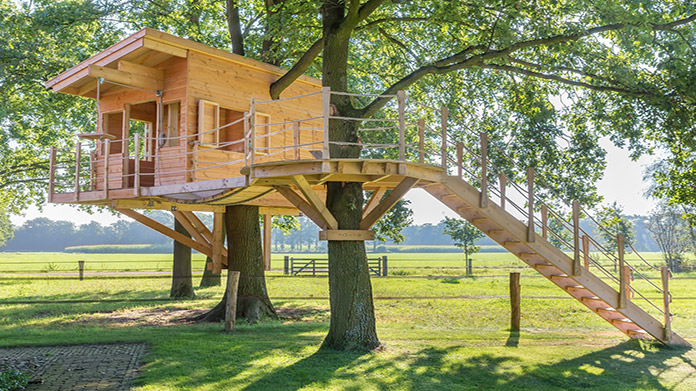
Part 1 - How to Start a Custom Treehouse Business - Background
Treehouse businesses can provide site consultation, design, construction, restoration, or plans and components for others to build. Choose the intended use and service before pricing a project: a children’s play structure, a private retreat, a dwelling, and commercial accommodation can need different designs, approvals, and operating arrangements. Bridges, zip lines, utilities, and other additions need their own assessment.
Classification follows the actual activity. The Census construction definitions distinguish new single-family housing built for others (236115), existing residential remodeling (236118), and commercial or institutional building construction (236220). Design-only architectural and engineering services differ from design-build construction. A recreational play structure or specialty-only job needs classification for that actual scope; the word “treehouse” alone does not select one code or establish permission to build.
Our guide is in 3 parts:
- Part 1 - How to start a Custom Treehouse business - Background
- Part 2 - Our planner tool to see if this idea is the right fit for you
- Part 3 - Action plan to get started
What are the costs involved in opening a custom treehouse business?
Prepare a budget for the services you can competently and lawfully provide. Quote professional and technical support, tree and site assessment, business and contractor requirements, insurance, tools, transport, safe access and handling equipment, worker training, design software, storage or prefabrication space, marketing, and working cash. A design consultancy and a crew completing construction have different resource needs.
Separate business startup spending from each customer’s project budget. Include design, engineering, approvals, materials, specialist hardware, foundations or supports, utilities, access, travel, installation, and specialist trades in the relevant project estimate. Nelson Treehouse’s current description illustrates site-specific design, prefabrication, shipment, on-site work, and additional utility infrastructure; it is not a universal startup budget.
Use actual quotes for the website and marketing work you need, such as a portfolio, service area, inquiry process, and clear project scope. Decide which equipment and vehicles to own, hire, or obtain through qualified contractors from expected workload and site requirements rather than assuming several trucks are essential at launch.
Budget registration and coverage separately from their face-value limits. For example, Washington L&I currently lists a $150.20 contractor registration application fee and requires applicable bonding and liability insurance. A bond’s stated amount is not its premium, and minimum registration coverage is not an assessment of sufficient insurance for your treehouse work.
What are the ongoing expenses for a custom treehouse business?
Track project design and review time, materials and hardware, employee and subcontractor costs, transport and crew travel, rented equipment, permits, inspections, site logistics, rework, and warranty or maintenance obligations. Add premises, software, equipment and vehicle care, insurance, administration, marketing, and owner management time.
Travel charged to the customer remains a delivery cost. Measure it along with the time and cash consumed by distant projects. Nelson’s cost overview specifically identifies logistics, crew accommodation, site access, and weather as cost factors.
Discuss the actual activities with an insurance adviser, including elevated construction, tree attachments, professional design, subcontracted work, completed projects, and any added attractions. Review limits, exclusions, deductibles, and responsibilities. Include the planned inspection and maintenance process: ISA guidance explains that construction can affect tree health and stability and that ongoing assessment may be needed.
Who is the target market?
Unfortunately, not everyone will have the funds to commission this sort of project. Your clients will be those who love the outdoors, who are kids or kids at heart, and who have enough money readily available to finance the venture.
How does a custom treehouse business make money?
A custom tree house builder designs and constructs structures based on their client’s vision. Customers are billed based on a number of factors including time spent on design, quality of materials required, location, and size and scope of the project.
How much can you charge customers?
Quote defined phases and deliverables: initial consultation, tree and site assessment, design and engineering, approval work, construction, utilities, and handover. State who supplies each service, the assumptions and exclusions, revision limits, payment milestones, and the treatment of changes or cancellation. A fixed construction bid and an open-ended consultation need different terms.
As a named premium residential example, Nelson Treehouse, checked November 14, 2026, states an approximate $300,000 baseline for its design-and-build service and about $30,000 minimum for fully permitted and engineered design services. Its total combines design fees with a construction contract, and utility infrastructure brought to the base is additional. This is that firm’s scoped offer, not a national average, a small play-fort price, or a prediction of your margin.
Confirm the project’s intended use and requirements with the relevant authorities before fixing the scope. Occupancy, location, height, access, setbacks, structure, utilities, tree protection, and proposed activities can matter. Portland’s development tree-plan guidance, for example, addresses structures, staging, utilities, tree protection, and circumstances requiring arborist reports. Its separate tree-permit page distinguishes non-development work and directs development projects to the relevant process. Obtain the actual local determination rather than treating a vendor’s permit discussion or one city’s rules as national approval.
How much profit can a custom treehouse business make?
Use an editorial project-cost model. Start with retained design and construction receipts, then subtract project-specific design and engineering, tree and site work, materials, labor and payroll costs, subcontractors, transport, accommodation, equipment, approvals, and expected rework or warranty service. The remaining contribution must support fixed overhead and an adequate allowance for owner work before it establishes an economic return.
Estimate how many comparable projects or paid design phases the business can complete within a period. Divide fixed costs by positive average contribution for that defined mix to estimate the work needed to cover those costs. Check the result against design review, field supervision, crew capacity, travel, weather, and customer approval time.
Prepare a milestone cash schedule alongside the profit model. Compare legally agreed customer payments with the dates suppliers, employees, professionals, and subcontractors must be paid. Allow for deposits owed back, paused projects, delayed approvals, changes, and callbacks. A large project price or a busy calendar does not establish owner take-home income.
How can you make your business more profitable?
Evaluate design-only work, managed construction, restoration, and plans or component sales as distinct offers. Census definitions distinguish professional design from design-build construction, while Nelson describes offering design separately as well as paired with construction. Compare contribution, workload, contract responsibilities, insurance, and customer support for each model.
Subcontracting can provide specialist capacity, but budget the cost of selection, coordination, checks, changes, and supervision. Confirm that the business and each contractor can perform the scope under the applicable rules; Washington’s registration guidance illustrates distinctions between general and specialty contractors.
For restoration, assess the existing structure and trees before quoting. For plans and kits, define the intended use, permitted reproduction, required site-specific review, component scope, installation responsibility, and support. Copyright clearance and the actual project’s technical and approval needs remain relevant when construction is performed by someone else.
Day-to-Day and Growth
What happens during a typical day at a custom treehouse business?
Work can include client consultation, site visits, design and review, procurement, prefabrication, travel, construction, contractor coordination, customer updates, records, and quality checks. Establish the proposed use, budget, site, deliverables, and approval sequence before promising a final design or opening date.
Bring tree assessment and structural planning together early. ISA advises arborists and builders to coordinate during construction planning; a tree’s condition, root protection, exposure, and changes over time can affect the project. A tree assessment does not by itself approve structural loads or guarantee future safety.
Manage design revisions, contracts, approvals, and site work in a documented sequence. Oversee work within the agreed responsibility, coordinate qualified specialists, and record inspection and handover requirements. Include owner instructions and an appropriate ongoing tree and structure assessment and maintenance plan.
What are some skills and experiences that will help you build a successful custom treehouse business?
Develop practical construction and project-management competence for the offer, and engage appropriately qualified and authorized professionals for tree assessment, structural and building design, and specialist trades. Assign responsibility for foundations and supports, tree attachments and movement, access, falls, fire and egress, utilities, and the intended occupancy. Check the actual professional and trade requirements for each jurisdiction and scope.
Tree knowledge and carpentry contribute different expertise. ISA’s tree-risk and construction guidance explains why early assessment, protection during work, and later monitoring matter. Washington L&I provides one example of contractor registration and additional trade requirements; registration is not a substitute for technical competence or project approval.
Prepare workers for the actual elevated construction tasks. OSHA’s residential construction fact sheet explains fall-protection duties for its defined scope. Other tasks and settings can have different requirements. Have competent advisers establish the applicable systems, training, access, handling, supervision, weather limits, and rescue arrangements for the site rather than relying on general caution.
What is the growth potential for a custom treehouse business?
Use qualified paid inquiries, accepted design work, project contribution, lead times, quality, and cash requirements to assess growth. Measure the capacity of design review and field supervision as well as crew hours. Nelson’s site-specific cost factors illustrate why travel, access, amenities, season, and logistics affect the work that can be delivered.
Expand the geographic area, crew, or service range only when the business can support the additional review, coordination, insurance, warranty response, and working cash. A specialist reputation can help win suitable work, but pricing still needs to cover the actual cost and responsibility.
How and when to build a team
Define roles for client scope and estimates, design, engineering, arboricultural assessment, approvals, construction, specialist trades, quality checks, customer records, and maintenance follow-up. Some can be retained professionals or qualified subcontractors under clear agreements. Budget compensation, training, supervision, travel, insurance, backup, and management time before adding capacity.
Make the site work plan and responsibilities explicit. Workers need appropriate competence and training for their tasks, including elevated access, fall protection, materials handling, communications, and emergencies. Review how the team will coordinate around the living trees and the structure, and keep the work within the actual approved design, contracts, and applicable contractor requirements.
Part 2 - Is this business right for you?
Business Evaluation & Strategy Tool
We'll walk you through the four pillars every business needs: Points of Leverage, Marketing Strategy, Financial Model, and Personal Compatibility. At the end you'll see a personalized report and your action plan below will be tailored to your answers.
This guide's benchmarks are under editorial review. Enter your own figures and choose the assumptions that fit your business.
Step 1 of 4 — Points of Leverage
Every viable business has natural advantages. Below are common leverage points across four categories. Pick the ones that apply to your Custom Treehouse business.
Step 2 of 4 — Marketing Strategy
Without a way to connect with customers, even great businesses fail. Pick the channels you plan to use to reach your customers.
Step 3 of 4 — Financial Model
Enter your monthly baseline costs — the minimum overhead to keep the business running. Then we'll estimate how many customer transactions would cover that overhead before variable costs.
Step 4 of 4 — Personal Compatibility
A business that doesn't fit your life will fail no matter how good the numbers look. Tell us how this business fits you.
Your Custom Treehouse Evaluation Report
Complete the four pillars and your personalized summary will appear here.
Points of Leverage
Marketing Strategy
Financial Model
Personal Compatibility
Part 3 - Your business launch action plan
Before committing to launch costs, test your business idea with potential customers. Use the free worksheet to record the offer, evidence and next decision.
Nine concrete steps to take you from idea to open business, grouped into 30-day phases. Adjust the phases to fit your funding, permits, and operating needs. Complete the planner above and we'll highlight what's most important for your situation.
First 30 days — Foundation
-
Choose a permitted business structure
Compare structures permitted for your activity, location, ownership and tax situation. Professional practices can have special entity and ownership rules. Check those requirements before filing; an LLC does not protect against every kind of personal liability.
-
Check tax IDs and registrations
Determine whether you need an EIN based on ownership, tax treatment, employees and applicable tax obligations. Some sole-owner businesses do not need one for federal income-tax purposes, while a bank or state may still require it. Apply directly with the IRS when needed and check applicable state or local registrations.
-
Separate business finances
Choose an appropriate business account and keep clear financial records. Separating business and personal transactions supports bookkeeping and entity formalities. Banks have their own eligibility and documentation requirements; a separate account is not a guarantee against personal liability.
-
Set up business accounting
Recording expenses and income from day one makes tax filing easier and lets you see when the business is actually profitable. Use software (QuickBooks, Wave) or a part-time bookkeeper.
Days 30–60 — Compliance & Risk
-
Get permits and licenses
Check the authorities responsible for your business activity and operating location. Professional authorization, tax registration, facility permits and product requirements are different questions. Online or mobile operations can still have licensing and other regulatory obligations.
-
Get business insurance
Identify the risks and coverage obligations for your activities, workers and location. Review applicable liability, property, professional or product coverage and workers’ compensation with the relevant state authority and a licensed insurance professional. Required coverage varies by jurisdiction and operation.
Days 60–90 — Launch
-
Define your brand
Choose a name, message and visual identity that help your intended customers understand the business. Check relevant name and trademark requirements before investing in a brand; a logo or business-name registration alone does not establish complete legal protection.
-
Create your business website
Choose a web presence that fits how your customers research and buy. A website can explain your offer, support inquiries or sales, and connect your marketing channels. Plan the content, accessibility, privacy and maintenance requirements for the features you need.
-
Set up your business phone system
Choose a customer-contact setup that fits your sales and service process. Compare current provider terms, business-use eligibility, routing features and ongoing costs, and decide how you will keep personal contact details separate.