Startup cost
$5k–$120k
TRUiC Business Ideas
Decision Snapshot
Idea Score
68
Startup cost
$5k–$120k
Profit margin
28%
Break-even
18 mo–36 mo
Time to launch
2 wk–12 wk
Demand trend
Stable
5-yr failure rate
—
Capital intensity
High
Time commitment
Full time
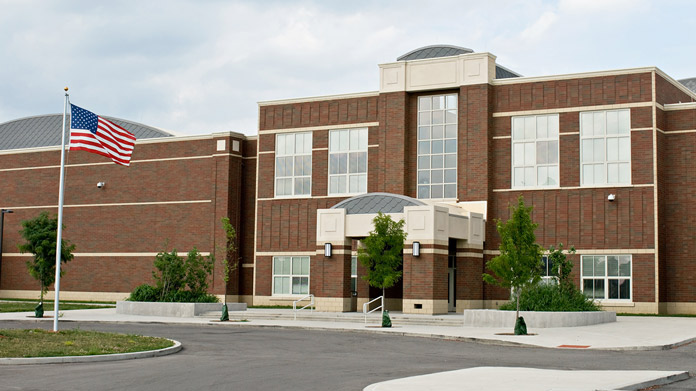
A charter school is like an independent school, but it is publicly-funded. They are attractive to educators and parents because they offer a bit more freedom than traditional public schools while still being accountable for producing good results from students and stable financial management from the school itself. Charter schools are an attractive feature in many communities because they give parents and students more of a choice regarding where the students go to school.
Our guide is in 3 parts:
The exact cost of opening a charter school can vary significantly based on the cost of the land, the size of the complex, and the number of students and teachers. For instance, if you anticipate 140 students, you may need a building as large as 20,000 feet. Getting an architect to design such a structure from the ground up may cost as much as two million dollars. A small staff comprised of seven standard teachers, one special education teacher, three teacher’s aides, a librarian, and a principal will cost a little over $700,000 per year depending on their salaries. Buying a stock of medical supplies, hardware supplies, toiletries, and various odds and ends may cost as high as $20,000. Stocking a small library with 20,000 books may cost nearly $120,000, and getting the relevant shelving you’ll need may cost $5,000. Purchasing computers for the school can cost over $37,000, and furniture (ranging from standard desks and tables to examination tables and gym wall pads) can easily cost $25,000. Larger appliances such as refrigerators, stoves, dishwashers, and food bars will cost $13,000 or more.
Your primary ongoing expenses include your monthly loan payment for the school, your teacher’s salaries (using our staff estimates above, you would be paying about $60,714 a month), supply costs (whose cost will vary based on needs, but are likely to be $2,000 a month or more), and utilities (which will also be about $2,000 a month or more).
While almost anyone can make a great charter school student, the target market is typically upper-middle-class or wealthy parents who want to offer their children the best preparation possible for higher education.
The bulk of the money that a charter school makes comes from the public funds of their state. The school may also receive grants, subsidies, and access to various federal programs. In terms of profit, the executives overseeing charter schools receive a portion of money per student enrolled. Note that your charter school must abide by state laws which can dictate whether your business can legally be for-profit or it must be a non-profit, although the latter can still yield substantial income.
Charter schools do not follow an exact customer/provider model. For the students, the charter school is free. However, the school is funded by both the district and the state on a per-pupil model. Your area may vary, but nationally, charter schools are paid $7,131 per pupil.
The exact amount of profit you can make depends ultimately on the number of students, how much you receive per student, and any money that might come from charitable donations and wealthy patrons. Overall, though, for-profit education is a market valued at over $1.3 trillion. Combined with the growth of charter schools themselves and their support from the latest Secretary of Education, this venture may prove quite profitable.
One of the downsides to income per pupil being determined by districts and states is that it makes it difficult to increase profits. There are essentially two avenues to become more profitable: expanding the school or securing more donations from parents and various wealthy patrons. The first option will require significant investment, but will ultimately increase the number of students your school serves, thereby increasing your profit. For the second option of soliciting donations, if you have the budget, it may be worth hiring an individual or team whose primary job is securing donations, grants, and other types of funding for your school.
The daily activities of a charter school are very similar to the daily activities of a traditional public school. Teachers spend their days preparing for classes, attending meetings, teaching classes, and taking care of any after-school activities. Administrators help coordinate with teachers, the board of directors, and other relevant individuals and agencies that help promote the school’s success.
As mentioned before, any prior experience as a public school educator or administrator is invaluable for this role. To this end, a formal degree in education or a related field is very helpful, as is any networking experience that you may have within your community. Many of the biggest charter schools thrive on donations from wealthy patrons, and your ability to tap into an existing network for potential funding can help your school succeed much more quickly.
The growth potential of charter schools is very steady, having risen from four to seven percent between 2004 and 2014.
One of the best things to do before opening a charter school is to listen to comments parents have been making about the local schools. This lets you learn from others’ mistakes and ensure that your school offers an experience the community is otherwise lacking. Make sure not to create a bigger school than you truly want: for many private schools, the small classrooms are considered a very attractive feature because students get more time with teachers, and a really crowded campus can undercut that benefit.
Unlike small businesses, a charter school must have a solid team of teachers, aides, administrators, and librarians from the very beginning.
Business Evaluation & Strategy Tool
We'll walk you through the four pillars every business needs: Points of Leverage, Marketing Strategy, Financial Model, and Personal Compatibility. At the end you'll see a personalized report and your action plan below will be tailored to your answers.
Every viable business has natural advantages. Below are common leverage points across four categories. Pick the ones that apply to your Charter School business. We've pre-suggested a few based on your idea — review and adjust.
Without a way to connect with customers, even great businesses fail. Pick the channels you plan to use to reach your customers.
Enter your monthly baseline costs — the minimum overhead to keep the business running. Then we'll calculate how many sales per month you need to break even.
A business that doesn't fit your life will fail no matter how good the numbers look. Tell us how this business fits you.
Complete the four pillars and your personalized summary will appear here.
Nine concrete steps to take you from idea to open business, grouped into 30-day phases. Complete the planner above and we'll highlight what's most important for your situation.
An LLC keeps your personal assets separate from business debts and lawsuits — the most common reason small business owners choose this structure. Sole proprietorships and partnerships do not provide this protection.
Apply for your free Employer Identification Number through the IRS, then register for any state or local taxes that apply to your business (sales tax, franchise tax).
A dedicated business account is required to maintain personal asset protection. Mixing personal and business finances ('piercing the corporate veil') can void your LLC's liability shield.
Recording expenses and income from day one makes tax filing easier and lets you see when the business is actually profitable. Use software (QuickBooks, Wave) or a part-time bookkeeper.
State and local requirements vary widely. Brick-and-mortar businesses typically need a Certificate of Occupancy; service businesses may need specific professional licensing; food businesses need health permits.
General Liability Insurance is the most common starting point. If you'll have employees, most states require Workers' Compensation. Specific industries need additional coverage (product liability, professional liability, etc.).
Your brand is how customers perceive and remember you. A clear name, logo, and visual identity make every later marketing decision easier and protect you legally as you grow.
Every legitimate business needs a website. Social media pages are not a substitute — you don't own the platform. Modern website builders mean you can launch a clean site in a weekend without a developer.
A dedicated business number keeps your personal life private, makes the business look legitimate, and lets you route calls professionally. Cloud phone services start under $20/month.
Starting a Charter School business typically costs $5,000 to $120,000. It is considered a high capital-intensity business.
A Charter School business runs roughly a 28% net profit margin, and most owners reach break-even in about 18 to 36 months.
You can usually launch a Charter School business in about 2 to 12 weeks, and it is commonly run full time.
A Charter School business is generally an intermediate-skill business to start, with stable demand. TRUiC rates it 68 out of 100 on our Idea Score.
Most Charter School businesses register as an LLC or other legal entity and obtain a general business license. Depending on your state and city you may also need industry-specific permits, sales tax registration, and zoning or health approvals, so check your local requirements before you launch.