Startup cost
$25k–$250k
TRUiC Business Ideas
Decision Snapshot
Idea Score
63
Startup cost
$25k–$250k
Profit margin
22%
Break-even
4 mo–12 mo
Time to launch
12 wk–36 wk
Demand trend
Rising
5-yr failure rate
—
Capital intensity
Very high
Time commitment
Part time
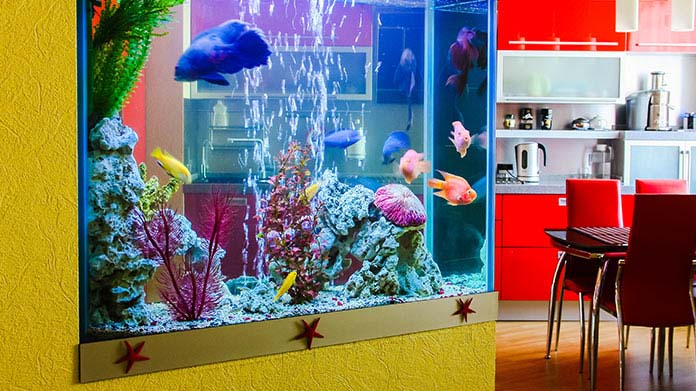
Many people enjoy having fish, as they’re a relaxing and peaceful pet. People don’t always, however, have the time or inclination to properly look after a fish tank. An aquarium maintenance business cleans and maintains aquariums, usually serving both businesses and individuals. These businesses let people have beautiful, healthy aquariums without personally cleaning them.
Our guide is in 3 parts:
The startup costs for an aquarium maintenance business are minimal.
The largest expenses are a vehicle for getting to clients’ sites and an office/storage space, but many business owners keep these costs low by using a room in their home and their personal vehicle. A business owner can invest in an outfitted vehicle and office space after their business is established, but in the beginning these things likely won’t be necessary.
Other startup expenses include insurance premiums, advertising fees, and equipment and supplies. Advanced Aquarium Concepts has an in-depth list of supplies that business owners may want. The list includes, among other things:
5-gallon buckets
towels (of various sizes)
algae pads (with and without handles)
razors and an X-acto knife
specimen containers
water changers
other supplies
The ongoing expenses for an aquarium business are relatively low. They include vehicle maintenance costs, fuel, insurance premiums, advertising fees and supply costs. Supply costs are minimal in the industry, as just a small amount of a supply can usually treat a lot of water.
An aquarium maintenance business’ ideal client is a pet store that sells fish. Pet stores not only have multiple aquariums that need to be cleaned, but they’re also where people go to purchase fish and fish tanks. These stores can be a source of both ongoing work and other potential clients.
An aquarium business makes money by charging clients for aquarium maintenance and cleaning services. While fees are usually based on the service provided, they may be calculated from a desired hourly rate. For instance, a business owner that wants to earn $60 per hour might charge $45 for a service that they expect will take 45 minutes to do.
Many aquarium maintenance businesses charge about $1 per gallon for service calls. Some businesses, however, charge significantly less, but choose to only service larger aquariums. For example, Clear Aquarium charges as little as $0.55 per gallon, but they won’t service aquariums under 100 gallons.
In addition to regular service charges, most businesses also charge for emergency calls. These calls are usually priced by the hour. Clear Aquarium assess a $50 per hour fee for emergency calls during business hours and $75 per hour during off hours.
With a full list of clients, an aquarium maintenance business can make a significant revenue. A business owner who charged $50 per hour would earn around $1,000 – $1,500 per week working full-time hours, not counting travel and transition time. Even after expenses are subtracted, this is still a respectable income.
An aquarium maintenance business can increase its revenue by also offering tank installations, and selling fish and other supplies.
An aquarium maintenance business owner spends much of their day driving to clients’ sites and cleaning their aquariums. Cleaning an aquarium can involve:
testing water for proper chemical balances
checking and changing filters
wiping algae off of the aquarium glass
assessing the health of fish
addressing any other issues that arise
other tasks related to keeping the aquarium clean and healthy
At the end of a service, business owners typically review what was done with the aquarium owner and make any recommendations that are appropriate.
When not actively servicing aquariums, business owners spend time cleaning their equipment, maintaining their own stock of fish and plants, ordering supplies, billing clients and seeking new clients.
An aquarium business owner should be extremely familiar with freshwater and saltwater aquariums, and the fish, plants, and other creatures that inhabit them. If business owners don’t have in-depth knowledge, clients may assume they’re paying a lot of money for someone who has a few buckets and brushes.
Business owners who don’t already possess this knowledge have a variety of resources available to them. The Ornamental Aquatic Trade Association offers a certificate and an advanced diploma, and ACS Distance Education has a 100-hour Aquarium Management program. Just a few of the many books written on aquarium maintenance include Freshwater Aquariums for Dummies, Saltwater Aquariums for Dummies, the Aquariums series (which covers freshwater, saltwater and reef aquariums), Aquarium Plants and Aquarium Corals.
In addition to taking a course and reading about aquariums, it’s also a good idea for new business owners to get some hands-on experience. Working for another aquarium maintenance business gives business owners a chance to learn about aquariums and the industry.
Most aquarium maintenance businesses service a single region. They’re generally located in cities, where there are more businesses and people who may want aquariums. Fish Geeks and Aquarium Design and Maintenance are two examples of businesses that service a single area.
While business owners may care for fish and other aquatic creatures, it’s people that pay for their service. How business owners interact with their clients is extremely important.
When seeing a new client’s aquarium for the first time, business owners should find something to compliment. Business owners can complement clients on the cleanliness of their aquarium, the health of their fish, a well-conceived set-up, or any other thing they think of. Complimenting clients puts them at ease and helps them feel accomplished, and it will also help them receive whatever constructive feedback you may want to offer them in terms of how they are caring for their aquatic pets.
Most aquarium maintenance businesses can be run as a one-person operation. If a business gets more clients than a single person is able to service, an employee may need to be hired. Additionally, very large tanks may sometimes require two people to clean, but it is unlikely that newer businesses will service tanks like this.
Business Evaluation & Strategy Tool
We'll walk you through the four pillars every business needs: Points of Leverage, Marketing Strategy, Financial Model, and Personal Compatibility. At the end you'll see a personalized report and your action plan below will be tailored to your answers.
Every viable business has natural advantages. Below are common leverage points across four categories. Pick the ones that apply to your Aquarium business. We've pre-suggested a few based on your idea — review and adjust.
Without a way to connect with customers, even great businesses fail. Pick the channels you plan to use to reach your customers.
Enter your monthly baseline costs — the minimum overhead to keep the business running. Then we'll calculate how many sales per month you need to break even.
A business that doesn't fit your life will fail no matter how good the numbers look. Tell us how this business fits you.
Complete the four pillars and your personalized summary will appear here.
Nine concrete steps to take you from idea to open business, grouped into 30-day phases. Complete the planner above and we'll highlight what's most important for your situation.
An LLC keeps your personal assets separate from business debts and lawsuits — the most common reason small business owners choose this structure. Sole proprietorships and partnerships do not provide this protection.
Apply for your free Employer Identification Number through the IRS, then register for any state or local taxes that apply to your business (sales tax, franchise tax).
A dedicated business account is required to maintain personal asset protection. Mixing personal and business finances ('piercing the corporate veil') can void your LLC's liability shield.
Recording expenses and income from day one makes tax filing easier and lets you see when the business is actually profitable. Use software (QuickBooks, Wave) or a part-time bookkeeper.
State and local requirements vary widely. Brick-and-mortar businesses typically need a Certificate of Occupancy; service businesses may need specific professional licensing; food businesses need health permits.
General Liability Insurance is the most common starting point. If you'll have employees, most states require Workers' Compensation. Specific industries need additional coverage (product liability, professional liability, etc.).
Your brand is how customers perceive and remember you. A clear name, logo, and visual identity make every later marketing decision easier and protect you legally as you grow.
Every legitimate business needs a website. Social media pages are not a substitute — you don't own the platform. Modern website builders mean you can launch a clean site in a weekend without a developer.
A dedicated business number keeps your personal life private, makes the business look legitimate, and lets you route calls professionally. Cloud phone services start under $20/month.
Starting an Aquarium business typically costs $25,000 to $250,000. It is considered a very high capital-intensity business.
An Aquarium business runs roughly a 22% net profit margin, and most owners reach break-even in about 4 to 12 months.
You can usually launch an Aquarium business in about 12 to 36 weeks, and it is commonly run part time.
An Aquarium business is generally an intermediate-skill business to start, with rising demand. TRUiC rates it 63 out of 100 on our Idea Score.
Most Aquarium businesses register as an LLC or other legal entity and obtain a general business license. Depending on your state and city you may also need industry-specific permits, sales tax registration, and zoning or health approvals, so check your local requirements before you launch.